
What Causes Skin Pigmentation? | 9 Triggers in Indian Skin & Which Ones You Can Prevent

Written by Clear Skin Content Team | Medically Reviewed by Dr. Dhanraj Chavan on August 19, 2026
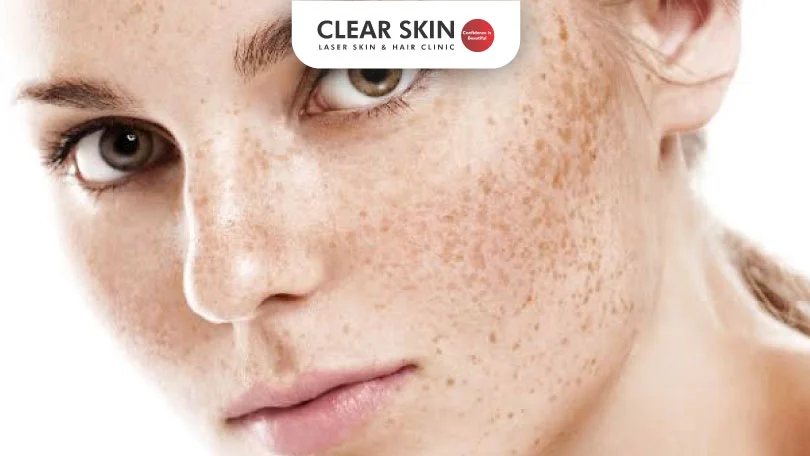
Skin pigmentation, patches or spots darker than your surrounding skin has one mechanism at its core: melanocytes (the cells that produce skin colour) are triggered into overproduction. What differs between each type is what sets off that trigger. Knowing your specific trigger is what determines whether topicals, peels, or laser will actually work for you.
This guide covers 9 causes seen most commonly in Indian patients, explains why Indian skin responds more intensely than other skin types, and separates the preventable causes from the ones that need clinical management.
Table Of Content
- Why Indian Skin Is More Prone to Pigmentation?
- 9 Causes of Skin Pigmentation on Indian Skin
- Preventable vs Non-Preventable: Quick Reference
- The One Step That Reduces All 9 Causes
- What Is Causing Your Pigmentation?
- When to See a Dermatologist?
- Frequently Asked Questions
- Conclusion
Why Indian Skin Is More Prone to Pigmentation?
Indian skin (Fitzpatrick types IV-VI) has higher melanocyte reactivity than lighter skin types. This means any trigger, UV, inflammation, hormones, or injury, produces a stronger melanin response, creating marks that are darker and take longer to fade without treatment.
This is not a flaw. Darker skin evolved with higher melanocyte activity as natural UV protection. But the same mechanism that provides that protection also means a pimple, a waxing session, or two weeks of unprotected sun leaves a mark that might take 6 to 18 months to fade on its own.
For a detailed guide to the specific types of hyperpigmentation and how each is treated, see the hyperpigmentation on Indian skin guide. This article focuses on what triggers pigmentation in the first place, and what you can do to prevent it.
What Is Pigmentation? | Causes & Solutions Of Pigmentation | Pigmentation Treatment | ClearSkin Pune
9 Causes of Skin Pigmentation on Indian Skin
1. UV Exposure (Preventable)
UV radiation activates tyrosinase, the enzyme that drives melanin production. Both UVA (penetrates clouds and glass) and UVB (causes burning) drive pigmentation, and India’s UV index is among the highest in the world. Pune and most of Maharashtra see a UV index of 8 to 11 for 8 to 10 months of the year. Consistent unprotected exposure causes tanning, solar lentigines (sun spots), and significantly worsens melasma and post-inflammatory marks.
Prevention: SPF 50 PA+++ or PA++++ broad-spectrum sunscreen, applied every morning and reapplied every 2 to 3 hours when outdoors even when at home . This is the single most impactful step in any pigmentation prevention plan.
2. Post-Inflammatory Hyperpigmentation (PIH) from Acne (Partially Preventable)
When a pimple causes inflammation, melanocytes in the surrounding skin release excess melanin as a defence response. The pimple heals, but a flat dark mark remains where the inflammation occurred. This is post-inflammatory hyperpigmentation (PIH), and it is the most common cause of facial pigmentation in Indian dermatology clinics.
In Indian skin (Fitzpatrick IV-VI), the melanocyte response to acne inflammation is substantially stronger than in lighter skin types. A spot that leaves a faint pink mark on pale skin can leave a deep brown mark on Indian skin that persists for 6 to 18 months without treatment.
Prevention: treating active acne early reduces the intensity of PIH. Avoiding squeezing or picking at pimples is the single most effective behavioural change. Treatment: niacinamide 10%, azelaic acid 10 to 15%, alpha arbutin 2%, Vitamin C 10 to 20%, retinoids (adapalene 0.1% or tretinoin 0.025%), Q-switched laser for established marks.
3. Hormonal Triggers: Melasma (Partially Preventable)
Rising oestrogen and progesterone levels sensitise melanocytes. When UV exposure is added, these sensitised melanocytes overproduce melanin in a symmetrical pattern across the cheeks, upper lip, forehead, and nose bridge. This is melasma.
Melasma is common during pregnancy, while on oral contraceptives, and during perimenopause. India’s high UV intensity means melasma develops and worsens more quickly in Indian women than in women at higher latitudes. Many patients notice their melasma is substantially darker in summer and slightly improved in winter.
Prevention: melasma from pregnancy is not preventable. The hormonal trigger can sometimes be modified (discussing alternative contraception with your gynaecologist). UV avoidance and strict daily SPF PA++++ substantially reduce severity. Treatment requires a dermatologist: triple combination cream (hydroquinone 4% + tretinoin 0.05% + corticosteroid) or tranexamic acid (oral 250mg twice daily or topical 2 to 5%), paired with SPF as a non-negotiable. Melasma is chronic and requires maintenance treatment after initial clearance or reduction
4. Friction Hyperpigmentation (Preventable)
Repetitive friction on skin causes micro-trauma and low-grade chronic inflammation, which triggers localised PIH over the contact area. This is one of the most common causes of pigmentation in Indian patients and one of the least discussed in skincare content, because Western dermatology resources do not account for India-specific friction sources.
Common locations in Indian patients: the back and sides of the neck (from necklaces, dupatta, collar seams), underarms (from tight clothing and synthetic fabrics), inner thighs, the posterior neck from helmet straps during long commutes, and ankles from new or ill-fitting footwear.
Prevention: identifying and reducing the friction source. Loose, soft fabrics in contact areas. A break-in period for footwear. Protective padding for helmet straps. Treatment once established: niacinamide, azelaic acid, SPF to prevent further darkening, Q-switched laser for marks that have been present for more than 6 months.
5. Hair Removal Trauma (Preventable)
Waxing, epilating, and depilatory creams cause surface trauma and inflammation. On Fitzpatrick IV-VI skin, this inflammation reliably triggers PIH in the treated area, particularly on the face, underarms, and bikini line. Threading performed too aggressively or too frequently can also cause post-procedure darkening at the follicle sites.
The mechanism is not the hair removal itself: it is the inflammatory response that follows trauma to the skin. The same waxing treatment that produces no visible mark on pale skin can cause weeks or months of darkening on Indian skin because of the stronger melanocyte response.
Prevention: waxing by professionals experienced with Indian skin and Fitzpatrick IV-VI parameters. Patch testing any new depilatory product before full application. Avoiding waxing on already-inflamed skin. Applying a calming product (aloe vera, centella-based cream) immediately after removal. Treatment: PIH management with niacinamide, azelaic acid, and daily SPF.
6. Drug-Induced Pigmentation (Non-Preventable Without Stopping the Medication)
Several medications commonly prescribed in India cause skin darkening as a side effect:
Hydroxychloroquine (prescribed for lupus, rheumatoid arthritis, and malaria prevention in India): produces brown to blue-grey pigmentation on the face, shins, and mucous membranes with long-term use.
Minocycline (antibiotic used for acne): produces blue-grey discolouration in acne scars or sun-exposed areas.
Amiodarone (cardiac medication): blue-grey pigmentation on sun-exposed areas.
Some antiepileptic drugs and chemotherapy agents also cause diffuse darkening.
Many patients on long-term hydroxychloroquine or minocycline do not connect their skin darkening to their medication. If you are on any of these medications and have developed unexplained pigmentation, mention this to your dermatologist. Management: discuss dose adjustment or substitution with the prescribing physician. Q-switched laser addresses residual pigmentation after the causative drug is reduced or stopped.
7. Genetic Predisposition (Non-Preventable)
Certain pigmentation conditions run in families. Freckles (ephelides) have a strong genetic component and are more common in individuals with a family history. DPN (dermatosis papulosa nigra), small, raised, dark papules on the face and neck, is extremely common in people of South Asian and African descent and is almost entirely familial.
Genetic predisposition does not directly cause pigmentation: it lowers the threshold at which other triggers (UV, inflammation, hormones) produce visible results. A person with a genetic tendency for hyperpigmentation will develop marks from triggers that would not visibly affect someone without that predisposition.
The genetic cause cannot be changed. The triggers that activate that predisposition can be managed. Treatment for freckles and DPN includes Q-switched Nd:YAG laser and Pico laser. For DPN removal, radiofrequency (RF) may also be used, followed by Q-switched laser treatment for residual pigmentation in some spots. Results require maintenance and sun protection to help prevent recurrence.
8. Vitamin B12 Deficiency (Preventable and Reversible)
Vitamin B12 deficiency is significantly more common in India than in most Western countries, primarily because B12 is found almost exclusively in animal products and India has one of the world’s highest rates of vegetarian and vegan diets. It is also common in older adults with reduced gastric absorption and in patients on long-term metformin for diabetes.
B12 deficiency causes diffuse skin darkening, not localised spots, but a generalised darkening particularly visible on the knuckles, lips, oral mucosa, and nail beds. It is frequently missed or misattributed to sun exposure.
Distinguishing features: diffuse rather than localised darkening, often accompanied by fatigue, weakness, tingling or numbness in the hands and feet, and poor memory. A simple blood test (serum Vitamin B12 level) confirms the deficiency. Supplementation (oral or intramuscular injection, depending on severity) corrects the deficiency and the pigmentation gradually improves as levels normalise.
If you have unexplained diffuse skin darkening, ask your dermatologist to check serum B12 as part of the workup.
9. Post-Procedure Hyperpigmentation (Preventable with Proper Care)
Skin procedures performed at incorrect parameters for Indian skin produce PIH in the treated area. This is one of the more distressing causes of pigmentation because patients sought treatment to improve their skin and come away with a new problem.
Common scenarios: a brightening chemical peel performed at too high a concentration or left on too long; laser treatment at energy settings calibrated for pale skin applied to Fitzpatrick IV-VI; waxing performed on actively inflamed or sensitised skin; aggressive microdermabrasion on darker skin.
The underlying mechanism is still PIH: the procedure causes more trauma and inflammation than the skin can handle without triggering a melanin response. The same peel or laser setting that produces no visible post-procedure darkening on Fitzpatrick II skin can cause significant PIH on Fitzpatrick V.
Prevention: procedures on Indian skin require adjustment. When seeking any pigmentation-related treatment, ask your provider whether they have experience treating Fitzpatrick IV-VI skin specifically. Treatment after post-procedure PIH: standard PIH management with niacinamide, azelaic acid, retinoids, and strict SPF; Q-switched laser if marks persist beyond 6 months.
Preventable vs Non-Preventable: Quick Reference
|
Cause |
Preventable? |
Key Prevention Step |
|
UV exposure |
Yes |
SPF 50 PA+++ daily, reapply outdoors |
|
PIH from acne |
Partially |
Treat acne early; do not pick pimples |
|
Melasma (hormonal) |
Partially |
Strict SPF PA++++; discuss contraception with gynaecologist |
|
Friction pigmentation |
Yes |
Reduce friction source; loose soft fabrics |
|
Hair removal trauma |
Yes |
Professional waxing; patch test; post-care soothing |
|
Drug-induced pigmentation |
Only by stopping/changing drug |
Discuss with prescribing physician |
|
Genetic predisposition |
No |
Manage triggers; laser for established marks |
|
Vitamin B12 deficiency |
Yes |
Supplement B12; blood test for diagnosis |
|
Post-procedure PIH |
Yes |
Choose providers experienced with Indian skin |
The One Step That Reduces All 9 Causes
SPF is the only intervention that provides some benefit across every single cause of skin pigmentation. UV worsens every type of pigmentation, even those that are not directly UV-caused, by amplifying the melanin response already triggered by another cause.
For any pigmentation treatment to work, SPF must come first. Without it, topicals and lasers are fighting a losing battle.
Recommended for Indian skin: SPF 50, PA++++ (four plus rating for UVA protection), broad-spectrum, applied every morning as the final step in your morning skincare routine. Reapply every 2 to 3 hours when outdoors. For melasma specifically, PA++++ is the minimum rating.
A common barrier in India: “sunscreen causes breakouts” or “sunscreen feels too heavy.” This is a formulation problem. Gel-based, fluid, or water-based sunscreens (such as Heliocare 360 Gel, La Roche-Posay Anthelios Invisible, or Bioderma Photoderm MAX Aquafluid) do not cause breakouts for most skin types and are non-greasy even in India’s humidity.
What Is Causing Your Pigmentation?
A brief guide to match your pattern to a likely cause:
Flat brown or dark marks after pimples, on the face: PIH from acne. Start with niacinamide 10% and azelaic acid, daily SPF.
Symmetrical patches on both cheeks, upper lip, or forehead: likely melasma. Needs a dermatologist for triple combination cream or tranexamic acid.
Darkening only on sun-exposed areas (face, hands, shoulders), with discrete spots: UV-induced solar lentigines. Q-switched laser plus strict SPF.
Diffuse darkening across the body, with fatigue and tingling in hands or feet: possible B12 deficiency. Get a serum B12 blood test.
Darkening on the neck, underarms, or inner thighs: likely friction pigmentation. Reduce friction source plus niacinamide.
Marks that appeared after waxing or a clinic procedure: post-inflammatory from trauma. Niacinamide, azelaic acid, SPF; give it 8 to 12 weeks before considering laser.
Not sure which you have: the hyperpigmentation types guide has a 7-type diagnostic framework to help you identify your specific condition.
When to See a Dermatologist?
See a dermatologist if:
Your pigmentation has not improved after 3 months of consistent topical treatment plus daily SPF. The cause likely needs to be identified before the right treatment can be chosen.
You have diffuse darkening without a clear trigger. Systemic causes including B12 deficiency and adrenal conditions need a blood workup, not just skincare.
Patches are growing, changing colour, or have irregular borders. This warrants a clinical check to rule out other causes.
You developed darkening after a skin procedure. Post-procedure PIH benefits from early intervention to prevent it becoming established.
Book a skin pigmentation consultation at Clear Skin, Pune
Frequently Asked Questions
What is the most common cause of skin pigmentation in India?
Post-inflammatory hyperpigmentation (PIH) from acne is the most common cause of facial pigmentation seen in Indian dermatology clinics. Indian skin (Fitzpatrick IV-VI) responds to acne inflammation with a stronger melanin response than lighter skin types, producing dark flat marks that persist for months after the pimple heals. Melasma is the second most common cause, particularly in women.
Can skin pigmentation be cured permanently?
It depends on the cause. PIH from acne can clear completely with treatment and sun protection. Solar lentigines can be removed effectively with Q-switched laser. Melasma cannot be permanently cured because the underlying hormonal and UV sensitivity remains, but it can be controlled well with ongoing treatment. B12 deficiency pigmentation reverses once B12 levels are restored.
Is skin pigmentation the same as melasma?
No. Melasma is one specific type of skin pigmentation caused by hormonal triggers combined with UV exposure. It presents in a characteristic symmetrical pattern on the face. Skin pigmentation is the broader category covering all forms of skin darkening from any cause, including acne marks, sun spots, friction, drug side effects, and genetics. Melasma needs specific treatment different from the approach for other pigmentation types.
Why does my skin darken after a pimple heals?
When acne causes inflammation, melanocytes in the surrounding skin release excess melanin. In Indian skin, this response is stronger and produces a dark flat mark (post-inflammatory hyperpigmentation) that can last 6 to 18 months without treatment. The mark is not a scar: the skin texture is smooth. Niacinamide, azelaic acid, retinoids, and daily SPF speed the fading process significantly.
Can nutritional deficiency cause skin darkening?
Yes. Vitamin B12 deficiency causes diffuse skin darkening, particularly on the knuckles, lips, and nail beds. It is common in India because B12 is found almost exclusively in animal products, making vegetarians and vegans particularly susceptible. It is also common in older adults and people on long-term metformin. A blood test confirms it and supplementation reverses the darkening over several months.
How long does skin pigmentation take to fade?
Without treatment, PIH from acne takes 6 to 18 months. With consistent topicals plus SPF, it typically fades in 3 to 6 months. With Q-switched or Pico laser added to the protocol, significant improvement is usually visible within 6 to 12 weeks. Melasma, being chronic, requires ongoing management rather than a fixed timeline. B12 deficiency pigmentation improves over 3 to 6 months after levels are corrected.
Do You Know?
Roughly 250 Patients Are Treated
Everyday By These Dermatologists
(You are one click away from flawless skin)
Meet Our Dermatologist!



Conclusion
The cause of your pigmentation determines the treatment. Using a Vitamin C serum for melasma without also addressing the hormonal trigger and SPF will produce minimal results. Lightening creams on drug-induced pigmentation will not work without addressing the medication. Getting the diagnosis right is the most time-efficient thing you can do.
If you have tried skincare without improvement for 3 months or more, or are not sure what is causing your pigmentation, a single dermatology consultation is usually all it takes to identify the cause and build a targeted plan. Book a consultation at Clear Skin, Pune.
Further Reading
Isotretinoin (Accutane) for Acne: What to Expect, Side Effects, and Cost
Isotretinoin is the most effective treatment for severe or treatment-resistant acne. Learn who it is for, how it works, what side effects are real, what the cost looks like, and what happens after.
Adult Acne Treatment After 25: Why It Happens and How to Clear It
Acne after 25 has different triggers than teenage acne and needs a different treatment plan. Learn why it persists, what drives it, and how a dermatologist clears it effectively.
Hormonal Acne and PCOS Acne Treatment for Women in Pune
Deep, painful pimples on your jawline and chin that follow your cycle are hormonal acne. Learn what causes it, how PCOS makes it worse, and how dermatologists treat it effectively.
Anti-Aging Treatment Reviews from Pune Patients – HIFU, Fillers and Botox Results at Clear Skin
Laser and chemical peels both treat sun damage and dark spots, but through different mechanisms.
Have thoughts? Please let us know
We are committed not only to treating you, but also educating you.