
Essential Vitamins for Melasma: How to Reduce Melasma Naturally

Written by Clear Skin Content Team | Medically Reviewed by Dr. Dhanraj Chavan on November 15, 2022
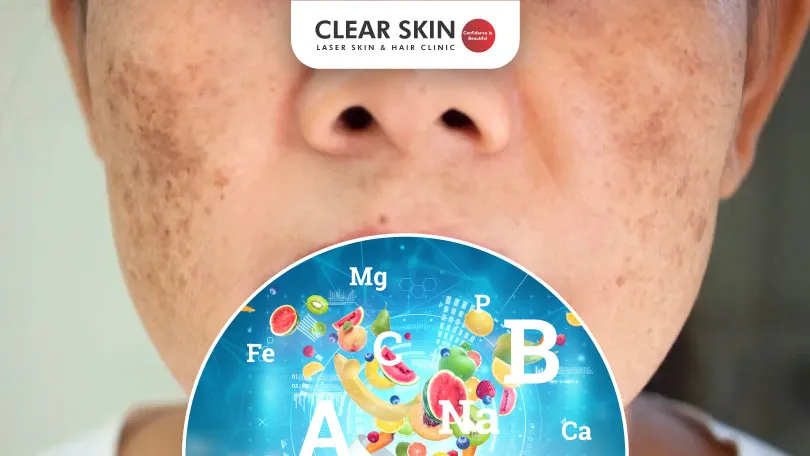
Do you suffer from melasma, a frustrating skin condition that causes dark patches and discolouration on your face? Are you tired of trying different skincare products and treatments that don’t seem to provide relief? If so, you may want to consider adding vitamins for melasma to your skincare routine.
Melasma can be a frustrating and challenging condition to manage, especially if you’re not sure where to turn for effective solutions. But with the right vitamins in your arsenal, you may be able to unlock the key to clearer, more even-toned skin.
Let’s find out how vitamins for melasma treatment work.
Table Of Content
- Vitamins for Melasma
- Conclusion
Vitamins for Melasma
Vitamins are essential micronutrients required for various physiological processes in the body, including skin health. Some vitamins have been found to be particularly beneficial in managing melasma.
Here are some vitamins that may help with melasma relief:
Vitamin C
Vitamin C, or ascorbic acid, is an antioxidant that helps to protect the skin from free radical damage caused by sun exposure. This water-soluble vitamin also plays a role in producing collagen, which is essential for skin health and melasma treatment. Studies have shown that topical application of vitamin C can help lighten dark spots and improve the skin’s overall appearance.
Vitamin E
Vitamin E is another antioxidant that helps to protect the skin from free radical damage, and it also helps to moisturise the skin and improve its texture. It can also help lighten dark spots and improve the skin’s overall texture.
Vitamin A
Vitamin A is essential for skin health and produces new skin cells, and it also helps to regulate the production of melanin and increase cell turnover. Topical application of retinoids, a form of vitamin A, has been shown to reduce hyperpigmentation and improve skin tone effectively.
Vitamin B3
Vitamin B3, also known as niacinamide, produces ceramides, which are essential for maintaining the skin barrier. It also helps to reduce inflammation and improve skin tone. Topical niacinamide can help reduce hyperpigmentation and improve skin texture.
While vitamins can be beneficial for managing melasma, it is important to note that they should be used in conjunction with other treatments, such as sunscreen and topical creams prescribed by a dermatologist. Following a healthy diet and lifestyle is also important to support overall skin health.
If you are struggling with melasma and unsure whether vitamins for melasma treatment are beneficial or not, book your consultation with Clear Skin Clinics Pune. Our experienced dermatologists will evaluate your skin condition and prescribe the best treatment option for you!
Do You Know?
Roughly 250 Patients Are Treated
Everyday By These Dermatologists
(You are one click away from flawless skin)
Meet Our Dermatologist!





Conclusion
In conclusion, incorporating specific vitamins into your skincare routine can significantly help in managing melasma. Vitamins such as C, E, and B3 have been shown to reduce pigmentation and improve skin health by promoting collagen production, protecting against UV damage, and enhancing skin barrier function.
For best results, these vitamins can be used in topical treatments or taken as supplements, but always consult with a dermatologist before starting any new regimen.
Further Reading
Gym & Sweat Acne: Causes & Prevention | Clear Skin Pune
Gym acne (acne mechanica) is caused by sweat, heat, and friction. Learn where it appears, why Pune’s humidity worsens it, and how to prevent breakouts.
Best Treatments for Back Acne and Body Scars
Struggling with back acne and body scars? Learn about effective home remedies and professional treatments to achieve clear, blemish-free skin.
Melasma Treatment Reviews in Pune | Clear Skin
Real Clear Skin Pune patient results for melasma treatment – see before and after outcomes after laser and chemical peel, and what to expect.
Best Treatment for Pigmentation on Face
Discover top treatments for pigmentation on the face. Get clear, even-toned skin with dermatologist-recommended pigmentation solutions in Pune.
Have thoughts? Please let us know
We are committed not only to treating you, but also educating you.