
Topical vs Oral Acne Treatment: Which Is Right for You?

Written by Clear Skin Content Team | Medically Reviewed by Dr. Dhanraj Chavan on August 08, 2026
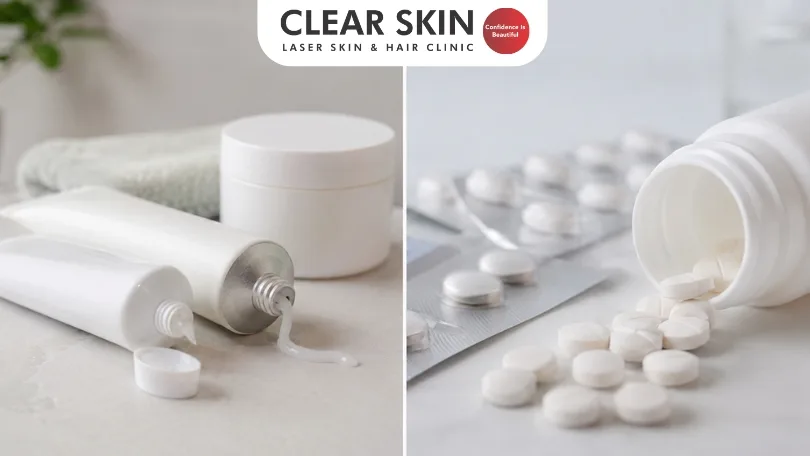
Topical and oral acne treatments are the two main ways dermatologists treat acne: topicals go on the skin, while orals are tablets taken by mouth. Topicals suit mild to moderate acne, orals suit moderate to severe or scarring acne, and the two are often combined.
Quick Answer
- Topical treatments go on the skin; oral treatments are tablets taken by mouth.
- Topicals suit mild to moderate acne; orals suit moderate to severe, resistant, or scarring acne.
- Oral options include antibiotics, hormonal treatment, and isotretinoin for severe cases.
- The two are often combined rather than used alone.
- A dermatologist matches the plan to your acne’s type and severity.
Table Of Content
- Quick Answer
- What Are Topical Acne Treatments?
- What Are Oral Acne Treatments?
- Key Differences
- Which Should You Choose?
- Frequently Asked Questions
What Are Topical Acne Treatments?
Topical treatments are creams, gels, and washes applied to the skin, such as retinoids, benzoyl peroxide, and azelaic acid. They work well for mild to moderate acne and are usually the first step for the various types of acne.
What Are Oral Acne Treatments?
Oral treatments are tablets that work from inside, including antibiotics for a limited course, hormonal treatments for women, and isotretinoin for severe acne. They are used for moderate to severe, or hormonal acne that topicals alone cannot control, under medical supervision.

Key Differences
Topicals target the skin surface with fewer whole-body effects, while orals reach deeper drivers like bacteria and hormones but need more monitoring. Starting oral treatment early for severe acne helps prevent scarring, and the AAD notes many people do best with a combination.
Which Should You Choose?
Choose topicals for mild to moderate surface acne. Choose oral treatment, usually with topicals, for severe, widespread, or scarring acne, and see Clear Skin’s acne treatment in Pune. Book a consultation for a plan matched to your skin.
Frequently Asked Questions
Is topical or oral treatment better for acne?
Neither is simply better, since they suit different severities of acne. Topicals are ideal for mild to moderate acne with fewer whole-body effects, while orals are needed for severe or scarring acne, and many people do best combining them.
When do you need oral acne treatment?
Oral treatment is usually needed when acne is moderate to severe, widespread, scarring, or not improving with topicals alone. Hormonal and deep cystic acne often respond better to oral options, which a dermatologist prescribes and supervises.
Can you use topical and oral acne treatment together?
Yes, combining them is very common and often works better than either alone. The oral medicine tackles deeper causes like bacteria or hormones while topicals keep pores clear, guided and adjusted by a dermatologist over time.
Are oral acne treatments safe?
Oral acne treatments are generally safe when prescribed and monitored by a doctor, though they need more care than topicals. Antibiotics are time-limited, isotretinoin and hormonal options have their own checks, and some are unsuitable in pregnancy.
How long do acne treatments take to work?
Most acne treatments take about two to three months to show a clear difference, whether topical or oral, because they work gradually. Stopping too early makes people think a treatment failed, so consistency and dermatologist review matter.
Do You Know?
Roughly 250 Patients Are Treated
Everyday By These Dermatologists
(You are one click away from flawless skin)
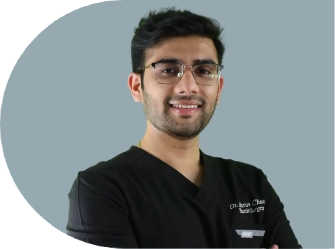
Meet Our Dermatologist!

Conclusion
Session count is not a guess – it is a clinical calculation based on your body area, hair type, hormonal profile, and the hair growth cycle’s biology. For most patients at Clear Skin Pune, 6-8 sessions over 8-12 months achieves 80-90% permanent hair reduction.
If you are unsure whether you are a suitable candidate or want an accurate session estimate for your specific area and hair type, a consultation with Dr. Dhanraj Chavan provides a personalised plan before any sessions are booked.
Book your consultation at Clear Skin Clinic, Pune: Contact Us
Further Reading
Gym & Sweat Acne: Causes & Prevention | Clear Skin Pune
Gym acne (acne mechanica) is caused by sweat, heat, and friction. Learn where it appears, why Pune’s humidity worsens it, and how to prevent breakouts.
Best Treatments for Back Acne and Body Scars
Struggling with back acne and body scars? Learn about effective home remedies and professional treatments to achieve clear, blemish-free skin.
Melasma Treatment Reviews in Pune | Clear Skin
Real Clear Skin Pune patient results for melasma treatment – see before and after outcomes after laser and chemical peel, and what to expect.
Best Treatment for Pigmentation on Face
Discover top treatments for pigmentation on the face. Get clear, even-toned skin with dermatologist-recommended pigmentation solutions in Pune.
Have thoughts? Please let us know
We are committed not only to treating you, but also educating you.