
HydraFacial for Acne-Prone Skin: Safe or Not?

Written by Clear Skin Content Team | Medically Reviewed by Dr. Dhanraj Chavan on October 27, 2026
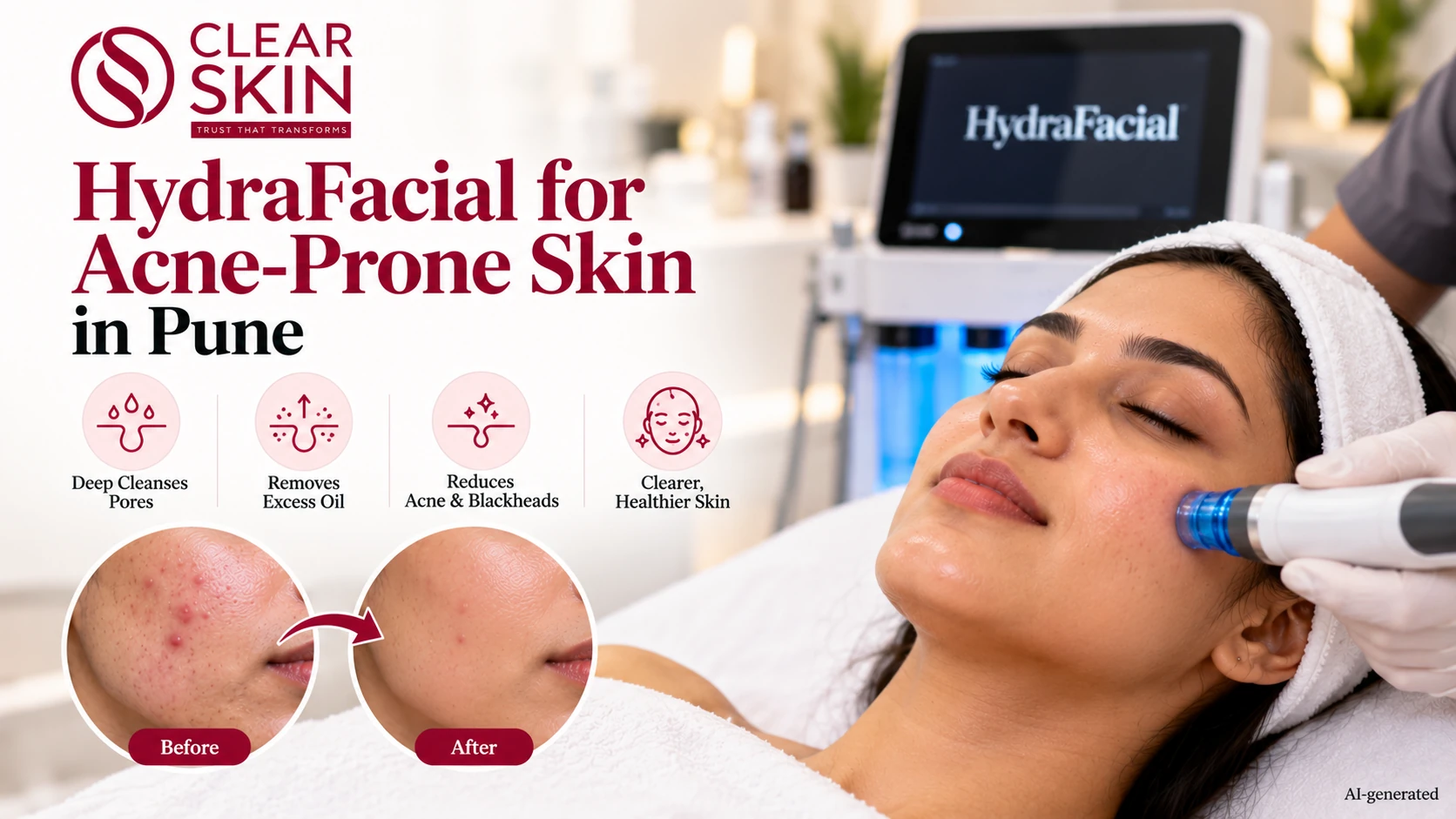
HydraFacial is safe for acne-prone skin in most situations, but with one important condition: it should not be done during an active flare of nodular or cystic acne. For skin that is congested with blackheads, whiteheads, and mild inflammation, HydraFacial deep-cleanses pores, removes sebum, infuses hydrating serums, and leaves skin visibly clearer , with no downtime. It does not address the hormonal, bacterial, or sebum-production causes of acne, so it works best as a regular maintenance tool alongside prescription treatment rather than as a standalone solution.
If you have acne-prone skin, you have probably been told to avoid facials. The logic sounds reasonable: manipulation of congested skin spreads bacteria and triggers more breakouts.
This is partially true for the wrong kind of facial. Vigorous manual extractions done incorrectly, high-heat steam without follow-up treatment, and comedogenic product application absolutely can worsen acne. HydraFacial is a different category of treatment, designed specifically to clean and hydrate without the risks associated with manual salon facials.
The question of whether it is safe for acne-prone skin is worth answering precisely, because the answer changes depending on what type of acne you have right now.
Table Of Content
- What Is a HydraFacial?
- Why Acne Patients Are Cautious About Facials?
- What HydraFacial Does for Acne-Prone Skin?
- When HydraFacial Is Safe for Acne-Prone Skin?
- When HydraFacial Is NOT Recommended?
- HydraFacial vs Chemical Peel for Acne: How They Compare?
- How to Use HydraFacial Within an Acne Treatment Plan?
- What to Expect From a Session?
- Expert Insight
- Summary
- Frequently Asked Questions
- Conclusion
At a Glance
|
Who it affects |
Men of all ages; peaks in the 15-35 range but persists into the 40s |
|
Common male-specific triggers |
Shaving technique, beard friction, sweat from exercise, whey protein supplements |
|
Where it typically appears |
Jaw, neck, back, chest , distinct from female hormonal patterns |
|
Key difference from female acne |
Higher baseline androgens; thicker skin; shaving as a constant mechanical trigger |
|
Undertreated because |
Stigma around men seeking skincare treatment; assumption it resolves on its own |
|
Treatment |
Same medical arsenal as female acne; isotretinoin more commonly used for severe male acne |
What Is a HydraFacial?
HydraFacial is a device-based facial treatment that uses a vortex suction tip to simultaneously exfoliate, extract, and infuse the skin with serums. The procedure runs in three steps:
Step 1 , Cleanse and exfoliate: A glycolic acid and salicylic acid solution is applied and worked into the skin while the vortex tip removes dead skin cells. This breaks down surface congestion without mechanical scrubbing.
Step 2 , Extract: The vortex suction lifts blackheads, whiteheads, and sebaceous debris from pores without manual squeezing. The tip creates negative pressure that draws out congestion cleanly , reducing the risk of spreading bacteria or damaging follicle walls.
Step 3 , Infuse: Hydrating, antioxidant serums (typically including hyaluronic acid, peptides, and vitamin C) are infused into the freshly cleaned pores. This step restores moisture and supports barrier recovery immediately after extraction.
Total treatment time: approximately 30-45 minutes. No needles, no peeling, no downtime.
The full HydraFacial Treatment at Clear Skin Clinic includes customisation of serums based on skin concerns.
Why Acne Patients Are Cautious About Facials?
The caution is based on a real risk from a specific type of treatment: aggressive manual facials.
A manual extraction facial involves a therapist physically pressing and squeezing pimples. Done incorrectly, this ruptures follicle walls, spreads C. acnes bacteria across the skin, and pushes inflammatory debris deeper into the dermis. The result is a post-facial breakout that is often worse than the original acne.
HydraFacial’s suction-based extraction is mechanically different. The vortex tip creates negative pressure that lifts debris upward and out rather than forcing it sideways. It does not press on the skin. For the right type of acne lesion, this is a significantly safer extraction method than manual techniques.
What HydraFacial Does for Acne-Prone Skin?
Clears comedonal congestion: Blackheads (open comedones) and whiteheads (closed comedones) are the primary targets. The combination of gentle chemical exfoliation and vortex extraction reduces visible congestion effectively in a single session. Regular sessions keep pores from re-clogging.
Reduces excess sebum: The cleansing step removes sebum from the surface and from within pores. Patients with consistently oily, congested skin notice a reduction in visible pore size and oiliness for several weeks after a session.
Supports the skin barrier: Many acne patients have a compromised skin barrier from years of harsh products or active acne inflammation. The infusion step in HydraFacial delivers hydrating ingredients into freshly opened pores, improving barrier function and reducing the reactive oiliness that a compromised barrier causes.
Fades early post-acne marks: The vitamin C and brightening serums infused in step three work on superficial post-inflammatory hyperpigmentation (PIH) , the dark marks left after pimples heal. Results are gradual over multiple sessions.
Prepares skin before events: HydraFacial produces an immediate visible improvement in skin clarity, texture, and hydration. It is a practical choice 1-2 weeks before a wedding, event, or professional photograph , provided there is no active cystic acne.
When HydraFacial Is Safe for Acne-Prone Skin?
HydraFacial is appropriate in the following situations:
- Comedonal acne: Predominantly blackheads and whiteheads, with little or no active inflammation. This is the strongest indication for HydraFacial , vortex extraction clears this type of congestion directly.
- Mild inflammatory acne: A few small red papules but no deep nodular lesions. Appropriate with serum customisation for sensitive, acne-prone skin.
- Moderate acne between flares: During a relative calm phase of moderate acne, when active cysts have resolved and the current concern is residual congestion and marks.
- Maintenance alongside prescription treatment: Once a prescription plan (topical retinoid, oral medication) has the acne under control, regular HydraFacial sessions maintain the results by keeping pores clear.
- Pre-event skin preparation: When skin is reasonably stable and an event is 1-2 weeks away.
When HydraFacial Is NOT Recommended?
Do not book a HydraFacial during:
- Active nodulo-cystic flare: Deep, inflamed nodules and cysts are below the surface, unreachable by the suction tip. The manipuation of skin around these lesions can increase surface inflammation and discomfort.
- Open or weeping lesions: Any broken skin surface is a contraindication. The suction tip should not contact open acne lesions.
- Isotretinoin use: Isotretinoin makes skin thin and fragile. Exfoliation and suction during an isotretinoin course can cause excessive irritation or barrier damage. Most dermatologists advise waiting 3-6 months after completing a course before resuming exfoliating treatments.
- Immediately after other exfoliating treatments: If you have had a chemical peel, microneedling, or laser treatment in the past 2 weeks, allow the skin to fully recover before a HydraFacial.
- Active rosacea or perioral dermatitis: These conditions involve a different type of skin sensitivity and may be aggravated by the treatment.
HydraFacial vs Chemical Peel for Acne: How They Compare?
Patients often ask which is better for acne-prone skin. They serve different purposes and work best in combination.
|
HydraFacial |
Chemical Peel |
|
|
Primary action |
Physical extraction + hydration infusion |
Chemical exfoliation + cell turnover acceleration |
|
Best for |
Comedonal acne, oily congested skin, maintenance |
Inflammatory acne, PIH, texture improvement |
|
Downtime |
None |
Mild peeling for 3-5 days (superficial peel) |
|
Frequency |
Every 4-6 weeks |
Every 3-4 weeks for a course of 4-6 sessions |
|
Safe during active cysts |
No |
No (for cystic/nodular active acne) |
|
Immediate event prep |
Yes (1-2 weeks before) |
No (allow 1 week minimum post-peel) |
Chemical Peels at Clear Skin Clinic are typically used for the treatment phase , clearing active acne and PIH over a course of sessions. HydraFacial is used for maintenance once the acne is under control, or alongside treatment for congestion management.
How to Use HydraFacial Within an Acne Treatment Plan?
The most effective approach positions HydraFacial as a complement to prescription treatment, not a replacement for it.
Treatment phase (months 1-3): Prescription topical retinoid plus oral medication if needed. Clinical sessions are chemical peels, which work more aggressively on the active acne drivers. HydraFacial may be used once per month for patients with predominantly comedonal acne.
Consolidation phase (months 3-6): Active acne is reducing. HydraFacial sessions every 4-6 weeks maintain pore clarity, and the brightening serums begin addressing residual PIH. Dermapen Microneedling may be added if early textural scarring is present.
Maintenance phase (beyond 6 months): Prescription topical continued at lower frequency. Monthly or 6-weekly HydraFacial sessions keep the skin clear. This phase is where most patients find HydraFacial most useful , it is the routine that prevents new congestion from building.
The full Acne & Pimple treatment plan is tailored to each patient’s acne type and stage.
What to Expect From a Session?
After a HydraFacial, skin typically looks cleaner and more even-toned immediately. A mild pink flush for 1-2 hours is normal. There is no peeling, no sensitivity to sunlight beyond the standard recommendation, and no activity restriction.
Blackheads that were visible before the treatment are noticeably reduced. Skin feels hydrated rather than tight. Makeup can be applied within a few hours if needed.
After a course of regular sessions, the cumulative effect is a consistent reduction in comedonal congestion, improved skin texture, and a more even tone from the gradual action of the infused serums.
Expert Insight
“HydraFacial is a tool, not a treatment,” says Dr. Dhanraj Chavan, Senior Dermatologist at Clear Skin Clinic. “It does not address what is causing the acne. But for managing congestion and maintaining the results we achieve with a full treatment plan, it is one of the most practical regular sessions we offer. Patients who keep up with it after their main treatment ends tend to stay clearer for longer.”
Summary
HydraFacial is safe for acne-prone skin when the acne is comedonal or mild to moderate, and when there is no active cystic flare or broken skin. It clears blackheads and whiteheads, reduces sebum, supports the skin barrier, and leaves skin immediately more even-toned without any downtime. It does not replace prescription acne treatment but works effectively alongside it , particularly in the maintenance phase once active acne is under control. Patients on isotretinoin should wait until 3-6 months after completing their course before resuming exfoliating treatments including HydraFacial.
Frequently Asked Questions
Will HydraFacial make my acne worse?
It can, if done at the wrong time. HydraFacial on actively inflamed cystic or nodular acne can increase surface irritation and discomfort. On comedonal or mild acne, it reliably improves congestion without triggering new breakouts. The key is having a dermatologist assess whether your acne is currently at a stage appropriate for the treatment.
How often should I get a HydraFacial for acne-prone skin?
Every 4-6 weeks is the standard interval for maintenance. More frequent sessions do not produce proportionally better results , the skin needs time to regulate oil production between sessions. During an active treatment phase with peels, monthly HydraFacial sessions are typically enough for congestion management between peel appointments.
Can HydraFacial replace my chemical peel course?
No. Chemical peels and HydraFacial serve different functions. Peels chemically accelerate skin cell turnover, reduce oil gland activity at the follicle level, and treat active inflammatory acne over a course of sessions. HydraFacial cleanses and hydrates without penetrating as deeply. Both have a role; neither replaces the other.
I am on prescription retinoin. Can I get a HydraFacial?
Check with your dermatologist. At low concentrations and if your skin has adjusted to the retinoid without significant dryness or sensitivity, a gentle HydraFacial may be fine. If your skin is still in the adjustment phase (first 3 months of retinoid use) with active peeling or sensitivity, wait until it settles. Do not book a HydraFacial while on isotretinoin without explicit clearance from your dermatologist.
Is HydraFacial suitable for Indian skin tones?
Yes. The treatment does not involve heat, ablative energy, or aggressive chemical concentrations that carry post-inflammatory hyperpigmentation risk on darker skin tones. The brightening serums used in the infusion step can actually help with the PIH that acne leaves on Indian skin. HydraFacial is one of the lower-risk procedure options for Fitzpatrick IV-VI skin.
Do You Know?
Roughly 250 Patients Are Treated
Everyday By These Dermatologists
(You are one click away from flawless skin)
Meet Our Dermatologist!





Conclusion
If you have acne-prone skin and are wondering whether HydraFacial is an option for you, the answer is likely yes , depending on where your acne is right now. A dermatologist can assess your skin in one appointment and advise whether HydraFacial fits your current plan.
Find your nearest Clear Skin Clinic on Google Maps or call +91 95845 84111.
See a doctor urgently if any skin treatment causes rapidly spreading redness, swelling, or signs of an allergic reaction , seek medical attention promptly.
Disclaimer: This article is for general educational purposes only. It does not replace personal medical advice. Treatment suitability depends on your current skin condition. Consult a qualified dermatologist before beginning any clinic procedure.
Further Reading
Acne Treatment for Men: Beard Acne, Shaving Bumps, and Gym Acne
Men’s acne has specific triggers , shaving, beard hair, gym sweat, and protein supplements , that women’s acne does not. Learn what is driving yours and how a dermatologist treats it.
Cortisone Injection for a Pimple: When It Works, Risks, and Cost
A cortisone injection can flatten a deep, painful pimple in 24–48 hours. Understand when it works, possible risks, and treatment costs.
How Many Months Before Your Wedding Should You Start Acne Treatment?
Planning your wedding? Find out when to start acne treatment, which treatments may help, and what to avoid before your wedding day.
Isotretinoin (Accutane) for Acne: What to Expect, Side Effects, and Cost
Isotretinoin is the most effective treatment for severe or treatment-resistant acne. Learn who it is for, how it works, what side effects are real, what the cost looks like, and what happens after.
Have thoughts? Please let us know
We are committed not only to treating you, but also educating you.