
Acne Treatment for Men: Beard Acne, Shaving Bumps, and Gym Acne

Written by Clear Skin Content Team | Medically Reviewed by Dr. Dhanraj Chavan on October 26, 2026
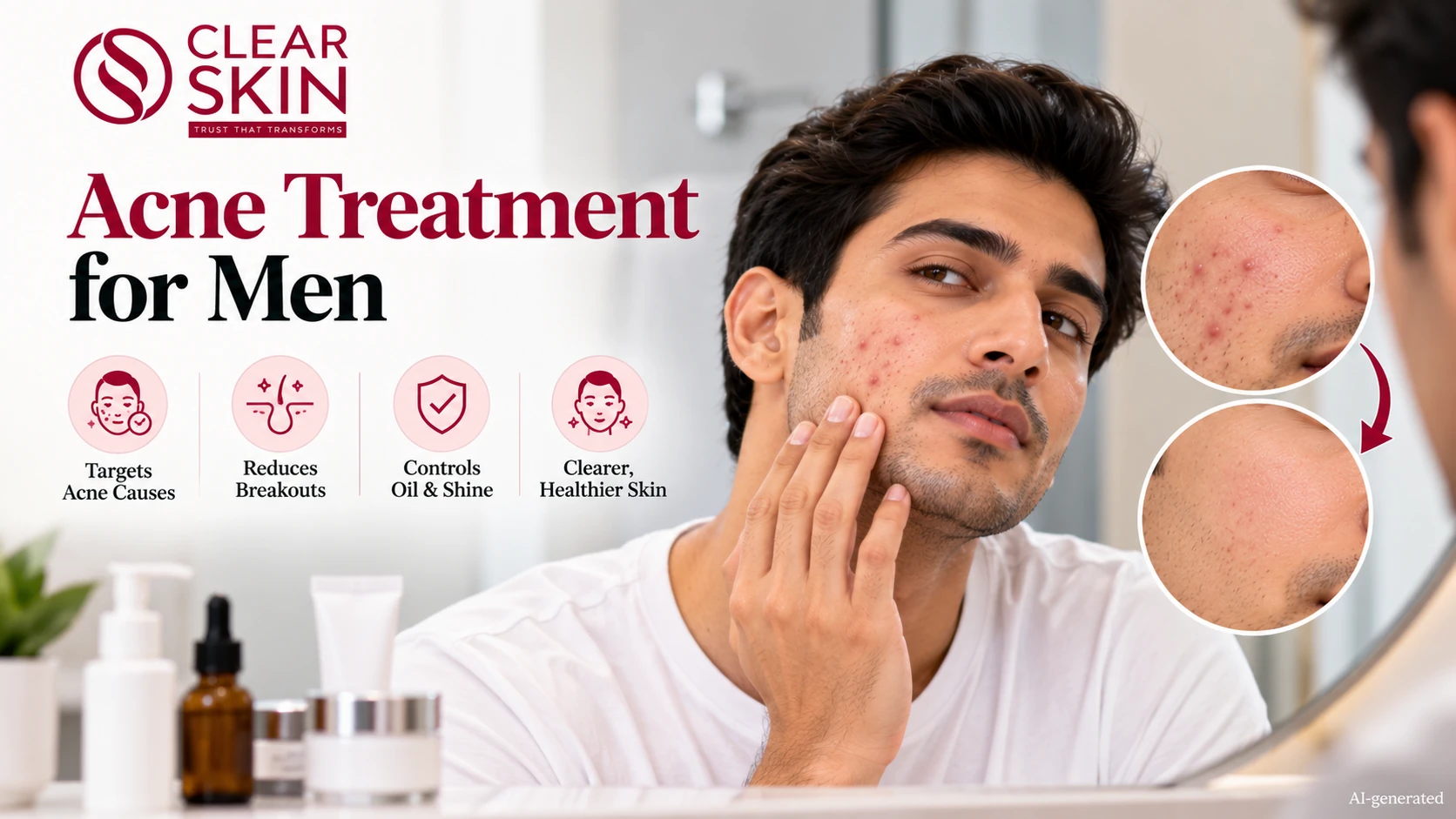
Most men who end up at a dermatology clinic for acne have tried face washes and OTC products for months or years before walking in. The assumption that skin problems are something to manage quietly, or grow out of, is persistent , and costly, because untreated male acne scars readily and the scarring is often the harder problem to fix.
Male acne is not a different condition from female acne. But it has specific triggers, a different hormonal baseline, and unique physical contexts , shaving, beards, gym workouts , that require specific consideration.
Table Of Content
- Why Men’s Acne Behaves Differently?
- Beard Acne: True Acne vs Folliculitis
- Shaving-Related Acne and Razor Bumps
- Gym Acne: Sweat, Friction, and Supplements
- Body Acne: Back and Chest
- Treatment Options for Men
- Skincare for Men with Acne: What to Use and What to Avoid?
- Expert Insight
- Summary
- Frequently Asked Questions
- Conclusion
At a Glance
|
Who it affects |
Men of all ages; peaks in the 15-35 range but persists into the 40s |
|
Common male-specific triggers |
Shaving technique, beard friction, sweat from exercise, whey protein supplements |
|
Where it typically appears |
Jaw, neck, back, chest , distinct from female hormonal patterns |
|
Key difference from female acne |
Higher baseline androgens; thicker skin; shaving as a constant mechanical trigger |
|
Undertreated because |
Stigma around men seeking skincare treatment; assumption it resolves on its own |
|
Treatment |
Same medical arsenal as female acne; isotretinoin more commonly used for severe male acne |
Why Men’s Acne Behaves Differently?
Higher Androgen Levels
Men produce testosterone at significantly higher levels than women throughout adult life. Testosterone stimulates sebaceous glands to produce more sebum. More sebum means more clogged pores, more bacterial growth, and more inflammation. This is why male skin tends to be oilier than female skin, and why severe nodulo-cystic acne , the kind that scars , is more common in men.
Thicker Skin and Deeper Lesions
Male skin is roughly 25% thicker than female skin, with a denser dermis. Acne lesions in men tend to go deeper, are harder to feel as surface-level, and take longer to resolve. This same thickness means scarring from deep male acne lesions is harder to treat once it forms.
Shaving as a Daily Trigger
Shaving is a daily mechanical and chemical disruption that women rarely experience on the face. It strips the skin barrier, causes micro-trauma to follicles, and, if done incorrectly or with dull blades, drives hair back into the follicle wall. This produces two distinct conditions that look similar but need different treatment.
Beard Acne: True Acne vs Folliculitis?
Before treating beard-area breakouts, it is worth knowing which condition you are actually dealing with. They look similar but respond to different treatments.
True acne in the beard area: Driven by excess sebum and bacterial growth inside the follicle. Produces comedones (blackheads), inflammatory papules, and deep nodules. Found across the jaw, chin, and cheeks where sebaceous glands are most active. Responds to standard acne treatment: topical retinoids, benzoyl peroxide, and oral medications where needed.
Folliculitis: Infection or irritation of the hair follicle itself. Produces small, uniform red bumps or pustules at the hair follicle opening. Common in the beard area, particularly with ingrown hairs. Caused by bacteria (most commonly Staphylococcus aureus), fungal organisms, or mechanical trauma from shaving. Does not respond to acne medications. Requires antibacterial or antifungal topicals depending on the cause.
How to tell them apart: Folliculitis tends to produce clusters of small, uniform red bumps at the surface, often with a visible hair in the centre. True acne produces varied lesions , some deep and painful, some surface-level , not all at follicle openings. A dermatologist confirms the diagnosis, sometimes with a skin swab if folliculitis is suspected.
Pseudofolliculitis barbae (razor bumps): When curly beard hair is cut at an angle, the sharp tip can curve back and re-enter the skin, causing an inflammatory reaction. This produces red, itchy bumps along the jawline and neck that look like acne but are a mechanical problem. More common in men with curly hair. Treatment involves adjusting shaving technique, allowing the beard to grow out, or laser hair removal to remove the hair permanently.
Shaving-aggravated acne: Men with underlying acne who shave are repeatedly disrupting the skin barrier over active lesions. This slows healing, spreads C. acnes bacteria across the face, and introduces new irritation with each shave.
Shaving tips that reduce acne aggravation:
- Shave after showering, when the hair is soft and the pores are open
- Use a sharp, single-use or well-maintained blade , a dull blade drags and creates more micro-trauma
- Shave with the grain of hair growth, not against it
- Use a fragrance-free, non-comedogenic shaving gel or foam, not a thick cream
- Do not shave over active, inflamed lesions; leave them alone
- Rinse with cool water after shaving; do not apply astringent toners
Gym Acne: Sweat, Friction, and Supplements
Sweat (Truncal Acne)
Exercise-related sweating is healthy, but sweat left on the skin for extended periods raises the moisture level inside follicles, which promotes bacterial growth. Men who work out and then stay in sweaty gym clothes for hours , or skip a post-workout shower , are creating an environment where back and chest acne (truncal acne) thrives.
Fix: Shower within 30-60 minutes of finishing a workout. Wear moisture-wicking, loose-fitting workout clothes. Do not use heavy body moisturisers on the back or chest before working out.
Friction (Acne Mechanica)
Repeated friction from gym equipment , weight belts, shoulder pads, backpack straps, or tight synthetic shirts , causes acne mechanica. The constant pressure and friction block follicles and produce a characteristic breakout pattern that follows the line of the friction source. Not driven by sebum excess. Resolves when the friction is removed and existing lesions are treated.
Protein Supplements
Whey protein is derived from dairy and contains IGF-1, a growth hormone that increases androgen production and sebum output in some men. Multiple studies have linked high-dose whey protein consumption to worsened acne. This is not universal , some men consume whey without any skin effect , but it is a significant enough association to assess.
If gym acne worsened after starting whey supplementation, replacing it with a plant-based protein supplement (pea protein, rice protein) for 8-12 weeks is a reasonable test. Creatine has also been associated with acne in some men, though the evidence is less established than for whey.
Body Acne: Back and Chest
Back and chest acne (bacne) is more common in men than women because of higher sebum production and androgen-driven gland activity across the torso. It is often more severe than facial acne in men and more likely to scar because the skin on the back is thicker and lesions go deeper.
Treatment involves:
- Prescription topical retinoids or benzoyl peroxide-based washes applied to the back and chest
- Oral medication for moderate to severe cases (antibiotics, isotretinoin)
- Chemical Peels on the back and chest for widespread comedonal acne , salicylic acid body peels clear congestion across large surface areas effectively
Treatment Options for Men
The same medical treatments available for female acne apply to men, with some pattern differences.
Topical retinoids: Tretinoin or adapalene applied at night. Adjust application to avoid the beard area if shaving daily over dry, retinoid-treated skin causes significant irritation. Some men apply retinoid only to the cheek and forehead, not the jaw.
Benzoyl peroxide wash: Used as a face or body wash (2.5-5%) on the chest and back, or as a spot treatment on the face. Kills C. acnes bacteria directly. Bleaches fabric , use old towels and white pillowcases.
Oral antibiotics: Doxycycline or minocycline for 2-3 months alongside topical treatment. Reduces inflammatory lesions while the topicals establish their effect. Not for long-term use.
Isotretinoin: Men with severe nodulo-cystic acne or acne with significant scarring are often the strongest candidates for isotretinoin. Unlike women, men face no contraception requirement. Monthly blood monitoring (liver, lipids) is still mandatory. Isotretinoin produces lasting clearance in most men with one course.
Microneedling Radiofrequency (RF): Reduces sebaceous gland activity and treats active acne alongside early scarring. Useful for men with persistently oily, congested skin who have not responded fully to topicals and oral medications.
The full range of Acne & Pimple conditions and treatments at Clear Skin Clinic covers both facial and body acne.
Skincare for Men with Acne: What to Use and What to Avoid?
Men’s skincare routines are typically minimal, which is not a disadvantage for acne-prone skin. Fewer products means fewer potential pore-clogging ingredients.
Use:
- A gentle, non-foaming or low-foam face cleanser (twice daily)
- A non-comedogenic, oil-free moisturiser , even oily skin needs hydration, particularly during retinoid use
- SPF 30 daily (non-comedogenic gel formulation sits comfortably under a beard or on oily skin)
- The prescribed topical exactly as directed
Avoid:
- Heavy, oil-based beard oils on skin that breaks out , these block the pores you are trying to clear
- Thick grooming creams or pomades that contact the hairline or jaw
- Aftershave products with high alcohol content , these strip the barrier and provoke reactive oiliness
Expert Insight
“Men with acne scars often come in after years of managing active acne without proper treatment,” says Dr. Dhanraj Chavan, Senior Dermatologist at Clear Skin Clinic. “The acne was treatable at any point. Waiting is what allowed the scarring. Men should not have a higher threshold than women for seeking proper treatment , the condition is the same, and so is the damage it causes when left too long.”
Summary
Men’s acne shares the same underlying biology as female acne but involves specific additional triggers: high baseline androgen levels, shaving as a daily mechanical disruption, gym-related sweat and friction, and protein supplements that elevate androgens. Beard-area breakouts may be true acne, folliculitis, or razor bumps , each requiring different treatment. Back and chest acne is more common and more severe in men due to higher sebum output. Treatment follows the same prescription framework as female acne, with isotretinoin more commonly used for severe or scarring-prone male acne. Starting treatment early prevents the scarring that is harder to reverse than the acne itself.
Frequently Asked Questions
Does shaving make acne worse?
It can, depending on technique and the condition of the skin. Shaving over active, inflamed lesions spreads bacteria and delays healing. A dull blade creates micro-tears that increase irritation and follicle damage. Shaving itself does not cause acne, but poor shaving technique on acne-prone skin aggravates it. Adjusting technique and using appropriate skincare reduces this significantly.
Should I shave over pimples or leave the beard to grow?
Neither extreme is ideal. Shaving over active nodular acne is damaging. But growing a full beard while on acne treatment creates problems , the beard traps sebum, sweat, and topical medications against the skin, and makes monitoring difficult. A short, maintained beard is often easier to manage than both extremes. Discuss this with your dermatologist when starting treatment.
My acne is mostly on my back, not my face. Does the same treatment apply?
Largely yes, but with adjustments for the body. Topical retinoids are harder to apply to the back independently; benzoyl peroxide washes are more practical. Chemical peels can be done on the back and chest. For severe back acne, oral medications including isotretinoin are often the most practical route because topical application across a large area is difficult.
Can whey protein cause acne? Should I stop taking it?
Whey protein has a documented association with acne in a meaningful number of men, through its effect on IGF-1 and androgen production. It does not affect all men equally. If your acne worsened after starting whey, replacing it with a plant-based protein for 8-12 weeks is a reasonable test. If it makes no difference, whey is unlikely to be a significant driver for you specifically.
Is acne treatment different for men over 40?
The treatment options are the same, but the trigger assessment changes slightly. Acne persisting or appearing in men over 40 warrants a check of testosterone levels, as some men develop late-onset androgen imbalances. Additionally, some skincare and hair products used in this age group (anti-aging creams, thicker moisturisers, hair oils) are comedogenic and can drive breakouts that look like true acne but resolve when the product is removed.
Do You Know?
Roughly 250 Patients Are Treated
Everyday By These Dermatologists
(You are one click away from flawless skin)
Meet Our Dermatologist!



Conclusion
Acne is not a problem you grow out of by ignoring it. For men with persistent, moderate to severe acne , particularly on the jaw, neck, back, or chest , a dermatologist-prescribed plan is the direct route to clearing it and stopping the scarring before it becomes permanent.
Find your nearest Clear Skin Clinic on Google Maps or call +91 95845 84111
See a doctor urgently if you develop rapidly spreading redness, swelling, or warmth across a large area of the face or back , this can indicate cellulitis or a spreading skin infection requiring prompt treatment.
Disclaimer: This article is for general educational purposes only. It does not replace personal medical advice. Consult a qualified dermatologist for a diagnosis and treatment plan suited to your skin.
Further Reading
Cortisone Injection for a Pimple: When It Works, Risks, and Cost
A cortisone injection can flatten a deep, painful pimple in 24–48 hours. Understand when it works, possible risks, and treatment costs.
How Many Months Before Your Wedding Should You Start Acne Treatment?
Planning your wedding? Find out when to start acne treatment, which treatments may help, and what to avoid before your wedding day.
Isotretinoin (Accutane) for Acne: What to Expect, Side Effects, and Cost
Isotretinoin is the most effective treatment for severe or treatment-resistant acne. Learn who it is for, how it works, what side effects are real, what the cost looks like, and what happens after.
Adult Acne Treatment After 25: Why It Happens and How to Clear It
Acne after 25 has different triggers than teenage acne and needs a different treatment plan. Learn why it persists, what drives it, and how a dermatologist clears it effectively.
Have thoughts? Please let us know
We are committed not only to treating you, but also educating you.