
Gym and Sweat Acne: Why Workouts Trigger Breakouts and How to Prevent Them?

Written by Clear Skin Content Team | Medically Reviewed by Dr. Dhanraj Chavan on September 09, 2026
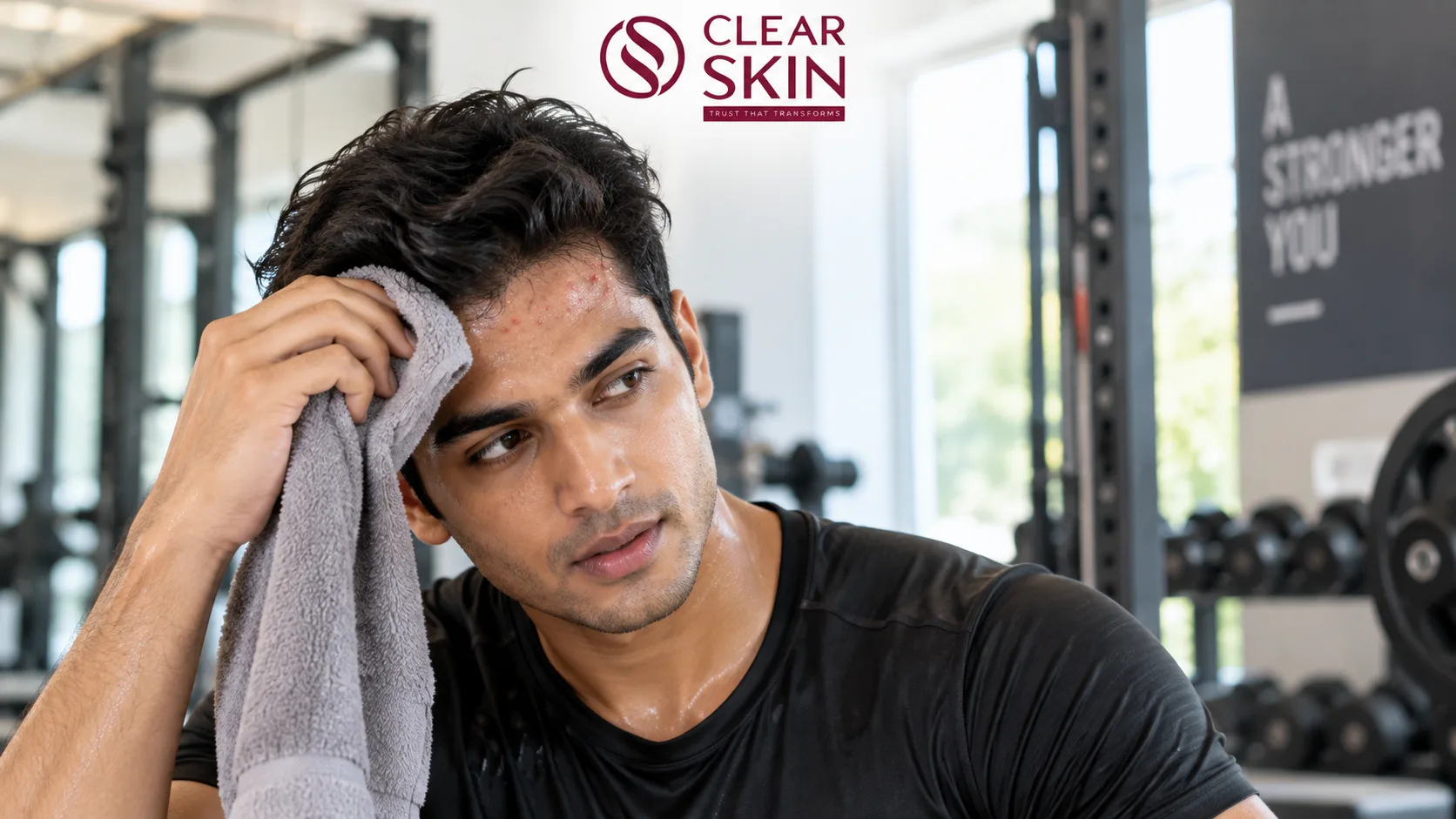
Gym acne, often called acne mechanica, IS A form of breakout caused by heat, sweat, and friction against the skin during exercise. It shows up where equipment, tight clothing, or trapped sweat press against the skin, such as the forehead under a headband, the back under a bag, or the chin under a chinstrap. It is common, preventable, and not a reason to stop working out.
For people in Pune, the city’s heat and humidity add to the problem, since sweat sits on the skin longer and mixes with oil and friction. This guide explains what causes gym acne, where it appears, and the routine Dr. Dhanraj Chavan recommends to prevent it.
Table Of Content
- Key Takeaways
- Key Facts About Gym and Sweat Acne
- What Causes Gym Acne?
- Where Gym Acne Shows Up?
- Why Pune’s Climate Makes It Worse?
- Your Post-Workout Skincare Routine
- Treating Gym Acne That Has Already Appeared
- Gym Habits That Prevent Breakouts
- When to See a Dermatologist?
- As a Verified By
- Frequently Asked Questions
- Conclusion
Key Takeaways
- Gym acne is acne mechanica, triggered by heat, sweat, friction, and pressure during exercise.
- It appears where gear or clothing traps sweat, such as the forehead, back, chest, and jawline.
- Sweat itself does not cause acne, but leaving it on the skin lets oil, bacteria, and dead cells clog pores.
- Pune’s humidity makes gym acne worse by keeping sweat on the skin for longer.
- Showering and cleansing within a short window after a workout is the single most effective prevention step.
- Clean, breathable clothing and wiped-down equipment reduce friction and bacterial load.
- Persistent or painful breakouts should be assessed by a dermatologist.
Key Facts About Gym and Sweat Acne
| Attribute | Detail |
|---|---|
| Medical name | Acne mechanica |
| Main triggers | Heat, sweat, friction, pressure, occlusion |
| Common sites | Forehead, back, chest, shoulders, jawline, chin |
| Worsened by | Humidity, tight synthetic clothing, unwashed gear |
| Key prevention window | Cleanse or shower soon after exercise |
| Not caused by | Sweat alone, or by exercise itself |
| Skin most affected | Oily and acne-prone skin, all skin tones |
| When to see a doctor | Painful, cystic, or persistent breakouts |
What Causes Gym Acne?
Gym acne is driven by a mix of heat, sweat, friction, and pressure, which is why it has the medical name acne mechanica. During exercise the skin heats up and produces more sweat and oil. When that mixture is trapped against the skin by clothing or gear, it softens the surface and pushes oil, dead skin cells, and bacteria into the pores.
Sweat by itself does not cause acne. The problem starts when sweat is left to sit, because it combines with oil and traps the debris that blocks pores. Add friction from a moving strap or tight fabric and the follicle wall becomes irritated, which tips a blocked pore into an inflamed breakout.
This is different from hormonal or dietary acne, which start from inside the body. Gym acne is mechanical and external, so the fixes are mostly about managing sweat, friction, and hygiene around your workout rather than changing your diet.
Skin type also plays a part. Oily and acne-prone skin clogs more easily, so the same workout that leaves one person clear can trigger breakouts in another. Heavy sunscreens, thick moisturisers, or makeup worn to the gym add to the load, because they combine with sweat to block pores more readily than clean skin would.

Where Gym Acne Shows Up?
Gym acne appears wherever sweat and pressure concentrate. On the face, the forehead is a common site because of headbands, caps, and helmet straps, and the jawline and chin suffer under chinstraps and phone contact. Wiping the face repeatedly with a shared towel also spreads bacteria.
On the body, the back and shoulders are frequent trouble spots, often called bacne, driven by backpacks, weight benches, and sweat-soaked shirts. The chest is affected for the same reasons. Managing shoulder and body acne follows the same principles as facial gym acne, with extra attention to breathable fabric and quick showering.
Because these areas are under constant friction during a session, they need the most care afterwards. Leaving a damp, sweaty shirt on after training is one of the most common causes of stubborn back breakouts.
Why Pune’s Climate Makes It Worse?
Pune’s warm and humid stretches, especially through the monsoon and summer, keep sweat on the skin far longer than a dry climate would. Slower evaporation means the sweat, oil, and bacteria mixture stays in contact with the pores for an extended period, which raises the chance of a blockage.
High humidity also encourages people to train in heavier, sweat-soaked clothing that clings to the skin. For anyone already prone to acne, this combination of heat, moisture, and friction is a reliable trigger. The fix is not to avoid exercise, but to shorten the time sweat sits on the skin and to reduce friction where you can.
Your Post-Workout Skincare Routine
To recap so far: gym acne is acne mechanica, caused by trapped sweat, friction, and heat, and Pune’s humidity makes it more likely. The most important defence is a simple routine built around the short window after your workout, when quick action prevents most breakouts.
The first step is to cleanse as soon as possible after training. A gentle, non-comedogenic face wash removes the sweat and oil before they settle into pores. If a full shower is not possible right away, a fragrance-free cleansing wipe on the affected areas is a reasonable stopgap until you can wash properly.
The second step is to shower and change out of sweaty clothes quickly, which protects the back, chest, and shoulders. After cleansing, apply a light, oil-free moisturiser to keep the barrier healthy, since over-drying the skin can trigger more oil. A good skincare routine for oily, acne-prone skin supports this, and a well-chosen serum for acne-prone skin can help if breakouts are frequent.
For the body, a wash containing salicylic acid can help sweat-prone areas like the back and chest, since it clears pores that friction tends to block. Choose products labelled non-comedogenic, which means they are formulated not to clog pores, and keep the overall routine short so the skin is not overloaded.
Avoid scrubbing hard or using harsh exfoliants after a workout, because the skin is already irritated from friction. Gentle is better, and consistency matters more than intensity.
Treating Gym Acne That Has Already Appeared
If breakouts have already formed, a few proven ingredients help alongside good hygiene. A cleanser or body wash with salicylic acid clears blocked pores and suits sweat-prone areas. Benzoyl peroxide reduces the bacteria involved in inflamed breakouts and works well as a short-contact wash that you rinse off after a minute.
Introduce active ingredients one at a time, because using several at once on skin already irritated by friction can worsen redness. Give any routine four to six weeks before judging it, since skin turnover takes time to show results. If the breakouts are deep, painful, or leaving marks, stop experimenting and see a dermatologist rather than layering on more products.
Gym Habits That Prevent Breakouts
Beyond skincare, a few gym habits make a real difference. Wear clean, breathable, loose clothing so sweat can evaporate and friction is reduced, and avoid re-wearing sweaty gym clothes. Wipe down shared equipment before use, since machines and mats carry oil and bacteria that transfer to the skin.
Keep your hands off your face during a session, as touching spreads bacteria from equipment straight to your pores. Use a clean towel that is yours alone, and blot rather than rub sweat away. Tie long hair back so hair products and oil do not sit on the forehead, and be aware that sports equipment such as helmets and straps can cause acne through constant pressure.
If you wear makeup, remove it before training, because the combination of makeup, sweat, and heat is a strong pore-clogging mix. These small habits, done consistently, prevent most gym acne before it starts.
When to See a Dermatologist?
Most gym acne settles within a few weeks of a good routine, but some cases need medical help and should not be left to run their course. If breakouts are painful, cystic, spreading, or leaving dark marks after acne, a dermatologist assessment is the right step. Persistent acne that does not respond to hygiene changes may need prescription treatment.
At Clear Skin Clinic, Dr. Dhanraj Chavan assesses the type and severity of the acne before advising a plan, which may include topical treatment or in-clinic options such as a chemical peel. Getting help early matters, because breakouts that are squeezed or left untreated are the ones most likely to leave lasting marks on Indian skin. For ongoing or severe cases, the full acne treatment pathway addresses the breakouts and prevents scarring.
As a Verified By
- The American Academy of Dermatology confirms that friction, pressure, and sweat can trigger acne, and that leaving sweat on the skin worsens breakouts.
- DermNet describes acne mechanica as acne caused by heat, occlusion, and repetitive friction against the skin.
- A clinical review of acne and its external triggers supports the role of mechanical and environmental factors in acne flares.
- Further evidence on acne pathogenesis and aggravating factors documents how sweat, oil, and occlusion combine to block pores.
- The American Academy of Dermatology guidance on face washing supports gentle cleansing after sweating as a core prevention step.
Frequently Asked Questions
Does sweating cause acne?
Sweat itself does not cause acne, but leaving it on the skin does contribute to breakouts. When sweat sits on the skin it mixes with oil, dead cells, and bacteria, and friction from clothing or gear then pushes that mixture into the pores. Cleansing soon after a workout removes the sweat before it can clog pores.
What is gym acne or acne mechanica?
Gym acne, known medically as acne mechanica, is a breakout caused by heat, sweat, friction, and pressure against the skin during exercise. It appears where equipment or tight clothing traps sweat, such as the forehead, back, and jawline. It is mechanical and external, so it responds well to hygiene and clothing changes rather than diet.
How do I prevent breakouts after working out?
The most effective step is to cleanse your face and shower soon after exercise, before sweat and oil settle into pores. Wear clean, breathable clothing, wipe down shared equipment, keep your hands off your face, and remove makeup before training. Applying a light oil-free moisturiser afterwards keeps the skin barrier healthy without adding oil.
Why do I get more gym acne in Pune’s weather?
Pune’s heat and humidity keep sweat on the skin for longer because it evaporates slowly, so oil, sweat, and bacteria stay in contact with your pores. Humid conditions also lead to heavier, sweat-soaked clothing that clings and creates friction. Shortening the time sweat sits on the skin is the key defence in a humid climate.
Should I wash my face immediately after the gym?
Yes, cleansing soon after a workout is one of the best ways to prevent gym acne. A gentle, non-comedogenic face wash removes sweat and oil before they block pores. If you cannot wash straight away, a fragrance-free cleansing wipe is a reasonable stopgap, but avoid scrubbing hard, since the skin is already irritated from friction.
When should I see a dermatologist for gym acne?
You should see a dermatologist if your breakouts are painful, cystic, spreading, persistent, or leaving dark marks. These signs suggest the acne needs more than hygiene changes and may require prescription treatment. At Clear Skin Clinic, Dr. Dhanraj Chavan assesses the type and severity before advising a plan to clear the acne and prevent scarring.
Do You Know?
Roughly 250 Patients Are Treated
Everyday By These Dermatologists
(You are one click away from flawless skin)
Meet Our Dermatologist!





Conclusion
Gym acne is a common, preventable form of acne mechanica caused by heat, sweat, friction, and pressure, and Pune’s humidity makes it more likely. You do not need to stop exercising. The answer is to cleanse and shower soon after training, wear clean and breathable clothing, keep your gear and your hands clean, and treat the skin gently and consistently afterwards.
If breakouts persist despite these steps, or if they are painful or leaving marks, an assessment with Dr. Dhanraj Chavan can set the right plan for your skin. Book a consultation at Clear Skin Clinic, Pune. All internal links verified.
Further Reading
Best Treatments for Back Acne and Body Scars
Struggling with back acne and body scars? Learn about effective home remedies and professional treatments to achieve clear, blemish-free skin.
Melasma Treatment Reviews in Pune | Clear Skin
Real Clear Skin Pune patient results for melasma treatment – see before and after outcomes after laser and chemical peel, and what to expect.
Best Treatment for Pigmentation on Face
Discover top treatments for pigmentation on the face. Get clear, even-toned skin with dermatologist-recommended pigmentation solutions in Pune.
Skin Treatments for Anti-Aging
Discover the best skin treatments for anti-ageing to reduce wrinkles, fine lines, and achieve glowing skin. Explore non-surgical options and expert tips for youthful skin.
Have thoughts? Please let us know
We are committed not only to treating you, but also educating you.