
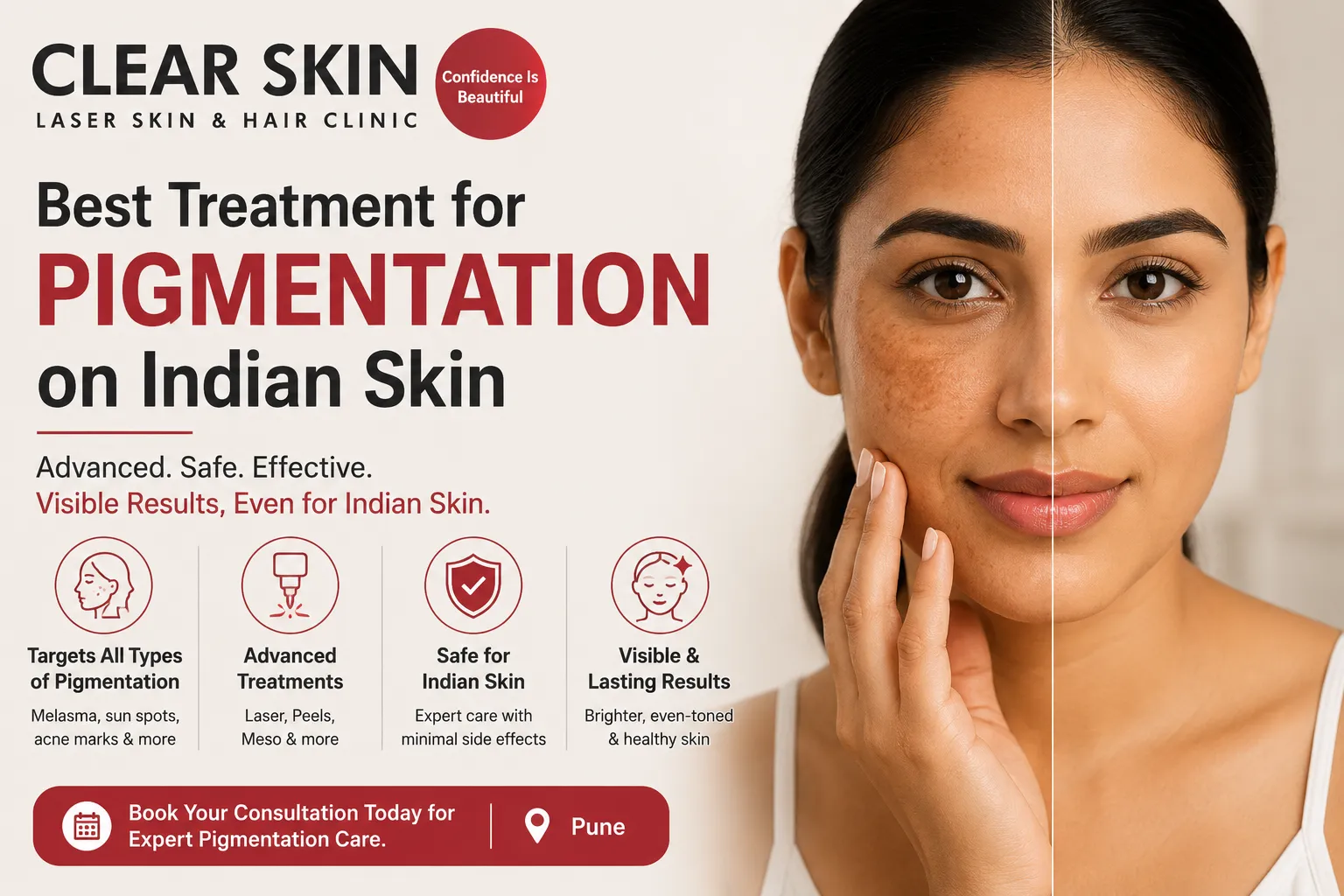
Best Treatment for Pigmentation on Indian Skin

Written by Clear Skin Content Team | Medically Reviewed by Dr. Dhanraj Chavan on June 29, 2026
Medical Disclaimer: This article is for informational purposes only. Consult a qualified dermatologist for personalised medical advice.
Using the wrong pigmentation treatment can waste months of time and money. Understanding your pigmentation type is the first step toward better results.
Hyperpigmentation is one of the most common and most frustrating skin concerns among Indian patients. It shows up in many forms: dark spots from past acne breakouts, the uneven brown patches of melasma across the cheeks and forehead, sun-induced tanning that deepens over years, or freckles that intensify through summer months. What unites all of them is a shared driver: excess melanin production in the skin.
What separates them critically is the depth, cause, and mechanism of that excess melanin. And that difference determines everything about how each type should be treated. Using the wrong treatment for your specific pigmentation type is the single most common reason patients in India cycle through treatment after treatment without the results they’re looking for.
This guide ranks the most effective pigmentation treatments available in 2026 for Indian skin, explains how to match treatment to your pigmentation type, and outlines why combining modalities in the right sequence consistently outperforms any single treatment used in isolation.
Table Of Content
- The First Step Nobody Takes: Identifying Your Pigmentation Type
- The Most Effective Pigmentation Treatments for Indian Skin in 2026
- How to Sequence These Treatments Correctly?
- FAQs
- Conclusion
The First Step Nobody Takes: Identifying Your Pigmentation Type
identified. Skipping this step jumping directly to a laser or peel without diagnosis is what leads to incomplete results, unnecessary expense, and occasionally, worsened pigmentation.
Post-Inflammatory Hyperpigmentation (PIH)
The dark marks left behind after acne lesions, injuries, or any inflammatory event heal. Sits in the epidermis. Responds well to chemical peels, topical brighteners, and low-fluence laser toning. Common in Indian skin because melanocytes in Fitzpatrick IV–VI skin are more easily triggered by inflammation.
Melasma
Symmetrical brown patches on the cheeks, forehead, and upper lip, driven by a combination of hormonal influence (estrogen and progesterone) and UV exposure. Can sit at epidermal depth, dermal depth, or both. The hormonal driver makes it chronic and recurrence-prone unlike PIH, which resolves when the inflammatory trigger is removed. Requires a layered, conservative protocol and long-term maintenance.
Solar Lentigines and Sun Damage
Discrete dark spots from cumulative UV exposure. Sit in the epidermis. Respond reliably to Q-switch or Pico laser, light chemical peels, and consistent SPF. Generally the most straightforward pigmentation type to treat.
Dermal Pigmentation
Pigment sitting in the dermis rather than the epidermis harder to treat because surface exfoliation and shallow laser passes don’t reach it. The Pico laser’s photoacoustic mechanism reaches deeper than Q-switch and is the preferred option for suspected dermal pigmentation.
The Most Effective Pigmentation Treatments for Indian Skin in 2026
1. Topical Combination Therapy The Non-Negotiable Starting Point
No in-clinic treatment for pigmentation on Indian skin is optimally effective without a concurrent topical protocol. Tranexamic acid at 2–5% inhibits the melanocyte-stimulating pathway directly blocking pigment production rather than just clearing it after the fact. Niacinamide at 4–10% reduces melanosome transfer and has anti-inflammatory properties that reduce PIH risk from concurrent treatments. Azelaic acid at 10–20% inhibits tyrosinase (the enzyme driving melanin synthesis) and is well-tolerated across all Indian skin tones. Retinoids accelerate cell turnover, helping clear epidermal pigment faster and improving the penetration of brightening actives.
This combination, applied consistently with SPF 50+, clears a significant proportion of epidermal PIH and mild melasma within 12–16 weeks. Skipping topicals and going directly to in-clinic procedures without home maintenance consistently produces results that are slower to appear and faster to relapse.
2. Chemical Peels Best for PIH and Surface Pigmentation
For epidermal PIH, sun damage, and mild-to-moderate melasma, a structured chemical peel course accelerates the topical protocol significantly. Salicylic-mandelic combinations are the safest starting peel for Indian skin mandelic acid’s large molecular structure and slow penetration reduce PIH risk substantially compared to pure glycolic peels at equivalent treatment depths. A course of 6–8 peels spaced 2–3 weeks apart, combined with rigorous SPF and home brightening agents, delivers consistent PIH clearance and general skin tone evening.
For deeper or more resistant pigmentation, carefully applied TCA peels under dermatologist supervision offer a step-up option but concentration selection and interval management are critical on Fitzpatrick IV–VI skin.
3. Q-Switched Nd:YAG Laser Standard for Epidermal Pigmentation Brightening
Q-switched Nd:YAG at 1064nm is the workhorse of pigmentation treatment for Indian skin. The 1064nm wavelength targets melanin with lower thermal damage to surrounding tissue than shorter wavelengths, making it the safe default for darker tones. In toning mode low fluence, large spot, multiple passes it progressively reduces overall melanin density and produces cumulative brightening across 6–8 sessions. Effective for solar lentigines, diffuse PIH, and epidermal melasma as part of a conservative toning protocol.
The critical limitation: for melasma specifically, high-fluence Q-switch applications can stimulate the hyperreactive melanocytes driving the condition and trigger a rebound flare. Conservative, low-fluence toning never aggressive spot treatment is the appropriate melasma protocol.
4. Pico Laser Best for Stubborn and Mixed Pigmentation
Pico lasers deliver energy in picoseconds rather than nanoseconds, shifting the dominant mechanism from photothermal (heat-based) to photoacoustic (pressure wave-based). The result is more complete pigment fragmentation with significantly less thermal damage to surrounding tissue. For Indian skin, lower thermal damage directly translates to lower PIH risk. For mixed epidermal-dermal pigmentation and melasma that has partially responded to Q-switch treatment and plateaued, Pico or advanced laser treatment offers a clinically meaningful step-up particularly effective where surface exfoliation and Q-switch toning have reached their ceiling.
5. Tranexamic Acid Mesotherapy Targeted Melasma Management
Tranexamic acid delivered via intradermal mesotherapy reaches concentrations in the dermis that topical application cannot achieve. It directly blocks the UV-induced keratinocyte signalling that stimulates melanocytes the mechanism specifically driving melasma. Studies in Asian skin populations show meaningful melasma reduction with 8–12 week mesotherapy courses. Not a standalone solution, but a powerful addition to a layered melasma protocol.
“The biggest mistake we see with pigmentation treatment on Indian skin is using a single modality and expecting complete resolution. Melasma especially it has a hormonal component that is always in the background. We combine topical therapy, conservative laser toning, and periodic peels, and we’re very explicit with patients that SPF is not optional. The patients who do everything except the sunscreen consistently get inferior results regardless of what we do in the clinic.”
How to Sequence These Treatments Correctly?
Layering treatments in the wrong order reduces effectiveness and increases the risk of PIH.
The Correct Sequence for Indian Skin
Begin with topical combination therapy tranexamic acid, azelaic acid or niacinamide, retinoid alongside SPF 50+ for 8–12 weeks to establish a treated baseline. Add chemical peels once the skin has adapted to topical actives. Introduce Q-switch laser toning after 2–3 peels to target residual pigment. Escalate to Pico laser for stubborn, treatment-resistant, or mixed-depth pigmentation. Add tranexamic mesotherapy for melasma specifically if peel plus laser toning has partially responded but not fully resolved.
Jumping from zero home care to aggressive laser in session one consistently underperforms this staged approach. Each layer builds on the foundation the previous one establishes.
Melasma specifically requires a separate acknowledgment: it is a chronic condition. Even the best in-clinic treatment does not produce permanent results without ongoing maintenance and rigorous, lifelong sun protection. Clinics that promise permanent melasma resolution should be approached with justified skepticism. Explore more about managing melasma long-term to understand the realistic commitment involved.
Frequently Asked Questions (FAQs)
How long does it take to see results from acne treatment?
Visible improvement typically begins within 4–6 weeks of starting a structured topical protocol combined with in-clinic sessions. Full control of moderate acne usually takes 3–4 months. PIH from prior breakouts continues to improve beyond the active treatment phase. Cystic acne on oral isotretinoin generally shows meaningful improvement within 6–8 weeks of initiating the medication.
Can acne come back after treatment is complete?
Yes acne has both genetic and hormonal components that don’t disappear after treatment. A structured course reduces active breakouts significantly and prevents new scarring, but long-term maintenance with topical home care and periodic in-clinic sessions is what keeps skin stable over time. Clinics that don’t build a maintenance plan into the discussion are leaving out the most important part.
Is chemical peel safe for acne on Indian skin?
Yes, with correct acid selection. Salicylic-mandelic combination peels and mandelic acid peels are the safest starting options for Fitzpatrick IV–VI skin their lower irritation profiles significantly reduce PIH risk compared to pure glycolic peels at equivalent treatment depths. Concentration, number of layers, and interval between sessions are all calibrated to your skin tone.
What’s the difference between a dermatologist and a cosmetologist for acne treatment?
A dermatologist is a qualified physician with specific medical training in skin conditions. They can diagnose your acne type, prescribe oral and topical medications including isotretinoin, and manage complications. A cosmetologist is trained in cosmetic procedures but is not medically qualified to diagnose or prescribe. For moderate-to-severe or persistent acne especially where scarring is a risk a dermatologist is the appropriate provider.
Do I need to stop my current skincare before my first consultation?
Do not stop any prescribed medication before your appointment. Bring your full current product lineup cleanser, moisturizer, sunscreen, any actives to your first consultation. Many over-the-counter products contain ingredients that aggravate acne or interact with treatment acids. Your dermatologist will review these and tell you exactly what to continue, modify, or stop.
What causes acne to flare after starting treatment?
An initial purge is common and expected when starting topical retinoids or when beginning chemical peel sessions. Actives accelerate cell turnover and bring comedones to the surface before clearing them. This typically peaks at 2–4 weeks and resolves. True worsening new deep cystic lesions beyond the purge window is a signal to return for a protocol review, not a reason to stop treatment.
Do You Know?
Roughly 250 Patients Are Treated
Everyday By These Dermatologists
(You are one click away from flawless skin)
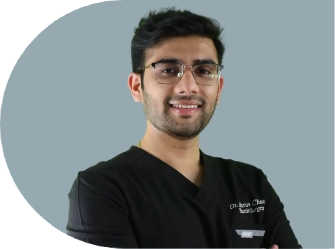
Meet Our Dermatologist!

Conclusion
Treating pigmentation successfully is not about choosing the newest laser or the strongest peel. It starts with identifying the exact type of pigmentation and selecting a treatment plan that matches your skin’s needs.
For Indian skin, a combination of medical skincare, chemical peels, laser treatments, and strict daily sun protection often delivers the most consistent and long-lasting results.
Whether you are dealing with acne marks, melasma, sunspots, or uneven skin tone, early diagnosis and a personalised treatment approach can make a significant difference. Instead of trying multiple products without knowing the underlying cause, consult an experienced dermatologist who can recommend the right sequence of treatments for safe, effective, and lasting improvement.
If you’re looking for expert pigmentation treatment in Pune, schedule a consultation at Clear Skin Clinic. Our dermatologists create customised treatment plans designed specifically for Indian skin, helping you achieve a clearer, healthier, and more even complexion with evidence-based care.
Further Reading
Profhilo vs Dermal Fillers: Which Is Better for Skin Hydration?
Profhilo and dermal fillers both use hyaluronic acid but work completely differently. This breakdown explains which one improves skin quality and which one restores volume.
Is HIFU Skin Tightening Worth the Cost in Pune?
HIFU skin tightening promises a non-surgical lift, but is it worth the cost? A clear breakdown of who it works for, realistic results, and what to expect for Indian skin
Dermal Fillers vs Botox in Pune: Cost, Results, and Which to Choose
Dermal fillers and Botox are often confused but treat completely different concerns.
Laser vs Chemical Peel for Sun Damage and Dark Spots: Which Is Better?
Laser and chemical peels both treat sun damage and dark spots, but through different mechanisms.
Have thoughts? Please let us know
We are committed not only to treating you, but also educating you.