
White Patches on Skin: Causes and Effective Treatments

Written by Clear Skin Content Team | Medically Reviewed by Dr. Dhanraj Chavan on July 25, 2026
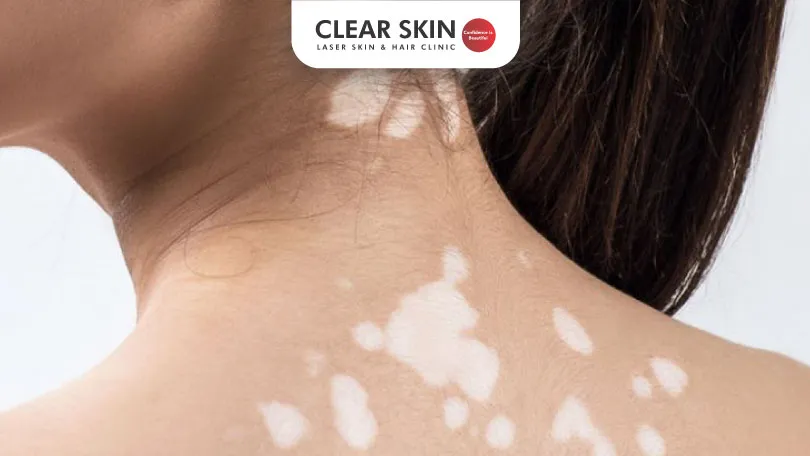
Lately, have you noticed small white dots on your skin? Ok, it could indicate a skin-related condition. But don’t let those dots scare you. Consult a dermatologist and know what is white dots on the skin, what’s causing them, and how to remove white dots on the skin.
White patches on the skin can develop at any age and may appear on the face, hands, arms, legs, or other parts of the body. While many people immediately associate these patches with vitiligo, several other conditions, including fungal infections, eczema, nutritional deficiencies, and post-inflammatory skin changes, can also cause loss of skin pigmentation. Identifying the underlying cause is important because each condition requires a different treatment approach.
In this article, we’ll discuss the most common causes of white patches on the skin, their symptoms, diagnosis, and available treatment options to help you understand when it’s time to consult a dermatologist.
Table Of Content
- What Are White Patches on Skin?
- Causes of White Patches on Skin
- A Dermatologist’s Honest Advice
- Consult Clear Skin for White Patches on Skin Treatment
- Conclusion
What Are White Patches on Skin?
White or pale patches on skin are the result of reduced or absent melanin in a specific area. Melanin is the pigment that gives skin, hair, and eyes their colour. When melanocytes (the cells that produce melanin) are destroyed, suppressed, or displaced, the skin in that area appears lighter or completely white relative to surrounding skin.
There are two clinical types:
- Hypopigmentation: Reduced melanin, the patch is paler than surrounding skin but not chalk-white. Causes include pityriasis alba, tinea versicolor, post-inflammatory changes, and pityriasis versicolor.
- Depigmentation: Complete absence of melanin, the patch is chalk-white, often with sharp edges. This is characteristic of vitiligo and chemical leukoderma.
This distinction matters because completely depigmented patches (especially if they are spreading) require more urgent evaluation than mildly hypopigmented patches in a child.
Causes of White Patches on the Skin
1. Vitiligo
Vitiligo is one of the most common causes of white patches. It occurs when pigment-producing cells (melanocytes) are destroyed, usually due to an autoimmune condition.
Symptoms:
- Well-defined milky-white patches
- Usually symmetrical
- Can affect the face, hands, feet, lips, and around the eyes
- Hair within the patches may also turn white
2. Fungal Infection (Tinea Versicolor)
A common fungal infection caused by an overgrowth of yeast on the skin.
Symptoms:
- Light or white patches with fine scaling
- Most common on the chest, back, neck, and shoulders
- Mild itching may occur
- More noticeable after sun exposure
3. Pityriasis Alba
A mild skin condition commonly seen in children and teenagers, often associated with dry skin or eczema.
Symptoms:
- Light-colored patches on the face
- Slight dryness or fine scaling
- Usually fades gradually over several months
4. Post-Inflammatory Hypopigmentation
After skin inflammation or injury, the affected area may temporarily lose pigment.
Common triggers:
- Eczema
- Psoriasis
- Burns
- Acne
- Skin injuries
- Cosmetic procedures
5. Nutritional Deficiencies
Although less common, deficiencies in certain nutrients may contribute to skin pigment changes.
Possible deficiencies include:
- Vitamin B12
- Copper
- Zinc
- Vitamin D (indirectly associated with some skin conditions)
6. Idiopathic Guttate Hypomelanosis
Small white spots that develop with age and prolonged sun exposure.
Features:
- Tiny round white spots
- Common on arms and legs
- Usually affects adults over 40
- Harmless and non-contagious
7. Autoimmune Disorders
Certain autoimmune diseases may affect skin pigmentation, either directly or through associated conditions like vitiligo.
8. Congenital Skin Disorders
Some people are born with inherited pigment disorders that cause white patches from birth or early childhood.
Less Common Causes
- Chemical exposure causing pigment loss
- Lichen sclerosus
- Leprosy (rare in most settings, but still occurs in some regions)
- Certain medications
- Skin trauma
A Dermatologist’s Honest Advice
White patches are common and often manageable. The biggest mistake people make is either ignoring them completely or assuming the worst immediately.
Instead of self-diagnosing, it is better to get clarity. Many patients who visit Clear Skin Clinic Pune are relieved to learn that their condition is treatable and not serious.
The right diagnosis makes all the difference.
Consult Clear Skin for White Patches on Skin Treatment
If you’ve been confronting large white patches or small white dots on the skin, visit Clear Skin. We are a team of dermatologists with over three decades of experience treating skin problems and over one lakh patients.
Our dermatologists provide personalized treatment and conduct a comprehensive diagnosis to offer various treatments. Our Skin treatment options include laser, UV therapy, medications, surgery, etc. We determine a particular treatment course based on the diagnosis and the patient’s condition.
Do You Know?
Roughly 250 Patients Are Treated
Everyday By These Dermatologists
(You are one click away from flawless skin)
Meet Our Dermatologist!





Conclusion
Not all white patches mean vitiligo. Most are caused by common and treatable conditions like fungal infection or mild skin inflammation.
If you notice a white patch, observe it carefully. If it changes, spreads, or does not improve, a Skin Specialist evaluation is the safest next step.
At Clear Skin Clinic, we assess the patch carefully, identify the exact cause, and create a personalised treatment plan suited to your skin type and concern.
Further Reading
Melasma Treatment Reviews in Pune | Clear Skin
Real Clear Skin Pune patient results for melasma treatment – see before and after outcomes after laser and chemical peel, and what to expect.
Best Treatment for Pigmentation on Face
Discover top treatments for pigmentation on the face. Get clear, even-toned skin with dermatologist-recommended pigmentation solutions in Pune.
Skin Treatments for Anti-Aging
Discover the best skin treatments for anti-ageing to reduce wrinkles, fine lines, and achieve glowing skin. Explore non-surgical options and expert tips for youthful skin.
Laser Hair Removal Before and After Results – Things to Know
What does laser hair removal look like after session 1, 3, and 6? See the session-by-session timeline, body area guide, and book at Clear Skin Pune.
Have thoughts? Please let us know
We are committed not only to treating you, but also educating you.