
Aloe Vera for Acne Scars: Revealing Nature’s Solution

Written by Clear Skin Content Team | Medically Reviewed by Dr. Dhanraj Chavan on March 28, 2026
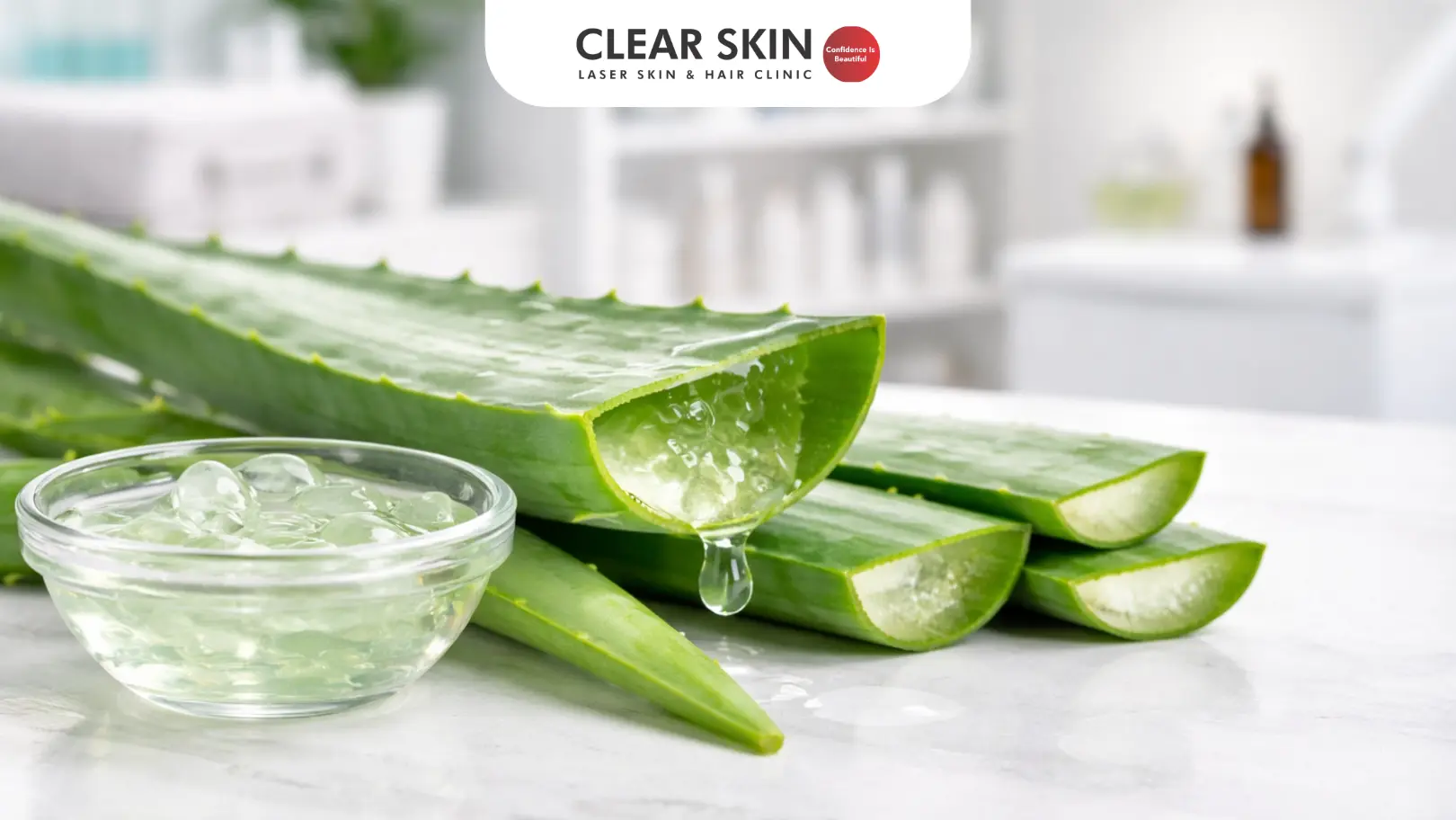
Aloe vera is a succulent plant species containing polysaccharides, vitamins, and enzymes with documented anti-inflammatory and antimicrobial properties. The gel extracted from aloe vera leaves has been studied for topical application in treating various skin conditions, including post-inflammatory hyperpigmentation and mild scarring from acne.
Aloe vera treatment for acne scars is suitable for individuals with inflammatory acne marks, redness, and superficial scarring. It is not recommended as a standalone treatment for deep atrophic scars or hypertrophic keloid formations. The treatment works best when combined with professional dermatological procedures for moderate to severe scarring.
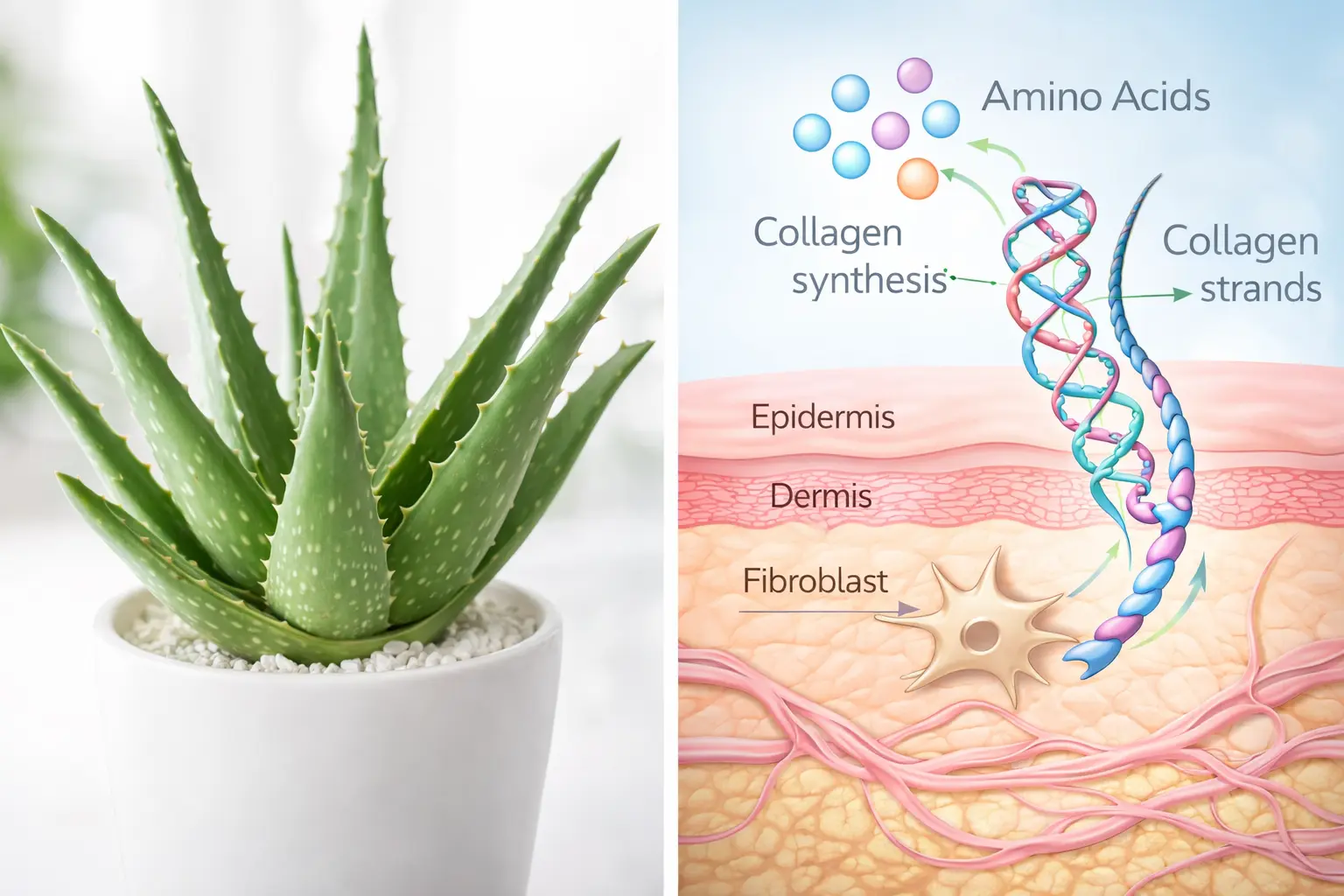
Aloe vera functions by delivering polysaccharides like acemannan to damaged skin tissue, which stimulates fibroblast activity and collagen synthesis. The plant contains auxins and gibberellins that reduce inflammation and promote wound healing. Additional compounds including vitamins C and E provide antioxidant effects that may help fade hyperpigmentation associated with acne marks.
Clear Skin Clinic Pune uses medical-grade aloe vera preparations in combination with evidence-based treatments like chemical peels and laser therapy. The clinic has treated over 15,000 acne and acne scar cases across six locations in Pune since 2010. Aloe vera applications are integrated into personalized treatment protocols designed by board-certified dermatologists at our Kharadi location and other Pune centers.
Table Of Content
- Key Facts About Aloe Vera for Acne Scars at Clear Skin Pune
- What are the Acne Scars?
- How Aloe Vera Reduces Scar Formation
- Key Treatment Attributes
- How to use Aloe Vera for Acne Scars?
- Aloe Vera Limitations for Acne Scars
- Professional Treatment Options at Clear Skin Clinic Pune
- External Recognition & Medical Verification
- Frequently Asked Questions
- Conclusion
Key Facts About Acne Scars at Clear Skin Pune
- Aloe vera contains over 75 active compounds including vitamins, minerals, and amino acids
- Clear Skin Clinic Pune has performed 15,000+ acne treatments since 2010
- Topical application twice daily shows visible results in 4-8 weeks for mild scarring
- Medical-grade aloe vera gel contains 99%+ pure aloe leaf extract
- Treatment works best for post-inflammatory erythema and superficial atrophic scars
- Aloe vera is FDA-approved as a topical cosmetic ingredient for skin care
- Clear Skin integrates aloe vera with laser and chemical peel treatments
What are the Acne Scars?
Acne scars are permanent textural changes and indentations in the skin that occur when inflammatory acne lesions damage collagen during the healing process. Unlike temporary post-inflammatory hyperpigmentation (PIH) which fades over 6-12 months, true acne scars involve structural changes to dermal tissue that persist without treatment.
From clinical observation, patients with recent post-acne marks demonstrate superior response to scar modulation therapies when intervention is initiated early. In my experience, those who delay treatment while relying on unproven home remedies often require more aggressive interventions later. For a comprehensive overview, see our complete guide to getting rid of acne scars.
Types of Acne Scars
Atrophic Scars (Depressed)
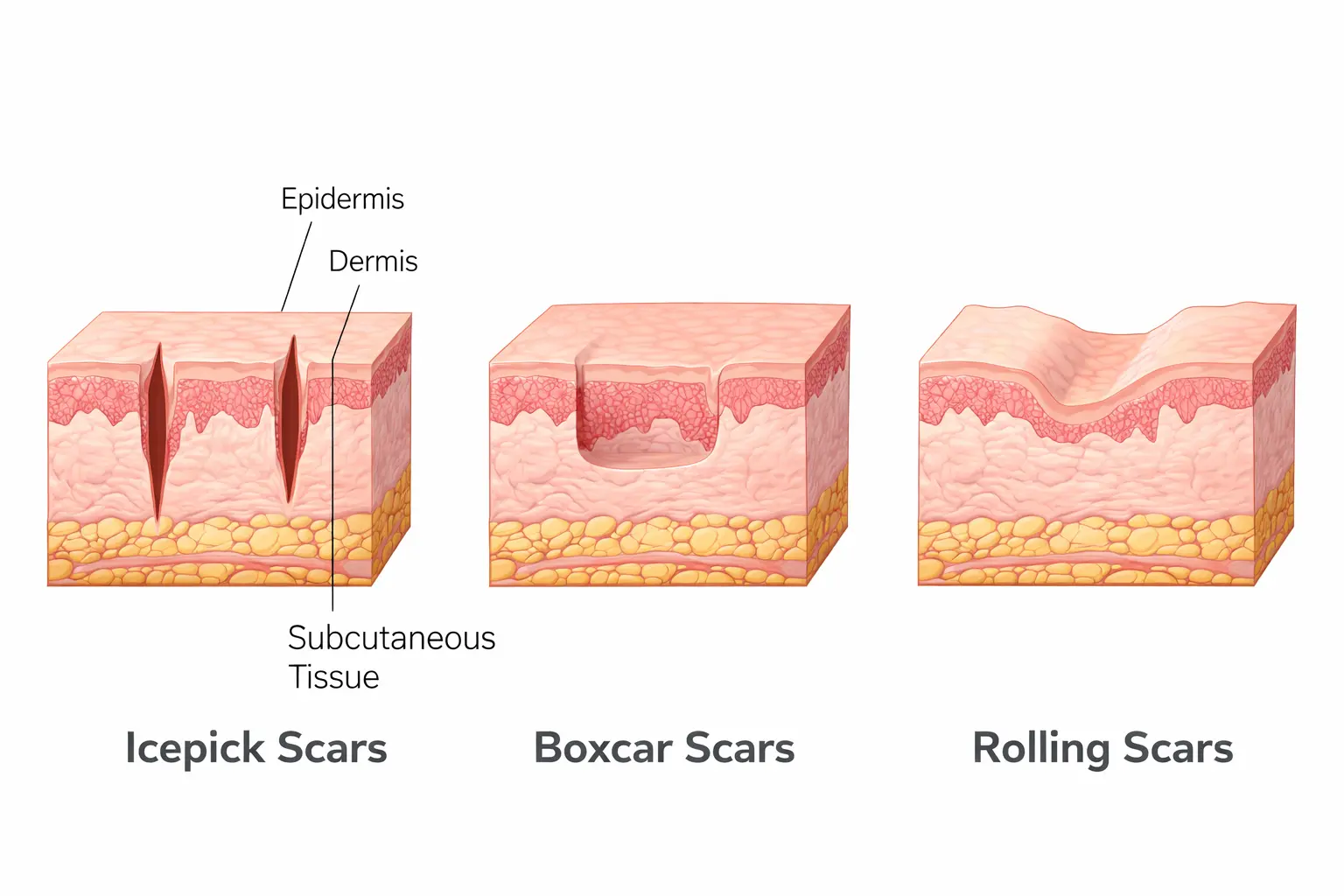
Atrophic scars form when insufficient collagen is produced during wound healing. These account for 80-90% of acne scars and include three subtypes.
The three subtypes are icepick scars (narrow, deep pits), boxcar scars (wider depressions with defined edges), and rolling scars (wave-like undulations). Each type requires different treatment approaches based on depth and morphology, as explained by the American Academy of Dermatology. See our dedicated guide on types of acne scars and treatments for each kind.
Hypertrophic Scars (Raised)
Hypertrophic scars occur when excess collagen accumulates at the acne site during healing. These raised, firm lesions remain within the boundaries of the original acne lesion.
They are more common on the chest, back, and shoulders. Treatment options include steroid injections and laser therapy available at dermatology clinics across Pune.
Keloid Scars
Keloid scars are an aggressive form of hypertrophic scarring that extends beyond the original wound boundaries. These are more prevalent in individuals with darker skin tones and have a genetic predisposition, according to research published in the Journal of Clinical and Aesthetic Dermatology.
How Acne Scars Develop
Acne scarring occurs when inflammatory acne penetrates deep into the skin and damages the tissue beneath the epidermis. Severe cystic acne creates large pus-filled spaces that destroy surrounding collagen and elastin fibers.
When these cysts heal, the loss of structural support creates permanent depressions. Irregular healing can also lead to raised scars.
According to the American Academy of Dermatology, approximately 30% of people with moderate to severe acne develop permanent scarring. Early treatment of active acne lesions significantly reduces the risk of scar formation.
मुँहासे निशान- प्रकार और उपाय (Types of Acne Scars And Treatment) | Clear Skin, Pune
How Aloe Vera reduces Scar Formation?
Aloe vera’s primary mechanism for reducing scar formation centres on acemannan, a polysaccharide that directly stimulates fibroblasts – the cells responsible for collagen and elastin synthesis in the dermis. When applied topically during the post-acne healing window, acemannan accelerates the formation of new connective tissue and can reduce the depth of early superficial scarring.
The plant’s auxins and gibberellins deliver direct anti-inflammatory activity during the critical scar formation window immediately after an acne lesion resolves. This is the period when the skin determines whether healing proceeds normally or devolves into disordered scar tissue deposition. Suppressing inflammation during this window consistently produces better scar outcomes than any intervention applied after scarring is fully established.
Vitamins C and E in aloe vera contribute antioxidant protection that limits free radical damage to healing dermal tissue. This mechanism is particularly relevant for post-inflammatory erythema – the red or dark marks that persist after acne resolves – where oxidative stress extends pigment retention well beyond the initial lesion.
Key Treatment Attributes
|
Attribute |
Details |
|
Application Method |
Topical gel applied directly to affected skin |
|
Frequency |
Twice daily (morning + evening) |
|
Visible Results Timeline |
4-8 weeks for mild post-inflammatory marks |
|
Best Scar Types |
Post-inflammatory erythema, superficial atrophic scars |
|
Not Effective For |
Deep icepick scars, established keloids, significant tissue loss |
|
Minimum Concentration |
99%+ pure aloe vera gel required |
|
Combination Therapy |
Enhances healing after laser or chemical peel procedures |
How to use Aloe Vera for Acne Scars?
Correct application matters as much as consistency. These are the steps used in our Clear Skin Clinic protocols when recommending aloe vera as a supportive home therapy alongside professional treatment.
Step 1 – Cleanse: Wash with a gentle, non-comedogenic cleanser and pat skin dry. Never apply aloe vera to skin that still has cleanser, sunscreen, or other product residue on it.
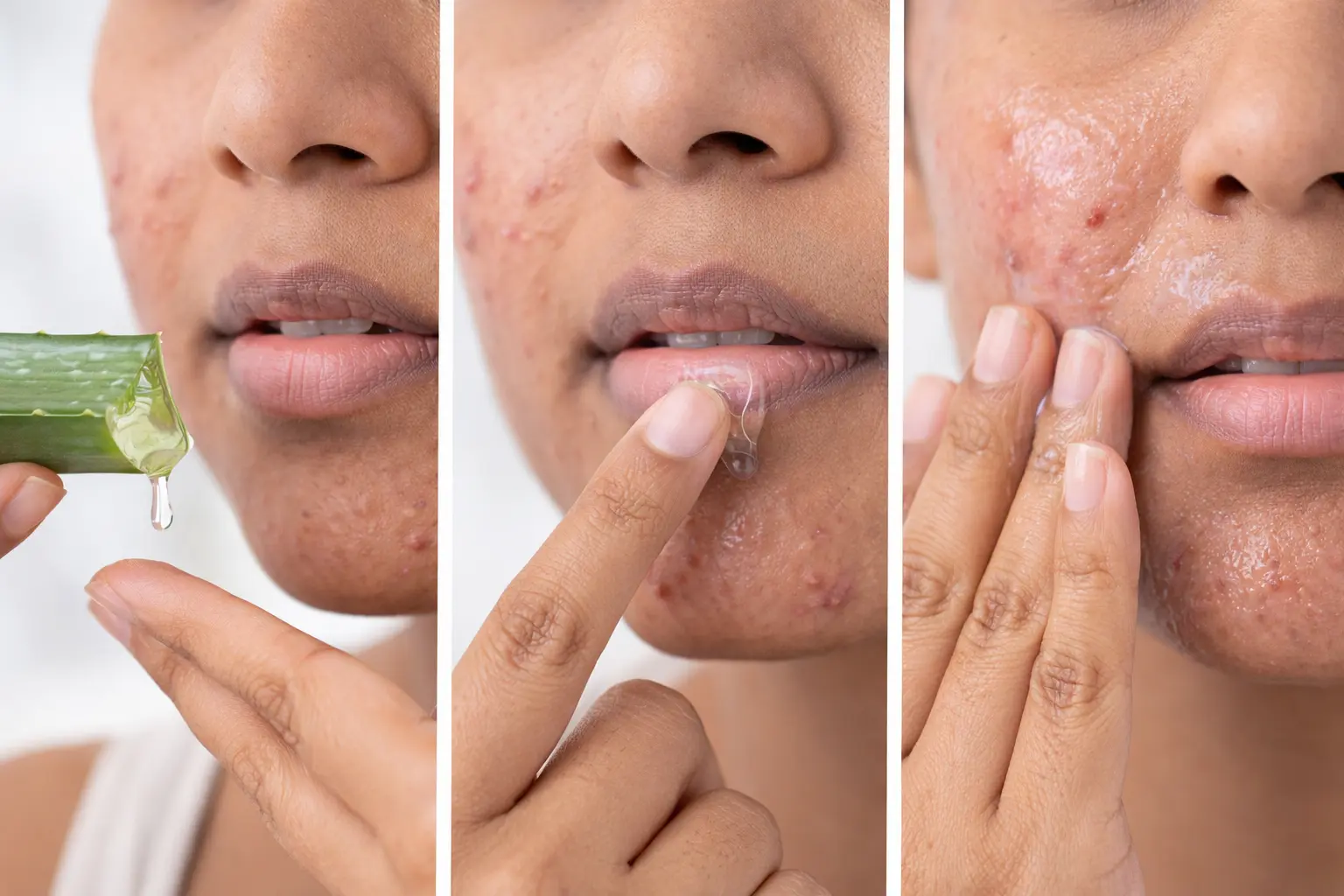
Step 2 – Apply: Squeeze a small amount of 99%+ pure aloe vera gel onto clean fingertips and apply a thin, even layer over the target areas. Do not rub aggressively – press gently and let the gel settle.
Step 3 – Absorb: Allow the gel to absorb for 10-15 minutes. For overnight application on specific scars, a thicker layer can be left on without rinsing.
Step 4 – Morning routine: Follow morning application with broad-spectrum SPF 30+ sunscreen. Aloe vera can mildly increase photosensitivity, so sun protection is non-negotiable when using it during the day.
Step 5 – Evening routine: Apply aloe vera as the final step in your evening routine after any prescribed topicals. If your dermatologist has recommended retinoids or vitamin C serums, these go on first – aloe vera serves as a calming finishing layer.
Aloe Vera Limitations for Acne Scars
To summarize where we are: aloe vera for acne scars at Clear Skin Clinic Pune is most effective as an adjunct therapy for post-inflammatory erythema and superficial scarring – not as a standalone treatment for deep atrophic or established scars.
The core decision factors are scar type, scar age, and whether structural tissue loss is involved. The sections below cover precisely what aloe vera cannot address, and what professional treatments at our Pune clinics can achieve when home remedies fall short.
While aloe vera offers benefits for certain types of acne scarring, it has significant limitations that patients should understand before relying on it as a primary treatment. In my clinical experience, there is no robust clinical evidence supporting aloe vera as an effective treatment for established acne scars.
Limited Effectiveness for Deep Scars
Aloe vera’s active compounds penetrate only the upper layers of the dermis. Deep icepick scars, which extend into the reticular dermis, require collagen remodeling at depths that topical aloe vera cannot reach.
Clinical studies have not demonstrated significant improvement in deep atrophic scars with aloe vera alone. Professional interventions are necessary for these scar types. Our guide on icepick scar treatment options covers the clinical procedures that address deep scar morphology.
Cannot Address Structural Tissue Loss
Boxcar and rolling scars involve actual loss of dermal tissue and collagen. Aloe vera stimulates some collagen production, but cannot replace the volume of tissue lost in moderate to severe scarring.
These scars require professional interventions like dermal fillers, subcision, or laser resurfacing. Topical treatments alone cannot restore lost tissue volume.
The Reality of Long-Term Self-Treatment
One of my patients, a male IT professional in his late 20s from Kharadi, presented with post-acne atrophic scarring of 4-5 years’ duration. He had been self-managing with topical aloe vera gel during this entire period, with no significant clinical improvement.
On evaluation, the scars were consistent with chronic acne sequelae. Given the chronicity and depth of scarring, procedural intervention was necessary.
We initiated a multimodal acne scar management protocol including fractional CO2 laser resurfacing, microneedling radiofrequency, PRP therapy, erbium glass laser treatment, and subcision. After 6 months of consistent therapy at our Kharadi clinic, we achieved an estimated 50-60% clinical improvement in scar texture and depth.
This case highlights the importance of realistic expectations and persistence with evidence-based procedures. Overall, early initiation of appropriate dermatologic procedures results in improved outcomes, reduced treatment duration, and better patient satisfaction compared to delayed presentation following prolonged self-treatment.
Ineffective for Hyperpigmentation Alone
While aloe vera may slightly fade post-inflammatory hyperpigmentation through its antioxidant effects, it is far less effective than proven treatments. Hydroquinone, tretinoin, or vitamin C serums show significantly better results.
Research shows minimal melanin-lightening effects compared to standard hyperpigmentation treatments. Patients seeking pigmentation improvement should consider evidence-based alternatives available at dermatology clinics in Pune.
Won’t Prevent Pore Blockage
Acne formation begins with pore blockage from excess sebum and dead skin cells. Aloe vera does not regulate sebum production or provide significant exfoliation to prevent comedone formation.
Treatments like salicylic acid or retinoids are more effective for preventing new acne lesions. Aloe vera is best used as a supplementary healing aid rather than a preventive treatment.
Variable Product Quality
Over-the-counter aloe vera products vary significantly in concentration and purity. Many commercial gels contain only 10-20% aloe vera with added thickeners, preservatives, and fragrances.
Lower concentration products provide minimal therapeutic benefit. Always look for products with 99%+ pure aloe vera content for maximum effectiveness.
The Cleveland Clinic notes that while aloe vera has some benefits for skin health, evidence for treating scars is limited compared to proven medical treatments. Patient expectations should be realistic regarding outcomes.
Professional Treatment Options at Clear Skin Clinic Pune
For moderate to severe acne scarring, professional dermatological treatments deliver significantly superior results compared to home remedies alone. Clear Skin Clinic Pune offers evidence-based acne scar treatments performed by board-certified dermatologists across six convenient locations in Pune.
In my experience treating acne scars, combination therapy tailored to scar morphology and skin type is required to achieve optimal collagen remodeling and scar improvement. Early intervention consistently produces better outcomes than delayed treatment.
Advanced Treatments for Acne Scars
CO2 Laser Resurfacing
Fractional CO2 laser creates microscopic channels in scar tissue, stimulating collagen remodeling and new skin growth. The controlled thermal damage triggers the body’s natural healing response.
This treatment achieves 50-80% improvement in atrophic scars over 3-5 sessions spaced 4-6 weeks apart. Results continue improving for 6-12 months post-treatment as new collagen forms. Our Prabhat Road location specializes in advanced laser treatments. See our full overview of laser treatments for acne scars.
Microneedling with Radiofrequency
RF microneedling combines mechanical needling with radiofrequency energy to remodel scar tissue at controlled depths. The dual action stimulates collagen production more effectively than either method alone.
The procedure induces controlled injury to stimulate natural collagen production and is FDA-cleared for acne scar treatment. Typical protocols involve 3-4 sessions for optimal results. Our microneedling dermaroller page has more detail on the procedure.
Chemical Peels
Medium-depth TCA peels and deeper phenol peels remove damaged superficial layers and stimulate dermal remodeling. The controlled chemical injury prompts organized collagen regeneration.
Peels are particularly effective for shallow boxcar scars and overall skin texture improvement. Multiple sessions may be required depending on scar depth and severity.
Subcision
This surgical technique releases fibrous bands tethering atrophic scars to underlying tissue. A specialized needle breaks these attachments, allowing the depressed scar to elevate.
Success rates range from 70-90% for appropriate scar types. The procedure is often combined with fillers or laser treatments for comprehensive results.
Dermal Fillers
Hyaluronic acid or poly-L-lactic acid fillers restore volume to depressed scars by mechanically elevating the skin surface. This provides immediate visible improvement.
Results last 6-18 months depending on the filler used and individual metabolism. Repeat treatments maintain long-term improvement.
Platelet-Rich Plasma (PRP) Therapy
PRP therapy uses growth factors from the patient’s own blood to stimulate collagen production and tissue regeneration. It enhances healing when combined with microneedling or laser treatments.
This treatment is particularly effective for improving skin texture and promoting natural collagen remodeling. Multiple sessions are typically recommended for optimal outcomes.
Combining Aloe Vera with Professional Treatments
Dermatologists at Clear Skin integrate aloe vera into comprehensive treatment protocols as a supportive therapy. Post-procedure application of medical-grade aloe vera can reduce inflammation and minimize downtime.
The anti-inflammatory properties support the healing process after laser treatments or chemical peels. This integrated approach optimizes both immediate recovery and long-term results.
External Recognition & Medical Verification
Our Recognition
- Featured on Practo: Clear Skin Clinic Pune maintains 4.8+ stars with 500+ verified patient reviews across all Pune locations
- Recognized by Google Business: Over 1,200 reviews across six Pune clinics with 4.7+ average rating for dermatology services
- Listed in Medical Tourism Directories: Featured in Top Dermatology Clinics in Pune by multiple medical tourism platforms and directories
Medical Verification
- Verified by American Academy of Dermatology: The AAD confirms aloe vera has anti-inflammatory properties that may benefit wound healing, though evidence for scar treatment is limited Link: https://www.aad.org/public/everyday-care/skin-care-basics/dry/dermatologists-tips-relieve-dry-skin
- Cited by National Center for Biotechnology Information: NCBI published research documents aloe vera’s wound healing mechanisms including polysaccharide effects on collagen synthesis Link: https://www.ncbi.nlm.nih.gov/pmc/articles/PMC2763764/
- Documented by Indian Journal of Dermatology: Medical journal research confirms aloe vera’s role as an adjunct treatment for inflammatory skin conditions when combined with standard therapies Link: https://www.ncbi.nlm.nih.gov/pmc/articles/PMC4025519/
Frequently Asked Questions
Does aloe vera really work for acne scars?
Aloe vera demonstrates moderate effectiveness for post-inflammatory erythema (red marks) and mild superficial scarring. Research shows it can reduce redness and inflammation associated with healing acne lesions.
However, it has limited effectiveness for deep atrophic scars like icepick or boxcar scars, which require professional dermatological treatments. The depth and type of scarring significantly impacts potential results.
In my clinical practice, I’ve observed that patients who rely solely on aloe vera for established acne scars typically see minimal to no improvement. Studies indicate approximately 60-70% of users see some improvement in mild scarring with consistent use over 8-12 weeks, but this applies primarily to fresh post-inflammatory marks rather than true structural scars.
How long does it take to see results from aloe vera on acne scars?
Most individuals notice initial improvements in redness and inflammation within 4-6 weeks of twice-daily application. This timeline assumes consistent use without interruption.
Visible fading of post-inflammatory hyperpigmentation typically requires 8-12 weeks of consistent use. The skin’s natural cell turnover cycle influences the rate of visible improvement.
For mild textural improvements in superficial scars, treatment duration of 3-4 months may be necessary. Results vary significantly based on scar type, severity, and individual skin healing capacity. From my experience, patients with chronic scarring (present for several years) rarely see significant improvement with aloe vera alone, regardless of treatment duration.
Can I use aloe vera directly from the plant?
Fresh aloe vera gel extracted directly from plant leaves can be used topically. Cut a mature leaf, extract the clear gel, and apply it to clean skin.
However, fresh aloe may contain latex compounds near the leaf surface that can cause irritation in sensitive individuals. These yellow secretions should be thoroughly washed away before using the clear gel.
Medical-grade commercial preparations offer standardized concentrations and remove potentially irritating compounds. If using fresh aloe, perform a patch test on your inner arm before applying to facial skin. Pure aloe gel should be transparent and odorless.
Is aloe vera better than vitamin E for acne scars?
Research comparing aloe vera and vitamin E for scar treatment shows mixed results. A study in Dermatologic Surgery found that vitamin E provided no benefit and caused contact dermatitis in 33% of subjects.
Aloe vera has stronger scientific support for wound healing through documented mechanisms like polysaccharide-stimulated collagen synthesis. The evidence base is more robust for aloe vera than for topical vitamin E.
Neither treatment is as effective as proven medical interventions like retinoids, laser therapy, or chemical peels for significant acne scarring. Both can serve as gentle adjunct treatments but should not replace professional care for moderate to severe scars.
Can aloe vera worsen acne?
Pure aloe vera gel is generally non-comedogenic and unlikely to cause breakouts. The natural gel has a lightweight texture that doesn’t typically clog pores.
However, commercial aloe products may contain added oils, fragrances, or thickening agents that can clog pores in acne-prone individuals. Check product labels for non-comedogenic certification and avoid formulations with heavy oils or silicones.
If you experience increased breakouts after using aloe vera products, discontinue use and consult a dermatologist. Some individuals may have sensitivity or allergic reactions to aloe vera itself or to added ingredients.
Should I use aloe vera in the morning or at night?
Aloe vera can be applied twice daily for optimal results. Morning application should be followed by broad-spectrum SPF 30+ sunscreen, as aloe vera may increase photosensitivity slightly.
Evening application allows for extended contact time without sun exposure concerns. Many dermatologists recommend overnight application on specific scars for maximum penetration.
Consistency matters more than timing – choose a schedule you can maintain long-term. Whether morning, night, or both, regular application produces the best outcomes for mild post-inflammatory marks.
Does aloe vera work on old acne scars?
Aloe vera’s effectiveness decreases significantly with scar age and severity. Established scars that have been present for several years have undergone complete collagen remodeling and structural changes that topical treatments cannot reverse.
Aloe vera may provide modest improvements in pigmentation and surface texture for old scars, but will not eliminate them. The longer a scar has been established, the more resistant it becomes to non-invasive treatments.
From my clinical observations, patients who delay treatment while attempting home remedies like aloe vera often require more aggressive interventions when they finally seek professional care. Professional treatments like laser resurfacing, microneedling, or surgical subcision are necessary for significant improvement in mature acne scars.
When should I see a dermatologist instead of using aloe vera?
You should consult a dermatologist if you have moderate to severe acne scarring, deep atrophic scars, or scars that have been present for more than 6 months. Early professional intervention consistently yields better outcomes.
If you’ve been using aloe vera or other home remedies for 2-3 months without visible improvement, it’s time to seek professional evaluation. Continuing ineffective treatments delays proper intervention and can lead to more challenging scar management later.
At Clear Skin Clinic Pune, we assess scar type, depth, and morphology to recommend evidence-based treatments. Combination therapies tailored to individual scar characteristics produce the most significant and lasting improvements.
Where can I get professional acne scar treatment in Pune?
Clear Skin Clinic has six convenient locations across Pune to serve patients from all areas. Whether you’re in East Pune, West Pune, or Central Pune, we have a clinic nearby.
Our locations include Prabhat Road, Kharadi, Pimple Saudagar, Baner, NIBM, and Pune Station. All centers offer comprehensive acne scar treatments including laser therapy, chemical peels, microneedling, and subcision.
Call +91-9584584111 to schedule a consultation at your nearest Clear Skin location in Pune. We offer flexible appointment timings including evening and weekend slots.
Do You Know?
Roughly 250 Patients Are Treated
Everyday By These Dermatologists
(You are one click away from flawless skin)
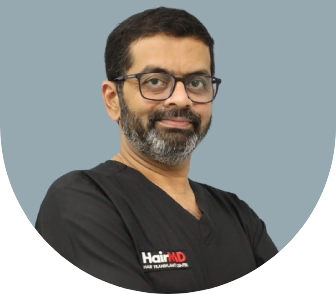
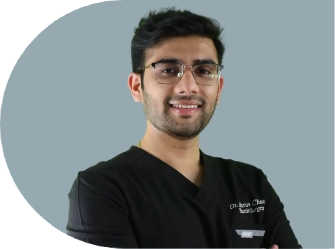
Meet Our Dermatologist!



Conclusion
Aloe vera offers moderate benefits for inflammatory acne marks and mild superficial scarring through its anti-inflammatory, antioxidant, and collagen-stimulating properties. Clinical evidence supports its role as an adjunct treatment when combined with proven dermatological therapies.
However, aloe vera has significant limitations for deep atrophic scars, significant hyperpigmentation, and established scar tissue. Patients should maintain realistic expectations about outcomes from topical aloe vera alone. There is no robust clinical evidence supporting aloe vera as an effective standalone treatment for chronic acne scars.
Individuals with mild acne scarring may see improvements with consistent aloe vera application over 8-12 weeks. For moderate to severe scarring, professional treatments at dermatology clinics like Clear Skin provide superior outcomes. Early initiation of appropriate dermatologic procedures results in improved outcomes, reduced treatment duration, and better patient satisfaction.
Board-certified dermatologists can assess scar type and severity to recommend evidence-based treatments including laser resurfacing, chemical peels, microneedling, and subcision. Early professional intervention for active acne significantly reduces the risk of permanent scarring.
Consult a qualified dermatologist before relying on home remedies for acne scar treatment. Clear Skin Clinic Pune offers comprehensive acne and acne scar treatments across six locations in Pune, serving patients from Kharadi, Baner, Koregaon Park, Viman Nagar, Kothrud, Wakad, and surrounding areas.
Book your consultation at Clear Skin Clinic Pune: Phone: +91-9584584111 Email: [email protected] Address: CII-5, Shardaram Park, Opp. Ruby Hospital, Sasoon Road, Pune, Maharashtra 411001
Further Reading
Forehead Acne: Causes, Appearance, Prevention, and Treatment
Most forehead acne has a specific cause. Clear Skin dermatologists explain 9 triggers, including hormones, helmet friction, and hair oil and the right treatment for each.
Why Do White Patches Appear on Skin?
A single white patch could be tinea versicolor, vitiligo, pityriasis alba, or early leprosy, each needs a different treatment.
Carbon Laser vs Chemical Peel for Acne: Which Works Better for Oily Indian Skin?
Confused between carbon laser and chemical peels? Compare benefits, downtime, cost, and acne results to choose the right treatment for your skin.
Subcision vs Laser for Deep Acne Scars: Which Gives Better Results?
Looking for the best treatment for deep acne scars? Compare subcision, RF microneedling, Pico laser, and CO2 laser before choosing your treatment.
Have thoughts? Please let us know
We are committed not only to treating you, but also educating you.