
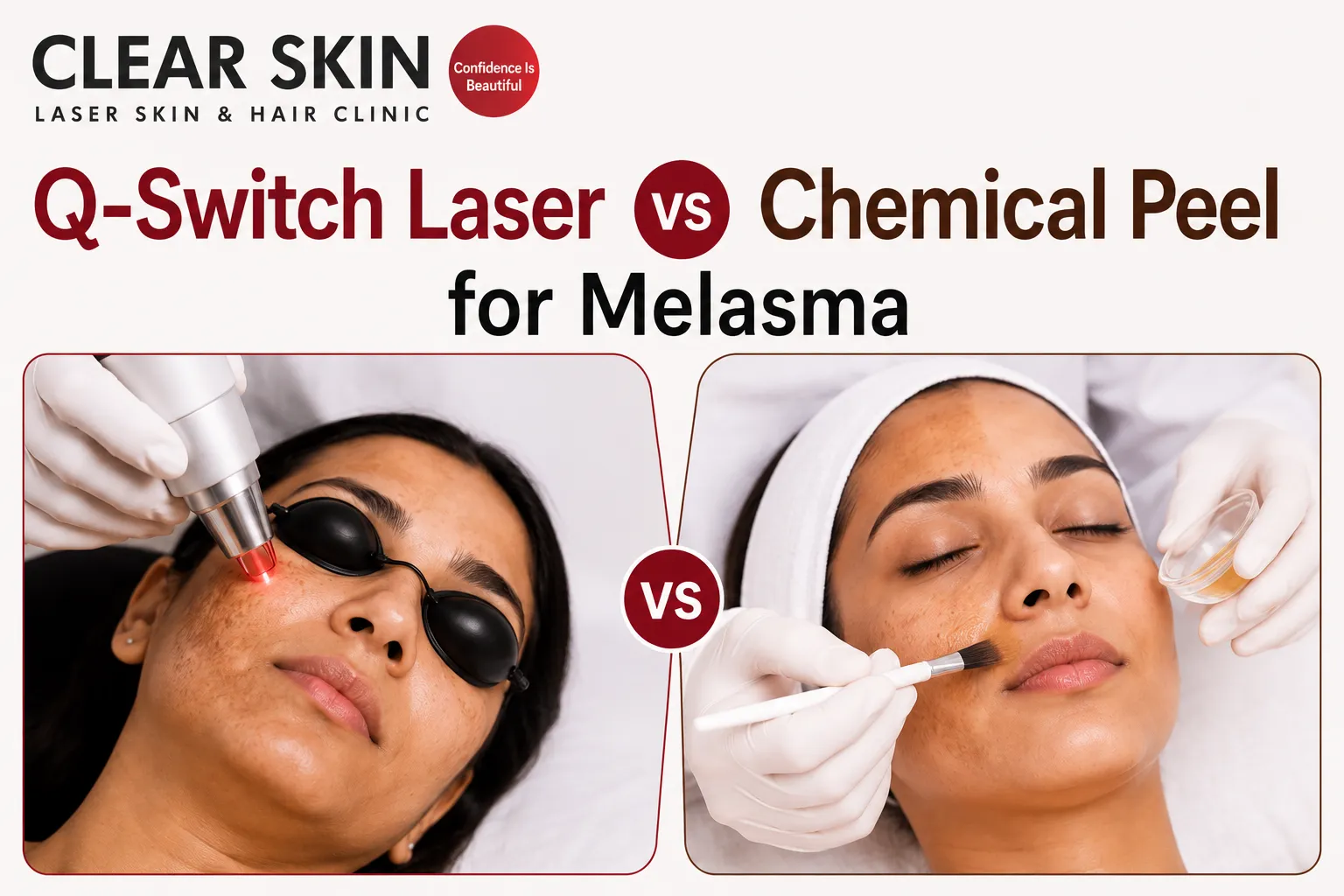
Q-Switch Laser vs Chemical Peel for Melasma: Which Gives Lasting Results?

Written by Clear Skin Content Team | Medically Reviewed by Dr. Dhanraj Chavan on July 22, 2026
Medical Disclaimer: This article is for informational purposes only. Consult a qualified dermatologist for personalised medical advice.
Melasma is the most treatment-resistant common pigmentation condition in Indian dermatology. Not because effective treatments don’t exist they do. But melasma has a chronic biological driver that doesn’t disappear after a laser session or a peel course
The hormonal influence on melanocyte sensitivity, the ongoing UV exposure, and the heat sensitivity of melasma-prone skin these factors mean that even well-executed treatment produces results that require ongoing maintenance to sustain.
Both Q-switch laser and chemical peels are commonly used for melasma across Indian clinics. Both have clinical evidence behind them. And both carry specific risks for Indian skin that fundamentally change how they should be applied. Understanding this before committing to a treatment course separates patients who manage melasma well from those who spend money on treatments that keep relapsing.
Table Of Content
- Why Melasma Is Different From Other Pigmentation?
- Chemical Peels for Melasma: What They Do and Their Honest Limitations?
- Q-Switch Laser for Melasma: The Opportunity and the Risk
- Q-Switch Laser for Chemical Peel: Head-to-Head Comparison
- FAQs
- Conclusion
Why Melasma Is Different From Other Pigmentation?
Most pigmentation conditions follow a straightforward treatment logic: identify the melanin deposit, target it with the appropriate treatment, and allow the skin to clear it. Melasma operates by different rules and failing to account for those rules is the most common reason treatment fails.
The Hormonal Component
Melasma has a documented hormonal driver. Estrogen and progesterone increase melanocyte sensitivity to UV exposure, which is why melasma commonly appears or worsens during pregnancy, while on oral contraceptives, or during hormonal fluctuations from stress or thyroid changes. This hormonal influence means the underlying cause is persistent. Even after successful treatment, any hormonal trigger or UV exposure can reactivate pigment production.
Heat Sensitivity
Melasma melanocytes are hyperreactive more easily stimulated than normal skin melanocytes. Heat from laser applications, excessive sun exposure, inflammation, or even vigorous exercise can trigger pigment production in melasma-prone skin. This heat sensitivity is why aggressive laser protocols for melasma on Indian skin frequently result in post-treatment flares that leave patients worse than they started.
Mixed Depth in Many Patients
Melasma sits at purely epidermal depth in approximately 50% of patients. In the other half, pigment extends into the dermis which is why some patients see incomplete response to surface-only treatments like chemical peels. Wood’s lamp examination helps assess depth and guides treatment selection between modalities.
Chemical Peels for Melasma: What They Do and Their Honest Limitations?
Chemical peels accelerate skin cell turnover and exfoliate melanin-rich surface cells, visibly reducing the epidermal pigment density of melasma patches. But acid selection is critical.
Safest Peels for Melasma on Indian Skin
Mandelic acid peels are he safest starting option. Their large molecular structure and slow penetration minimize irritation and PIH risk on Fitzpatrick IV–VI skin important because treatment-induced PIH on top of existing melasma is both common and frustrating. Salicylic-mandelic combinations address concurrent acne-related congestion alongside melasma. Lactic acid is the gentlest option for sensitive or reactive skin.
Glycolic acid is effective for epidermal melasma but requires careful concentration selection — too high a concentration too quickly on darker Indian skin raises PIH risk. TCA peel applications for melasma are reserved for carefully selected cases in experienced hands the PIH risk on Indian skin makes TCA a non-first-line choice for melasma.
What Peels Realistically Achieve for Melasma
A complete course of 6–8 peels produces visible melasma lightening, particularly for epidermal-dominant cases. Peels also address concurrent PIH and uneven tone an advantage for patients managing multiple pigmentation concerns simultaneously. The honest limitation: peel results for melasma without ongoing topical maintenance and rigorous sun protection relapse relatively quickly. Peels treat the visible surface expression of melasma without modifying the underlying melanocyte hyperreactivity. The trigger (UV, hormonal change) restores the pigmentation.
Q-Switch Laser for Melasma: The Opportunity and the Risk
How Q-Switch Toning Works for Melasma
Q-switched Nd:YAG at 1064nm in toning mode low fluence, large spot size, full-face coverage progressively reduces overall melanin density. For mixed epidermal-dermal melasma where peels have cleared the surface component but dermal pigment persists, 1064nm offers deeper penetration than any surface peel can achieve.
The Critical Risk: Rebound Flares
At too-high fluence or applied too frequently, Q-switch laser heats the hyperreactive melasma melanocytes and triggers the very pigment production it’s trying to reduce. This rebound phenomenon is documented, not rare, and is the most common presentation when patients arrive at a clinic with darker melasma than before they started treatment elsewhere. The therapeutic window for Q-switch on melasma is narrow — conservative energy, conservative intervals, mandatory sun protection not aggressive, high-energy spot treatment.
What Conservative Laser Toning Achieves for Melasma
Correctly applied Q-switch toning over 6–10 sessions produces gradual, cumulative melanin density reduction. For mixed-depth melasma, it reaches the dermal component that chemical peels cannot. The key is patience the conservative protocol requires more sessions than an aggressive approach, but it avoids the flares that set patients back months.
Understanding the full melasma treatment options and protocol helps patients see where laser fits in a longer-term management strategy.
Q-Switch Laser for Chemical Peel: Head-to-Head Comparison
|
Factor |
Chemical Peel |
Q-Switch Laser |
|
Mechanism |
Surface exfoliation of melanin-rich cells |
Melanin fragmentation via laser energy |
|
Best melasma depth |
Epidermal-dominant |
Mixed epidermal-dermal |
|
Risk of flare |
Low with correct acid selection |
Moderate if high-fluence settings used |
|
PIH risk on Indian skin |
Low-moderate (acid-dependent) |
Low-moderate (fluence-dependent) |
|
Downtime |
1–5 days |
Minimal 1–2 days |
|
Sessions needed |
6–8 |
6–10 |
|
Cost per session (Pune) |
₹3,000–₹6,000 |
₹4,000–₹8,000 |
|
Addresses dermal pigment |
Limited |
Better — deeper penetration |
|
Durability without maintenance |
Low |
Low |
“We regularly see patients arriving with darker melasma than when they started — having come from clinics where laser settings weren’t appropriate or sun protection wasn’t enforced. With melasma, the laser is a tool for gradual, managed improvement, not a one-time fix. Conservative energy, adequate intervals, and non-negotiable sun protection separate a good outcome from a worsened one.” — Dr. Dhanraj Chavan, Clear Skin Clinic
Frequently Asked Questions (FAQs)
How long does it take to see results from acne treatment?
Visible improvement typically begins within 4–6 weeks of starting a structured topical protocol combined with in-clinic sessions. Full control of moderate acne usually takes 3–4 months. PIH from prior breakouts continues to improve beyond the active treatment phase. Cystic acne on oral isotretinoin generally shows meaningful improvement within 6–8 weeks of initiating the medication.
Can acne come back after treatment is complete?
Yes acne has both genetic and hormonal components that don’t disappear after treatment. A structured course reduces active breakouts significantly and prevents new scarring, but long-term maintenance with topical home care and periodic in-clinic sessions is what keeps skin stable over time. Clinics that don’t build a maintenance plan into the discussion are leaving out the most important part.
Is chemical peel safe for acne on Indian skin?
Yes, with correct acid selection. Salicylic-mandelic combination peels and mandelic acid peels are the safest starting options for Fitzpatrick IV–VI skin their lower irritation profiles significantly reduce PIH risk compared to pure glycolic peels at equivalent treatment depths. Concentration, number of layers, and interval between sessions are all calibrated to your skin tone.
What’s the difference between a dermatologist and a cosmetologist for acne treatment?
A dermatologist is a qualified physician with specific medical training in skin conditions. They can diagnose your acne type, prescribe oral and topical medications including isotretinoin, and manage complications. A cosmetologist is trained in cosmetic procedures but is not medically qualified to diagnose or prescribe. For moderate-to-severe or persistent acne especially where scarring is a risk a dermatologist is the appropriate provider.
Do I need to stop my current skincare before my first consultation?
Do not stop any prescribed medication before your appointment. Bring your full current product lineup cleanser, moisturizer, sunscreen, any actives to your first consultation. Many over-the-counter products contain ingredients that aggravate acne or interact with treatment acids. Your dermatologist will review these and tell you exactly what to continue, modify, or stop.
What causes acne to flare after starting treatment?
An initial purge is common and expected when starting topical retinoids or when beginning chemical peel sessions. Actives accelerate cell turnover and bring comedones to the surface before clearing them. This typically peaks at 2–4 weeks and resolves. True worsening new deep cystic lesions beyond the purge window is a signal to return for a protocol review, not a reason to stop treatment.
Do You Know?
Roughly 250 Patients Are Treated
Everyday By These Dermatologists
(You are one click away from flawless skin)
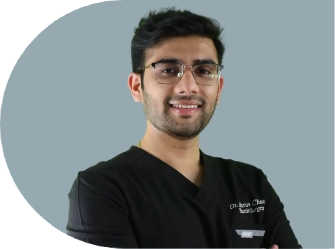
Meet Our Dermatologist!

Conclusion
Neither Q-switch laser alone nor chemical peels alone gives truly lasting melasma results. The melanocytes that produce excess pigment do not permanently normalize after a treatment course. What both treatments can achieve, done correctly, with experienced calibration, supported by rigorous home care, is sustained control. Melasma that is well managed can be kept at a level where it is not noticeable in daily life. That is a realistic and clinically meaningful outcome — even if it requires ongoing commitment rather than a one-time fix.
The Practical Long-Term Protocol
Begin with topical combination therapy: tranexamic acid, azelaic acid, SPF 50+ as the permanent foundation. Add salicylic-mandelic peels as the first in-clinic intervention for surface epidermal clearing. Layer in conservative Q-switch toning for mixed-depth cases. Consider a Pico laser for stubborn treatment-resistant melasma with incomplete Q-switch response. Commit to maintenance sessions every 3–6 months and treat sun protection as a lifelong habit, not a temporary treatment measure.
Advanced laser and rejuvenation options may be relevant for patients with melasma alongside broader skin quality concerns. Your dermatologist will guide the overall protocol based on your full skin presentation.
Further Reading
Q-Switch vs Pico Laser for Pigmentation: Which Is More Effective for Indian Skin?
Q-switch laser or chemical peel for melasma which lasts longer on Indian skin? An honest comparison of how each works, the relapse risk, & what a sustainable melasma protocol actually looks like.
Best Pigmentation Treatment for Indian Skin in 2026: Ranked by Results
Compare pigmentation treatments for Indian skin, including Pico laser, Q-Switch laser, chemical peels, and topical therapies before choosing the right option.
Chemical Peel vs Laser for Active Acne: Which Works Faster on Indian Skin?
Find out whether chemical peels or laser treatment is better for active acne. Compare benefits, costs, downtime, and treatment timelines for Indian skin
Best Acne Treatment Clinic in Pune: What to Look for Before You Book
Choose the right acne treatment clinic in Pune with confidence. Know how dermatologists treat acne, acne marks, and scars with personalised care.
Have thoughts? Please let us know
We are committed not only to treating you, but also educating you.