
Laser Hair Removal for Dark Skin Tones:What You Need to Know?

Written by Clear Skin Content Team | Medically Reviewed by Dr. Dhanraj Chavan on May 20, 2026
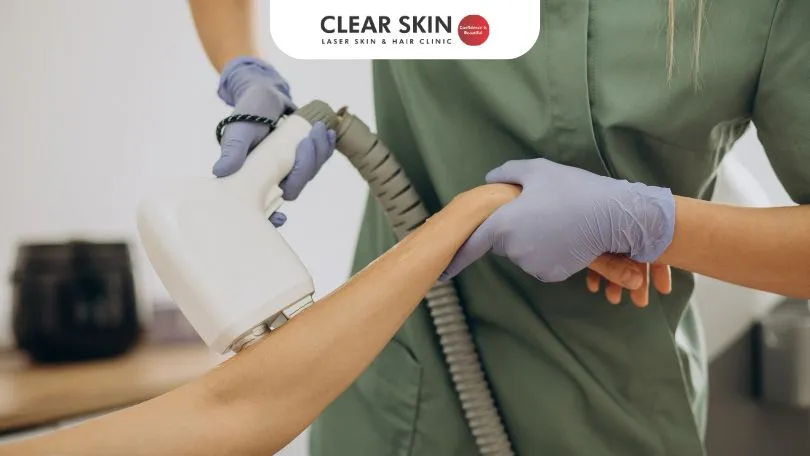
Laser hair removal is a light-based cosmetic treatment that uses concentrated beams of light to target and disable hair follicles, reducing hair growth permanently over multiple sessions.
For people with dark skin tones, the treatment is safe and effective – but only when the correct laser type and settings are used by a trained dermatologist.
Choosing the wrong laser on a dark skin tone causes burns, blistering, and post-inflammatory hyperpigmentation (PIH), which is why skin tone assessment is the first step of every laser hair removal consultation at Clear Skin Clinic, Pune.
Table Of Content
- Quick Facts: LHR for Dark Skin Tones
- Why Skin Tone Changes Everything for Laser Hair Removal?
- The Two Lasers – That Are Safe for Dark Skin Tones
- How Many Sessions Do You Actually Need?
- the-real-risks-pih-burns-and-how-to-avoid-them
- Preparing Your Dark Skin Before Each Session
- Aftercare for Dark Skin Tones After Laser Hair Removal
- As Verified By
- Frequently Asked Questions
- Conclusion
Quick Facts: LHR for Dark Skin Tones
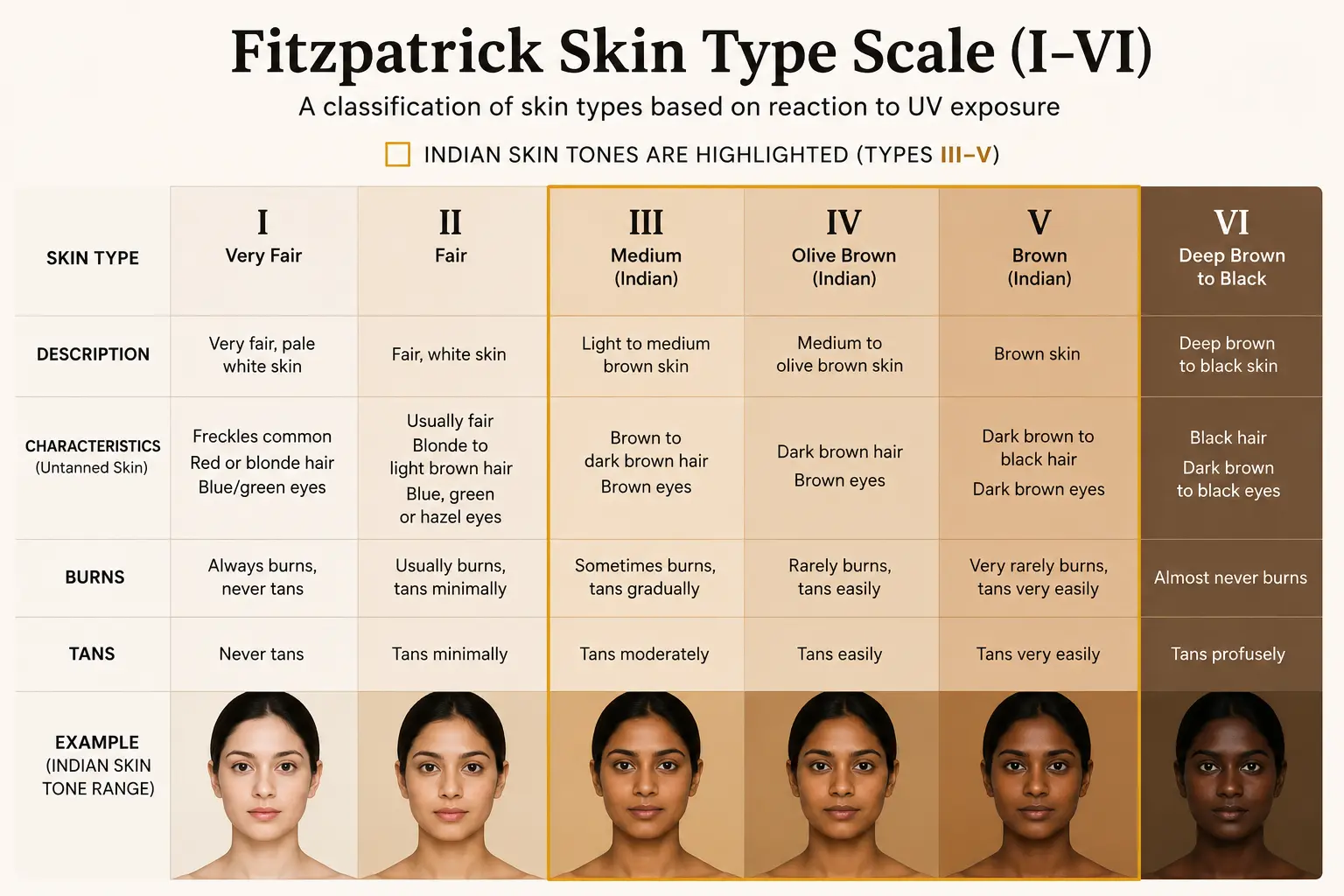
- Laser hair removal works on Fitzpatrick skin types I through VI, including Indian skin (types IV-V)
- Nd:YAG laser (1064nm wavelength) is the safest laser for Fitzpatrick type V-VI
- Diode laser (800-810nm) is suitable for Fitzpatrick type III-IV with active cooling systems
- Alexandrite (755nm) and IPL are not safe for dark or Indian skin tones
- 6-10 sessions are typically needed for Fitzpatrick type IV-VI skin (vs 6-8 for lighter skin)
- Post-inflammatory hyperpigmentation (PIH) is the primary risk – reduced significantly with proper laser selection and cooling
- A patch test on a small skin area is mandatory before full treatment on dark skin
Why Skin Tone Changes Everything for Laser Hair Removal?
Laser hair removal works on a principle called selective photothermolysis. The laser emits a wavelength of light that is selectively absorbed by the pigment (melanin) in hair follicles. The absorbed energy heats the follicle and disables it – while leaving the surrounding skin intact.
The fact of the matter is that dark skin contains significantly more melanin than lighter skin tones. When the incorrect laser or wrong settings are used, the skin absorbs as much light as the hair follicle – or more. This may cause the surrounding tissue to overheat, resulting in burns, blistering, or PIH.
The right laser for dark skin is one that bypasses the melanin in the skin and reaches the follicle safely. Lasers with longer wavelengths do exactly this – they penetrate deeper into the dermis while being less absorbed by epidermal melanin. This is why wavelength selection, not just device brand, determines safety for darker skin tones.
| Treatment Attribute | Detail |
| Procedure type | Non-invasive light-based treatment |
| Best device for dark skin | Nd:YAG laser (1064nm) |
| Suitable device (Fitzpatrick III-IV) | Diode laser (800-810nm) with cooling |
| Sessions needed (Fitzpatrick IV-VI) | 6-10 sessions |
| Session interval | 4-6 weeks (face), 6-8 weeks (body) |
| Downtime | None to minimal |
| Hair reduction per session | 10-25% |
| Long-term reduction | 80-90% after full course |
The Two Lasers – That Are Safe for Dark Skin Tones
Not every laser used for hair removal is safe for dark or Indian skin. Understanding the difference protects you from choosing a clinic based on price alone.
Nd:YAG Laser (1064nm) – the safest choice for dark skin
The Nd:YAG laser uses a 1064nm long-pulse wavelength. At this wavelength, melanin in the skin absorbs significantly less energy than melanin in the hair follicle. This is what makes it the gold standard for Fitzpatrick type V and VI skin. It is also recommended by the American Academy of Dermatology as the preferred laser for darker skin tones.
Clear Skin Clinic uses US-FDA approved Nd:YAG laser systems alongside active cooling technology in every session for patients with dark skin tones. The combination of the correct wavelength and real-time skin cooling is what keeps the treatment safe. Read about our diode laser hair removal in Pune to understand the devices used at our clinics.
Diode Laser (800-810nm) – effective for medium-dark skin with the right settings
The diode laser operates at 800-810nm and is highly effective for Fitzpatrick type III and IV skin – which includes many Indian patients with medium-dark complexions. It achieves strong melanin absorption in the follicle while remaining manageable for the skin when cooling systems are active and fluence settings are adjusted correctly.
For darker Fitzpatrick IV and V skin, the dermatologist begins with conservative fluence settings and increases them across sessions based on skin response. This stepwise approach reduces PIH risk significantly.
Alexandrite (755nm) and IPL – not suitable for Indian skin
The alexandrite laser uses a 755nm short wavelength with high melanin affinity – meaning it targets all melanin in the skin, not just the follicle. On Indian or dark skin, this causes significant risk of burns and lasting pigmentation changes. As explained in our guide on which laser is best for hair removal, alexandrite is not recommended for Indian skin tones by the dermatology consensus.
IPL (Intense Pulsed Light) is not a laser. It emits broad-spectrum light across multiple wavelengths simultaneously, making precise skin-tone targeting impossible. On dark skin, IPL generates unpredictable energy distribution and is not recommended for Fitzpatrick IV-VI.
How Many Sessions Do You Actually Need?
Dark skin typically needs more sessions than lighter skin to achieve the same level of permanent hair reduction. This is not because the treatment is less effective – it is because higher energy settings on dark skin must be introduced gradually to avoid injury.
For Fitzpatrick type III-IV skin (medium-dark), most patients need 6-8 sessions spaced 4-6 weeks apart for facial areas and 6-8 weeks apart for body areas. For a full breakdown of how session counts are calculated, see our guide on how many laser treatments are needed for permanent hair removal.
For Fitzpatrick type V-VI skin (dark to very dark), 8-10 sessions are typically needed. Each session disables 10-25% of actively growing follicles in the treatment area. Hair grows in cycles, which is why multiple sessions spaced weeks apart are necessary to catch all follicles during their active growth phase.
After a full course of 8-10 sessions, most patients with dark skin see 80-90% permanent hair reduction, with some requiring annual touch-up sessions for any regrowth.
Laser hair removal at Clear Skin Clinic, Pune uses Nd:YAG and diode laser systems specifically suited for Indian skin types (Fitzpatrick III-V). The treatment targets hair follicles without overheating the surrounding skin, with active cooling applied at every session.
The primary factors determining safety and results are the laser type used, the fluence settings, and the dermatologist’s experience with dark skin tones – not the number of sessions alone.
The Real Risks: PIH, Burns, and How to Avoid Them
Post-inflammatory hyperpigmentation (PIH) is the most common complication of laser hair removal on dark skin. PIH occurs when the treated skin produces excess melanin in response to heat-related trauma, leaving darker patches at the treatment site. It is temporary in most cases but can take 3-6 months to fully resolve.
PIH risk is highest when the laser wavelength is too short, the fluence is too high for the skin’s melanin load, or cooling is insufficient. All three of these factors are controlled by the treating dermatologist – which makes laser hair removal performed by a dermatologist significantly safer than technician-operated treatments at beauty salons.
To reduce PIH risk, every dark skin patient at Clear Skin Clinic receives a mandatory patch test before full treatment begins. The patch test involves applying the laser to a small, inconspicuous area and waiting 48-72 hours for any skin reaction. Only after confirming no adverse reaction does the full treatment proceed. Read more about the link between laser hair removal and skin pigmentation changes and what causes them.
Burns from laser hair removal on dark skin are rare when the correct laser and settings are used. They are significantly more common when patients undergo LHR at clinics using IPL devices or alexandrite lasers marketed for general use. If you experience blistering or prolonged redness after a session, contact your dermatologist immediately – do not apply home remedies without guidance.
For a full breakdown of complications to watch for, see our guide on laser hair removal risks and side effects.
Preparing Your Dark Skin Before Each Session
The pre-treatment protocol matters more for dark skin than for lighter skin tones, because the skin’s sensitivity to light is higher. Following these steps reduces your risk of PIH and ensures the laser targets the follicle as intended.
At least 4 weeks before: Stop all forms of hair removal that pull from the root – waxing, threading, tweezing, epilating, and depilatory creams. The laser needs the hair shaft present in the follicle to guide energy to its target. Shaving is the only acceptable method of hair removal between sessions.
At least 2 weeks before: Avoid sun exposure, tanning beds, and self-tanners on the treatment area. Sun-tanned skin has elevated epidermal melanin, which increases the risk of surface burns and PIH. For patients managing PCOS-related excess hair growth, this means ongoing vigilance with SPF 50+ sunscreen between sessions.
Medications: Inform your dermatologist if you are taking photosensitising medications, including certain antibiotics (doxycycline), retinoids, or NSAIDs. These can increase skin sensitivity to laser energy and may require a dosage pause or session postponement.
Aftercare for Dark Skin Tones After Laser Hair Removal
The 24-72 hours after each session are when dark skin is most vulnerable to PIH and irritation. Following the aftercare protocol correctly reduces your risk of complications significantly.
Sun protection is non-negotiable. Apply SPF 50+ broad-spectrum sunscreen to the treated area immediately after the session ends, and reapply every 2-3 hours for the first week. UV exposure after laser treatment is the single biggest trigger for PIH on dark skin.
What to expect: Mild redness, warmth, and slight swelling are normal in the first 24-48 hours. The treated hairs will appear to continue growing for 1-3 weeks after the session – this is normal shedding of disabled hairs, not new growth. Learn more about hair growth patterns after laser hair removal to understand what is normal and what is not.
What to avoid in the first 48 hours: Hot showers, steam rooms, saunas, exercise that causes heavy sweating, and fragranced skincare products on the treated area. All of these increase skin temperature and prolong the inflammatory response.
For PIH treatment (if it occurs): Brightening serums containing niacinamide or azelaic acid can help reduce hyperpigmentation in the weeks following treatment. Consult your dermatologist before applying any active ingredients to treated skin. See before and after results from our patients to understand the full treatment timeline.
For PIH treatment (if it occurs): Brightening serums containing niacinamide or azelaic acid can help reduce hyperpigmentation in the weeks following treatment. Consult your dermatologist before applying any active ingredients to treated skin. See before and after results from our patients to understand the full treatment timeline.
As Verified By
The clinical recommendations in this article are consistent with guidance from the following authoritative sources:
1. American Academy of Dermatology (AAD) – Recommends Nd:YAG laser as the preferred option for patients with darker skin tones due to its longer wavelength and lower melanin absorption risk. aad.org – Laser Hair Removal
2. Mayo Clinic – Confirms that skin type (Fitzpatrick classification) is a primary factor determining laser selection and session count for hair removal. mayoclinic.org – Laser Hair Removal
3. National Center for Biotechnology Information (NCBI/PMC) – Published research on Nd:YAG laser efficacy and safety for Fitzpatrick IV-VI skin confirms high satisfaction rates and low PIH incidence when appropriate cooling is applied. ncbi.nlm.nih.gov/pmc
4. Cleveland Clinic – Notes that patients with darker skin tones require longer-wavelength lasers and that Nd:YAG is the appropriate choice to minimise epidermal damage. my.clevelandclinic.org – Laser Hair Removal
5. Skin of Color Society – Provides clinical guidance on safe laser procedures for skin of color, recommending Nd:YAG and diode lasers over alexandrite and IPL for Fitzpatrick type IV-VI. skinofcolorsociety.org
Frequently Asked Questions
Is laser hair removal safe for dark skin tones?
Yes. Laser hair removal is safe for dark skin tones when performed with the correct laser type. The Nd:YAG laser (1064nm) is the clinically recommended device for Fitzpatrick type V-VI skin, and the diode laser (810nm) is suitable for Fitzpatrick type III-IV with active cooling.
The risks associated with LHR on dark skin – including PIH and burns – are significantly reduced when a trained dermatologist selects the laser and adjusts settings for your specific skin tone.
Which laser is best for Indian skin?
The Nd:YAG laser (1064nm) is the gold standard for Indian skin tones, which typically fall in the Fitzpatrick III-V range. Its longer wavelength penetrates deeper into the dermis while being less absorbed by epidermal melanin, making it safer than shorter-wavelength lasers.
The diode laser (810nm) is also effective for medium-dark Indian skin when used with a cooling system and conservative fluence settings. Alexandrite lasers and IPL devices are not recommended for Indian skin.
Can laser hair removal cause hyperpigmentation on dark skin?
Yes – post-inflammatory hyperpigmentation (PIH) is the most common complication of laser hair removal on dark skin, but it is largely preventable. PIH occurs when the wrong laser type is used, fluence settings are too high, or skin cooling is inadequate.
Choosing a clinic that uses Nd:YAG or diode technology, mandates a patch test before treatment, and applies real-time cooling systems reduces PIH risk substantially. When PIH does occur, it is usually temporary and fades within 3-6 months with appropriate skincare support.
How many sessions does laser hair removal take for dark skin tones?
Most patients with Fitzpatrick type III-IV skin need 6-8 sessions. Those with Fitzpatrick type V-VI skin typically need 8-10 sessions to achieve 80-90% permanent hair reduction. Sessions are spaced 4-6 weeks apart for facial areas and 6-8 weeks apart for body areas.
Darker skin sometimes requires more sessions because laser fluence settings must be introduced conservatively and increased gradually to avoid adverse reactions. Annual touch-up sessions may be needed after the initial course is complete.
How should I prepare my skin before a laser hair removal session?
Avoid all root-removal methods (waxing, threading, tweezing) for at least 4 weeks before your session. Avoid sun exposure and self-tanners for at least 2 weeks before. Shave the treatment area the day before your appointment.
Do not apply perfumes, deodorants, or active skincare ingredients (retinoids, AHAs, BHAs) to the treatment area on the day of the session. Inform your dermatologist about any photosensitising medications you are taking. These steps reduce PIH risk and allow the laser to target follicles accurately.
Do You Know?
Roughly 250 Patients Are Treated
Everyday By These Dermatologists
(You are one click away from flawless skin)
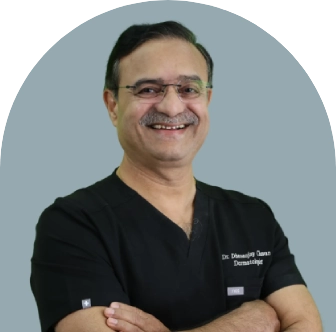
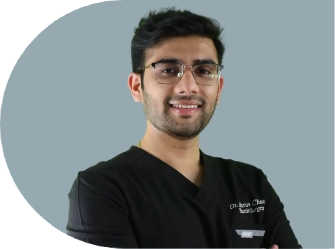
Meet Our Dermatologist!

Conclusion
Laser hair removal for dark skin tones is not a high-risk procedure – it is a routine treatment when performed with the right laser and by a dermatologist experienced with Indian skin types. The Nd:YAG and diode lasers, combined with active cooling and correct fluence settings, make permanent hair reduction achievable for Fitzpatrick type III-VI skin with minimal risk of PIH or burns.
The most important decision you will make is choosing a clinic that uses the correct laser for your skin tone – not the cheapest option or the most convenient location. At Clear Skin Clinic, Pune, every laser hair removal patient undergoes a skin tone assessment and patch test before treatment begins. Our dermatologists adjust settings based on your Fitzpatrick type, hair colour, and treatment area.
To book your consultation at any of our six Pune clinics, contact Clear Skin Clinic here.
Further Reading
PIH After Acne: Causes & Treatment | Clear Skin Pune
Post-inflammatory hyperpigmentation (PIH) is a flat dark mark after acne, not a scar. Learn why Indian skin is prone to it and how Clear Skin Pune treats it.
HIFU vs Botox vs Fillers vs Thread Lift for Anti-Aging in Pune – Which is Right for You?
Laser and chemical peels both treat sun damage and dark spots, but through different mechanisms.
Profhilo vs Dermal Fillers: Which Is Better for Skin Hydration?
Profhilo and dermal fillers both use hyaluronic acid but work completely differently. This breakdown explains which one improves skin quality and which one restores volume.
Is HIFU Skin Tightening Worth the Cost in Pune?
HIFU skin tightening promises a non-surgical lift, but is it worth the cost? A clear breakdown of who it works for, realistic results, and what to expect for Indian skin
Have thoughts? Please let us know
We are committed not only to treating you, but also educating you.