
Diode vs Nd:YAG vs Triple Wavelength Laser: Which Is Right for Your Skin?

Written by Clear Skin Content Team | Medically Reviewed by Dr. Dhanraj Chavan on May 30, 2026
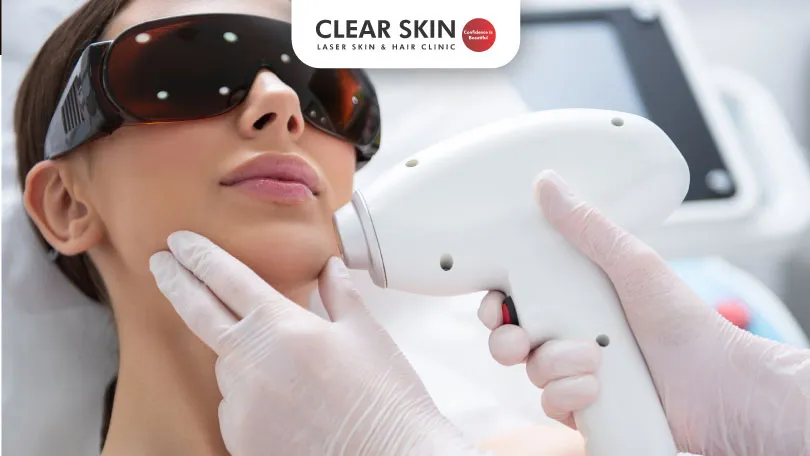
Diode, Nd:YAG, and triple wavelength are the three medical-grade lasers used for permanent hair reduction at Clear Skin – each is a different wavelength technology suited to a specific skin tone range, and choosing the wrong one for your Fitzpatrick type increases the risk of burns, pigmentation, or poor results.
At Clear Skin, Pune, a dermatologist matches the laser to your skin and hair type before your first session.
Table Of Content
- Diode Laser – Best for Most Indian Skin Types
- Nd:YAG Laser – Safest for Darker Skin Tones
- Triple Wavelength Laser – Most Versatile Option
- Which Laser Does – Clear Skin Use for You?
- Frequently Asked Questions
Diode Laser – Best for Most Indian Skin Types
The diode laser uses an 810 nm wavelength that penetrates deep into the hair follicle and targets melanin precisely. It is the most commonly used laser for hair removal in India because it works well across Fitzpatrick types II–IV – the skin tone range covering most Indian patients.
Clear Skin uses a diode laser with an integrated cooling system, which reduces discomfort during each session. Most patients with medium skin tones and dark hair see 70-80% permanent hair reduction after 6–8 sessions.
Nd:YAG Laser – Safest for Darker Skin Tones
The Nd:YAG laser uses a longer 1064 nm wavelength, which bypasses surface melanin and targets the follicle at a deeper level. This makes it the safest option for Fitzpatrick types IV–VI – darker Indian skin tones where diode lasers carry a higher risk of post-inflammatory hyperpigmentation.
At Clear Skin, the Fotona Nd:YAG is the preferred choice for patients with deep brown or very dark skin, and for sensitive areas like the face and bikini line in darker skin types. It may require a few more sessions than diode but with a much lower risk of skin darkening.
Triple Wavelength Laser – Most Versatile Option
The triple wavelength laser (Leolase) combines three wavelengths – 755 nm, 810 nm, and 1064 nm – in a single device, making it the most versatile laser available for hair removal. It treats all Fitzpatrick types I–VI without switching devices mid-session.
At Clear Skin, the Leolase is used for patients with mixed skin tones, large treatment areas such as full legs or full back, and cases where hair varies in thickness or colour across the same treatment zone. It is also the preferred choice for patients who have had inconsistent results with single-wavelength treatments elsewhere.
Which Laser Does – Clear Skin Use for You?
Clear Skin uses all three technologies – diode, Fotona Nd:YAG, and Leolase triple wavelength – and selects based on your skin type, hair colour, and treatment area – not on a one-size-fits-all protocol.
Your dermatologist assesses your Fitzpatrick type at the first consultation and assigns the correct device and settings before any session begins. This is the key difference between a medical clinic and a salon: the machine is matched to you, not the other way around.
If you have been told you are “not a candidate” for LHR elsewhere, or are unsure which laser suits your skin, book a consultation at Clear Skin Pune.
Related reading: What Is Laser Hair Removal? – Clear Skin’s Complete Guide
Frequently Asked Questions
Which laser is safest for Indian skin?
The Nd:YAG laser (1064 nm) is the safest option for darker Indian skin tones – Fitzpatrick types IV–VI. Its longer wavelength bypasses surface melanin and reduces the risk of pigmentation or burns. For medium Indian skin (Fitzpatrick II–IV), a diode laser with a cooling system is both safe and highly effective.
Does Clear Skin use diode or Nd:YAG?
Clear Skin uses three laser technologies: diode, Fotona Nd:YAG, and Leolase triple wavelength. Your dermatologist selects the right laser based on your Fitzpatrick skin type, hair colour, and the area being treated. Most patients in Pune are treated with diode or Fotona Nd:YAG; the Leolase is used for complex cases and large treatment areas.
What is a triple wavelength laser?
A triple wavelength laser combines 755 nm, 810 nm, and 1064 nm wavelengths in a single device. This allows it to treat all Fitzpatrick skin types – I through VI – without switching machines mid-session. Clear Skin uses the Leolase triple wavelength laser for patients with mixed skin tones, large treatment areas, or varied hair types across the same treatment zone.
How many sessions do I need regardless of which laser is used?
Most patients need 6–8 sessions for 70-80% permanent hair reduction, regardless of which laser is used. The number can vary by body area, hair thickness, and hormonal factors. Your Clear Skin dermatologist will give you a personalised session estimate at your first consultation.
Do You Know?
Roughly 250 Patients Are Treated
Everyday By These Dermatologists
(You are one click away from flawless skin)
Meet Our Dermatologist

Further Reading
Gym & Sweat Acne: Causes & Prevention | Clear Skin Pune
Gym acne (acne mechanica) is caused by sweat, heat, and friction. Learn where it appears, why Pune’s humidity worsens it, and how to prevent breakouts.
Best Treatments for Back Acne and Body Scars
Struggling with back acne and body scars? Learn about effective home remedies and professional treatments to achieve clear, blemish-free skin.
Melasma Treatment Reviews in Pune | Clear Skin
Real Clear Skin Pune patient results for melasma treatment – see before and after outcomes after laser and chemical peel, and what to expect.
Best Treatment for Pigmentation on Face
Discover top treatments for pigmentation on the face. Get clear, even-toned skin with dermatologist-recommended pigmentation solutions in Pune.
Have thoughts? Please let us know
We are committed not only to treating you, but also educating you.