
Sebaceous Cyst Removal in Pune: Cost, Procedure and Recovery Time

Written by Clear Skin Content Team | Medically Reviewed by Dr. Dhanraj Chavan on May 13, 2026
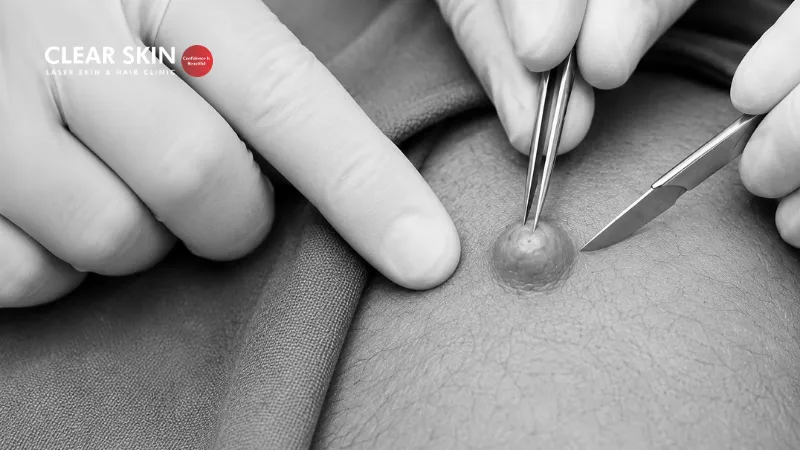
Before you can treat something, you need to understand what it actually is, because what most people call a sebaceous cyst and what it truly is medically are two very different things.
You are getting dressed one morning when you brush your hand against your neck, back, or behind your ear. You notice a small, smooth, painless lump sitting just beneath the surface of your skin. Over the next few weeks or months, you watch it slowly grow. While it might not hurt initially, its presence is unsettling. You might catch yourself constantly checking it, wondering if it is dangerous, or feeling self-conscious when others notice it.
This highly relatable scenario is the classic presentation of a sebaceous cyst. As dermatologists, we see countless patients who feel anxious about these sudden lumps. Many attempt to squeeze or drain them at home, which inevitably leads to painful infections and worsening of the condition.
If you are dealing with this issue, you need medically sound advice, not home remedies. Finding a reliable skin specialist in Pune is your best first step toward resolving the problem safely. At Clear Skin Clinic Pune, we regularly help patients successfully manage and remove these cysts. This comprehensive guide will walk you through exactly what sebaceous cysts are, how the removal procedure works, the recovery timeline, and the costs involved.
Table Of Content
- What Is a Sebaceous Cyst?
- When Should You Consider Sebaceous Cyst Removal?
- Sebaceous Cyst Removal Procedure – Step-by-Step
- Types of Sebaceous Cyst Removal Techniques
- Cost of Sebaceous Cyst Removal in Pune
- Recovery Time After Sebaceous Cyst Removal
- Aftercare Tips for Faster Healing
- Risks of Ignoring a Sebaceous Cyst
- Why Choose Clear Skin Clinic Pune for Sebaceous Cyst Removal?
- Frequently Asked Questions (FAQs)
- Conclusion
What Is a Sebaceous Cyst?
To understand how to treat this condition, we must first look at how it forms. In medical terms, what most people call a “sebaceous cyst” is actually an epidermoid or pilar cyst. True sebaceous cysts are less common and originate from the sebaceous (oil-producing) glands. However, the term is widely used to describe these benign, slow-growing bumps under the skin.
Your skin naturally sheds dead cells. Sometimes, these cells move deeper into your skin rather than falling off, multiplying and forming a closed sac. This sac fills with keratin—a thick, yellow, cheese-like protein that naturally occurs in your hair, skin, and nails.
Common causes of these cysts include:
- A blocked hair follicle or oil gland
- Damage to the skin from a scratch, surgical wound, or acne condition
- Genetic conditions (though this is rare)
You will most commonly find these cysts on the face, neck, upper back, and chest. The good news? Sebaceous cysts are almost always benign (non-cancerous). They are not dangerous to your overall health. However, just because they are benign does not mean you should ignore them entirely.
When Should You Consider Sebaceous Cyst Removal?
Many patients ask if every single cyst requires surgery. The short answer is no. If a cyst is tiny, painless, and not growing, a dermatologist in Pune might simply recommend monitoring it. However, several specific scenarios make surgical removal highly advisable.
You should strongly consider a professional sebaceous cyst removal in Pune if you experience any of the following:
Pain, Infection, or Swelling
If the cyst suddenly becomes red, hot to the touch, swollen, and tender, it has likely become inflamed or infected. An infected cyst can be incredibly painful and requires prompt medical attention. Your doctor may need to prescribe antibiotics before proceeding with the removal.
Cosmetic Concerns
A visible lump on your face, neck, or jawline can significantly impact your self-confidence. Many patients opt for removal simply because they dislike how the cyst looks, especially if it continues to grow larger over time.
Increase in Size
Sebaceous cysts can grow to the size of a golf ball if left untreated. A large cyst can press against nearby nerves or tissues, causing discomfort. It is always easier, safer, and leaves a smaller scar if the cyst is removed while it is still relatively small.
Recurring Cysts
If you have a cyst that seems to drain, flatten out, and then swell back up a few weeks later, it requires professional intervention. Temporary drainage leaves the sac wall inside the skin, meaning the cyst will inevitably return. Only a complete surgical removal of the entire sac guarantees it will not come back.
Sebaceous Cyst Removal Procedure – Step-by-Step
The thought of undergoing a surgical procedure can feel intimidating. However, sebaceous cyst removal is a minor, routine outpatient procedure performed comfortably within the clinic. Knowing exactly what to expect helps alleviate any anxiety you might feel.
Here is a step-by-step breakdown of how we perform a sebaceous cyst treatment Pune residents trust for safety and comfort:
- Consultation and Diagnosis
Your journey begins with a thorough clinical examination. We physically inspect the lump to confirm it is indeed a sebaceous cyst and not a lipoma or swollen lymph node. We review your medical history and ensure the cyst is not currently severely infected, as active infections can complicate the numbing process. - Local Anaesthesia
Once you are comfortable in the treatment room, we clean the area meticulously with an antiseptic solution. We then inject a local anaesthetic directly into the skin surrounding the cyst. You will feel a quick prick and a mild stinging sensation for a few seconds. After this, the entire area becomes completely numb, ensuring you feel zero pain during the procedure. - Cyst Removal (Minor Surgical Procedure)
The most critical part of the surgery is removing the cyst intact. Using precise surgical instruments, the dermatologist makes a small, carefully planned incision over the cyst. We gently separate the cyst sac from the surrounding healthy tissue. It is vital to extract the entire sac wall. If even a microscopic piece of the sac remains, the cyst can regrow. - Stitching
Once the cyst is entirely removed, we clean the empty pocket. Depending on the size of the incision, we will close the wound using a few sterile sutures (stitches). For smaller incisions, we might use surgical glue or specialized wound closure strips to minimise scarring.
5. Post-Procedure Care
We apply a sterile dressing or bandage over the site. You will receive clear, written instructions on how to care for the wound at home, along with a prescription for any necessary antibiotics or pain relievers
Types of Sebaceous Cyst Removal Techniques
Medical science offers a few different surgical approaches for cyst removal. The technique your doctor chooses depends on the size of the cyst, its location, and whether it is currently inflamed.
Surgical Excision (Wide Excision)
This is the traditional and most common method. The doctor makes an incision large enough to remove the entire cyst intact. It is highly effective and carries the lowest risk of recurrence. While it does leave a small scar, a skilled dermatologist will place the incision along your natural skin folds to make the resulting mark as unnoticeable as possible.
Minimal Excision Technique
For cosmetic areas like the face, doctors often prefer a minimal excision. We make a tiny 2 to 3-millimetre incision, express the keratin contents out, and then carefully pull the deflated sac out through the small opening. This leaves a much smaller scar, though the risk of recurrence is slightly higher if the sac tears during extraction.
Laser-Assisted Removal
In some specific cases, dermatologists use a laser to create the initial tiny opening (a punch technique) rather than a scalpel. We gently squeeze out the contents and remove the sac walls. The laser minimises bleeding and promotes excellent cosmetic healing.
Cost of Sebaceous Cyst Removal in Pune
Understanding the financial aspect is a crucial part of planning your treatment. When researching the cyst removal cost Pune clinics charge, you will find that prices vary based on the complexity of your specific case.
Below is an estimated breakdown of what you might expect for this minor surgical procedure:
|
Factor |
Cost Range |
|
Small cyst removal |
₹5,000 – ₹7,000 |
|
Medium cyst |
₹7,000 – ₹9,000 |
|
Complex/infected cyst |
₹15,000 – ₹20,000+ |
Several variables directly influence your final treatment cost:
Size and Location
A tiny cyst on the back is straightforward to remove. A large cyst located near sensitive areas, such as the eyelid or major facial nerves, requires intricate surgical precision, which naturally increases the cost.
Infection
If your cyst is actively infected and has turned into an abscess, it requires a two-step process. First, we must perform an incision and drainage to clear the infection. Weeks later, once the inflammation subsides, we perform the actual sac removal. This dual approach impacts the overall price.
Technique Used
Advanced techniques, such as laser-assisted minimal excision, utilise specialized equipment and may carry a different price point compared to a standard scalpel excision.
Dermatologist Expertise and Clinic Facilities
You are paying for the extensive medical training, safety protocols, and hygienic standards of the facility. A premium clinic ensures the use of sterile instruments, high-quality sutures, and strict infection control measures.
Clear Skin Clinic Pune strongly believes in financial transparency. We do not offer generic price tags without seeing you first. We provide honest, consultation-based cost estimations so you know exactly what to expect before you commit to the procedure.
Recovery Time After Sebaceous Cyst Removal
Patients often worry that minor surgery will severely disrupt their daily lives. Fortunately, the recovery time after a sebaceous cyst removal is generally swift and straightforward.
The First Few Days (Days 1–3)
You might experience mild soreness, swelling, or slight bruising around the incision site once the anaesthetic wears off. This is entirely normal. Over-the-counter pain relievers or the medications prescribed by your doctor will easily manage this discomfort. You can usually return to work the very next day, provided your job does not involve heavy physical labour.
Healing Timeline (Days 7–14)
During this week, the skin rapidly heals and fuses back together. You must keep the area clean and dry. If you have non-dissolvable stitches, you will return to the clinic between day 7 and day 14 (depending on the location of the wound) to have them safely and painlessly removed.
When Normal Activities Can Resume
You can resume light daily activities immediately. However, you should avoid heavy lifting, intense gym workouts, or swimming for at least two weeks to prevent the stitches from stretching or tearing.
Aftercare Tips for Faster Healing
Your behaviour at home plays a massive role in how beautifully your surgical wound heals. Follow these practical aftercare tips to prevent infection and minimise scarring:
Keep the Area Clean and Dry
Follow your dermatologist’s specific instructions regarding showering. Usually, you must keep the bandage completely dry for the first 24 to 48 hours. After that, you may gently wash the area with mild soap and water, patting it dry with a clean towel.
Avoid Touching or Squeezing
Never pick at the surgical site, scratch the healing scab, or attempt to squeeze any fluid from the wound. Your hands carry bacteria that can easily introduce an infection into the fresh incision.
Follow Medication Properly
If your doctor prescribes a short course of oral antibiotics or an antibiotic ointment, use it exactly as directed. Complete the entire course, even if the wound looks perfectly healed after a few days.
Attend Follow-Up Visits
Do not skip your suture removal or follow-up appointment. This visit allows the dermatologist to assess your healing progress and provide guidance on long-term scar management, such as using silicone gels or sun protection.
Risks of Ignoring a Sebaceous Cyst
It is tempting to ignore a painless lump, hoping it will vanish on its own. Unfortunately, sebaceous cysts do not resolve themselves. Ignoring them can lead to several unpleasant medical complications.
Infection and Abscess Formation
Cysts are essentially sealed pockets of dead skin cells the perfect breeding ground for bacteria. If bacteria enter the cyst (often from scratching or tight clothing), it quickly becomes an abscess. The lump will become intensely painful, red, and swollen, requiring emergency drainage.
Rupture
If the cyst grows too large or sustains a physical impact, the sac can rupture beneath the skin. This releases the irritating keratin contents deep into your dermal tissues, triggering a massive inflammatory response. A ruptured cyst is highly painful and significantly harder to remove surgically.
Scarring
When a cyst repeatedly inflames or ruptures, it damages the surrounding tissue. By the time you finally seek surgical removal, the resulting scar will be much larger and more noticeable than if you had removed the cyst while it was small and calm.
Why Choose Clear Skin Clinic Pune for Sebaceous Cyst Removal?
Treating a cyst requires absolute surgical precision. If the sac wall is left behind, you will face the same problem again a few months later. When choosing where to undergo your procedure, you need a clinic that guarantees expertise and safety.
At Clear Skin Clinic Pune, we bring decades of specialised medical experience to every procedure we perform.
Experienced Dermatologists
Our doctors possess an intricate understanding of skin anatomy. They know exactly how to plan the incision to follow your natural skin tension lines, ensuring the most aesthetically pleasing result possible.
Advanced Techniques and Hygienic Environment
We perform all minor surgical procedures in a strictly sterile, medical-grade environment. We use the finest surgical instruments and advanced suturing techniques to minimise tissue trauma and reduce your recovery time.
Personalized Treatment
We treat you as a patient, not just a procedure. We take the time to evaluate the specific nature of your cyst, discuss your cosmetic concerns, and choose a removal technique that aligns with your lifestyle and goals. Our commitment to outstanding patient care is why we are deeply trusted by patients across Pune.
Book your consultation for Skin treatment in Pune today and get a personalised plan designed for your skin.
Frequently Asked Questions
Can I pop a sebaceous cyst at home like a pimple?
No, you should never attempt to pop or squeeze a sebaceous cyst at home. Squeezing forces the keratin contents deeper into the skin, causing severe inflammation and increasing the risk of a painful bacterial infection. It also leaves the sac wall intact, guaranteeing the cyst will return.
Will sebaceous cyst removal leave a large scar?
Any surgical incision leaves a scar, but dermatologists use specialised minimal excision techniques and fine sutures to make the scar as small and unnoticeable as possible. Over time, the scar will fade significantly, especially if you follow the prescribed aftercare instructions.
Does the cyst removal procedure hurt?
The procedure is virtually painless. You will feel a quick prick when the local anaesthetic is injected, which might sting for a few seconds. After that, the entire area becomes numb. You might feel a slight pressure or pulling sensation during the removal, but you will not feel sharp pain.
How long does a sebaceous cyst removal take?
It is a very swift outpatient procedure. Depending on the size and complexity of the cyst, the actual surgical removal usually takes only 20 to 45 minutes from start to finish.
Will my hair grow back if the cyst is removed from my scalp?
If the cyst is located on your scalp, the dermatologist will carefully part the hair to make the incision, rarely requiring any shaving. While a tiny line of hair loss may occur exactly where the incision was made, the surrounding hair usually covers it completely once healed.
Can a sebaceous cyst turn into cancer?
Epidermoid and pilar cysts are almost universally benign (non-cancerous). It is exceedingly rare for a cyst to become malignant. However, any new, growing lump on your body should always be evaluated by a dermatologist to confirm an accurate medical diagnosis.
Do You Know?
Roughly 250 Patients Are Treated
Everyday By These Dermatologists
(You are one click away from flawless skin)
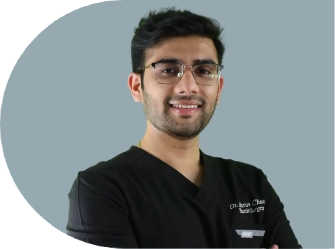
Meet Our Dermatologist!

Conclusion
A sebaceous cyst might start as a minor annoyance, but ignoring it allows it to grow into a painful, confidence-draining problem. You do not have to live with the constant worry of an unexpected infection or a rupture. The surgical removal is a quick, safe, and virtually painless procedure that permanently resolves the issue, allowing you to get back to feeling comfortable in your own skin.
Taking prompt action prevents complications and ensures the smallest possible scar. Prioritise your health by trusting your skin to verified medical professionals.
If you are dealing with a sebaceous cyst, consult Clear Skin Clinic Pune for safe and effective removal by experienced dermatologists.
Visit us at Baner, Kharadi, Prabhat Road, Pune Station, or NIBM for personalised skin treatment.
Further Reading
PIH After Acne: Causes & Treatment | Clear Skin Pune
Post-inflammatory hyperpigmentation (PIH) is a flat dark mark after acne, not a scar. Learn why Indian skin is prone to it and how Clear Skin Pune treats it.
Best Treatment for Pigmentation on Face
Discover top treatments for pigmentation on the face. Get clear, even-toned skin with dermatologist-recommended pigmentation solutions in Pune.
Hypo/Hyperpigmentation: Comprehensive Guide and Treatment.
Regain your skin’s natural glow by addressing hyperpigmentation effectively with these expert tips and treatments.
Understanding Skin Pigmentation Causes and Treatments
Discover causes of skin pigmentation & effective treatments. Learn about sunlight exposure, skin damage, medication, & more with expert guidance
Have thoughts? Please let us know
We are committed not only to treating you, but also educating you.