
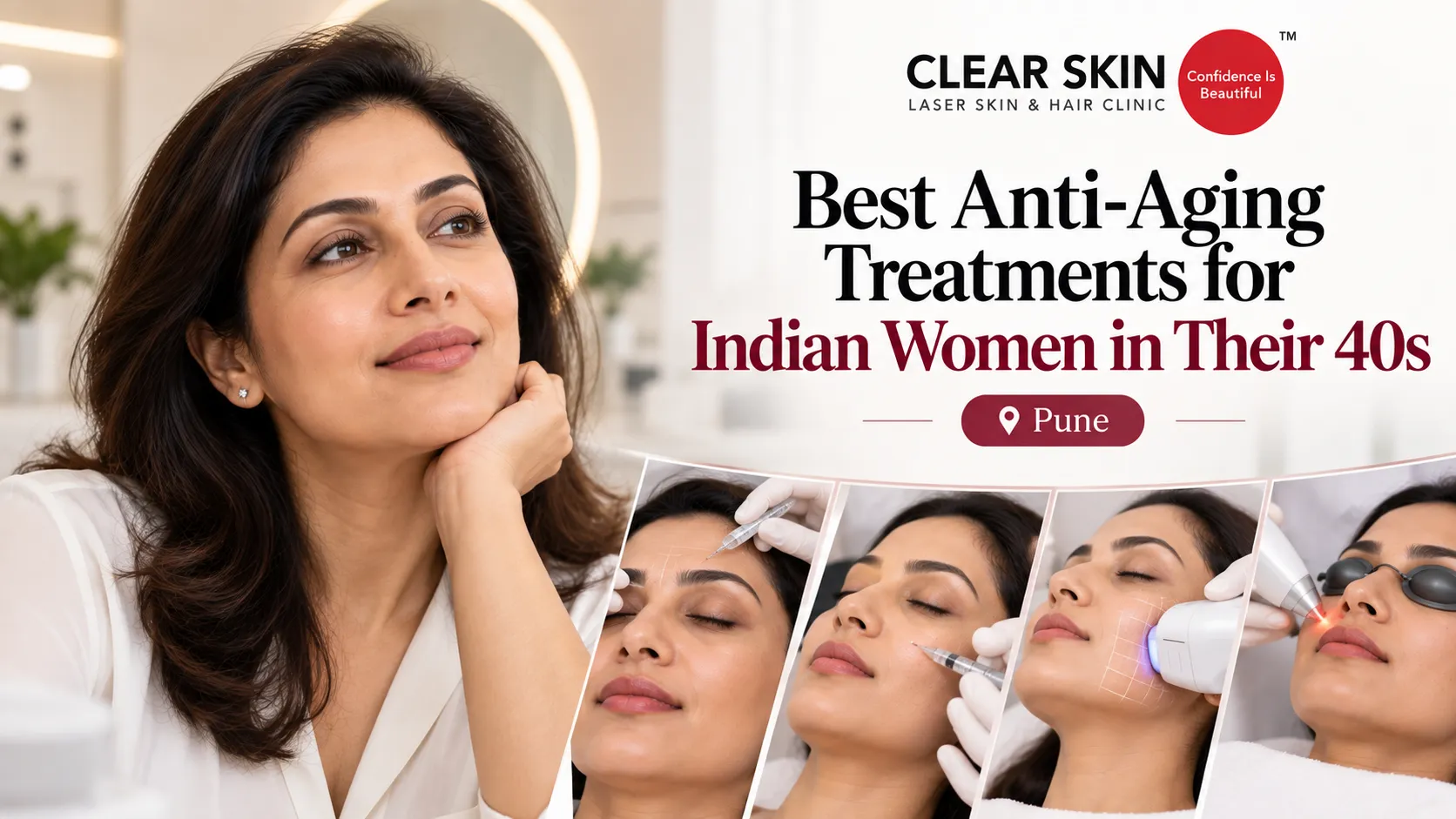
Best Anti-Aging Treatments for Indian Women in Their 40s

Written by Clear Skin Content Team | Medically Reviewed by Dr. Dhanraj Chavan on September 30, 2026
Is this article for you?
- You are in your 40s and noticing multiple skin changes at once: Yes, this is written for you
- You want to know which treatment to prioritize with a limited budget: Read the ranking section
- You have Indian skin and are worried about PIH from aggressive treatments: The Indian skin section covers this specifically
- You want to understand the full picture before booking anything: Start from the beginning
The 40s are when multiple aging mechanisms become visible simultaneously: volume loss, skin laxity, expression lines, uneven pigmentation, and surface texture changes all present at the same time. No single treatment addresses all of them. The best approach is identifying which concern is most dominant and treating that first, then layering additional treatments in sequence. This article ranks six treatments by overall impact for Indian women in their 40s, with honest notes on what each one can and cannot do.
Most anti-aging advice is written for a generic patient in a non-specific climate with lighter skin and access to treatments calibrated for Western dermatology norms. Indian women in their 40s are navigating a genuinely different set of skin concerns: years of high UV exposure accelerating pigmentation and photoaging, Fitzpatrick IV to VI skin with elevated PIH risk that limits which treatments are safe to use aggressively, hormonal changes from perimenopause affecting skin thickness and moisture retention, and hard water exposure affecting skin quality daily.
The treatment ranked first on a European anti-aging list may be ranked fourth or fifth for an Indian patient because the PIH risk makes aggressive use impractical. The treatment barely mentioned in Western guides may be most valuable here because Indian skin responds particularly well to it.
This ranking is built specifically for Indian skin, Indian climate, and the specific combination of concerns most common in Indian women in their 40s.
Table Of Content
- Anti-Aging in Your 40s
- What Is Actually Happening to Skin in the 40s?
- The Ranking: 6 Treatments by Impact for Indian Women in Their 40s
- Budgeting Your Anti-Aging Treatment in the 40s
- Summary
- Frequently Asked Questions
- Conclusion
Anti-Aging in Your 40s
|
Primary skin changes in 40s |
Volume loss, skin laxity, pigmentation, expression lines, uneven texture |
|
Most effective single treatment |
Depends on dominant concern, no universal answer |
|
Treatments ranked in this article |
6, from highest to lowest impact for Indian skin |
|
PIH risk considerations |
High priority for Fitzpatrick IV to VI skin |
|
Combination approach |
Almost always produces better results than any single treatment |
|
Where to start |
A dermatologist-led skin assessment before spending anything |
What Is Actually Happening to Skin in the 40s?
Understanding why skin changes in the 40s helps make sense of why certain treatments rank where they do.
Collagen loss accelerates: Women lose approximately 30% of skin collagen in the first 5 years after menopause begins, with perimenopause (which often starts in the early 40s) initiating this decline. Skin thins, loses elasticity, and becomes less resilient to environmental damage.
Volume redistribution: Fat compartments in the face begin deflating noticeably in the 40s. The mid-cheek, under-eye area, and temples lose volume. Simultaneously, fat shifts downward and can accumulate in the lower face and jowl area.
Hormonal effects on pigmentation: Fluctuating estrogen during perimenopause worsens melasma in women who are prone to it, and increases the frequency of new pigmentation triggers. For Indian women, this layered on top of existing UV-driven PIH creates more complex and persistent pigmentation.
Cumulative sun damage: Decades of India’s high UV index exposure (often without consistent SPF) manifest visibly in the 40s as uneven tone, dark spots, surface roughness, and accelerated textural aging.
Barrier changes: Skin barrier function decreases with hormonal shifts, increasing transepidermal water loss and making skin more reactive and prone to dryness.
The Ranking: 6 Treatments by Impact for Indian Women in Their 40s
Rank 1: Medical-Grade Skincare Protocol (Non-Negotiable Foundation)
This ranks first not because it produces the most dramatic single result, but because no injectable, laser, or energy-based treatment delivers its full potential without it. Medical-grade skincare for the 40s is not optional support. It is the foundation on which everything else builds.
The core protocol for Indian skin in the 40s: prescription-strength retinoid (tretinoin 0.025 to 0.05%) used at night to stimulate collagen, accelerate cell turnover, and address both texture and pigmentation simultaneously. Vitamin C serum (10 to 20% L-ascorbic acid) every morning for antioxidant protection, collagen synthesis support, and PIH management. SPF 50 PA+++ every morning without exception. Niacinamide (5 to 10%) for barrier support, pigmentation control, and anti-inflammatory action.
This protocol alone produces measurable improvement in skin texture, tone evenness, and early fine line reduction within 12 to 16 weeks. More importantly, it makes every other treatment on this list work better.
Book a Medical Skincare Consultation at Clear Skin Clinic
Rank 2: Chemical Peels (Highest Versatility for Indian Skin in the 40s)
Chemical peels rank second because they address more of the simultaneous concerns of the 40s than any other single treatment: pigmentation, surface texture, fine lines, uneven tone, and early photoaging all respond to a well-selected peel series.
For Indian skin, the correct peel selection is critical. Glycolic acid peels (20 to 50%), lactic acid peels, and mandelic acid peels are appropriate for most Indian patients. TCA peels at appropriate concentrations address deeper texture and more established pigmentation. Aggressive phenol peels are not first-line for Fitzpatrick IV to VI skin due to PIH risk.
A series of 4 to 6 monthly peels produces cumulative improvement in skin clarity, texture, and tone that is difficult to achieve with topicals alone. Peels are significantly more cost-effective than laser treatments and carry manageable PIH risk when formulations and concentrations are matched correctly to the patient’s skin type. For Indian women in their 40s dealing with pigmentation and texture simultaneously, a well-managed chemical peel treatment programme delivers consistent results.
Rank 3: Botox (Highest Precision for Expression Lines)
For Indian women in their 40s, expression lines are typically well-established by this point. Horizontal forehead lines, frown lines, and crow’s feet that were previously visible only during expressions are now present at rest. Botox addresses these with a precision and consistency that no other treatment matches.
Botox ranks third rather than first because it addresses only expression wrinkles , one of five or six concerns typically present in the 40s. Its precision within that specific concern is unmatched, but it does not contribute to pigmentation improvement, volume restoration, or structural firmness. As a treatment for its specific concern, it is the most reliable option available.
For Indian skin, Botox carries essentially no pigmentation risk. Results last 3 to 6 months. It is among the lowest-risk injectable procedures when performed by an experienced dermatologist.
Rank 4: Dermal Fillers (Highest Impact for Volume-Related Concerns)
Volume loss becomes clearly visible in most Indian women by the mid-40s. Flat or concave mid-cheeks, sunken under-eyes, and deflated lips are among the changes that most significantly age the face in photographs. Dermal fillers address these with immediate, visible results.
Fillers rank fourth overall because they address volume loss specifically and do not contribute to expression line treatment, structural firming, or pigmentation management. Within their specific concern, their impact is high and often dramatic. The combination of mid-cheek filler restoring the face’s structural support point, plus under-eye filler addressing the hallmark tired look of the 40s, is one of the most consistently well-received aesthetic interventions in this age group.
For Indian skin, HA fillers carry very low PIH risk and are safe for Fitzpatrick IV to VI skin when placed by an experienced practitioner.
Rank 5: HIFU or RF Microneedling (Best for Structural Laxity)
By the mid-40s, the structural layer of the face (the SMAS) and the dermis have lost enough collagen that the overall firmness of the face is noticeably reduced. HIFU addresses the SMAS and deep dermis through focused ultrasound. RF microneedling addresses the dermis and sub-dermal layers through radiofrequency energy delivered via microneedles, with the option to combine PRP for enhanced collagen response.
For Indian skin, RF microneedling has an excellent safety profile for Fitzpatrick IV to VI skin. HIFU’s epidermal bypass mechanism also makes it well-suited for Indian patients concerned about PIH risk from surface treatments. Both produce progressive collagen improvement over 3 to 6 months and last 12 to 18 months.
The ranking reflects that both address skin firmness specifically , an important concern in the 40s but one that competes with more immediate priorities like pigmentation and volume restoration for patients on a limited budget.
Explore RF Microneedling and Skin Rejuvenation Options
Rank 6: Laser Treatments for Pigmentation (Essential but Requires Careful Selection)
Laser treatments for pigmentation (Q-switched Nd:YAG, Pico laser) rank sixth in the overall list not because they are ineffective, but because they require the most careful candidate selection for Indian skin and work best after the foundation (skincare protocol and peels) has been established.
For Indian women in their 40s with established melasma, sun damage, or post-inflammatory pigmentation, Q-switched Nd:YAG laser treatment at correct settings for Fitzpatrick IV to VI skin produces significant pigmentation clearance that peels and topicals alone may not achieve. However, incorrect settings or too-aggressive treatment triggers PIH that can be worse than the original pigmentation. The requirement for an experienced practitioner who specifically calibrates for Indian skin elevates the stakes.
Used correctly in the correct patient, laser pigmentation treatment in the 40s is genuinely transformative. This ranking reflects the priority order in which treatments should be approached, not a commentary on their effectiveness.
“Indian women in their 40s are managing more simultaneous skin concerns than almost any other patient group. The most common mistake I see is spending the entire budget on one treatment and expecting it to solve everything. A well-planned sequence , starting with the skincare foundation, adding peels for pigmentation and texture, then layering injectables and energy-based treatments in order of the patient’s priorities , produces outcomes that look genuinely refreshed rather than treated. The sequence matters as much as the treatment selection.” , Dr. Dhanraj Chavan, Clear Skin Clinic
Book an Anti-Aging Assessment at Clear Skin Clinic: Call +91 95845 84111
Budgeting Your Anti-Aging Treatment in the 40s
|
Priority Level |
Treatment |
Approximate Annual Cost |
|
Foundation (non-negotiable) |
Medical-grade skincare protocol |
Rs. 8,000 to 20,000 per year |
|
High impact |
Chemical peel series (4 to 6 sessions) |
Rs. 10,000 to 30,000 per year |
|
Expression lines |
Botox (2 sessions per year, 2 to 3 areas) |
Rs. 20,000 to 60,000 per year |
|
Volume restoration |
Dermal fillers (1 to 2 sessions per year) |
Rs. 20,000 to 80,000 per year |
|
Structural firming |
HIFU or RF microneedling (1 session per year) |
Rs. 20,000 to 50,000 per year |
|
Pigmentation |
Laser sessions (4 to 6 per year as needed) |
Rs. 15,000 to 40,000 per year |
Visit Clear Skin Clinic in Pune
Summary
- Skin in the 40s changes through five simultaneous mechanisms: collagen loss, volume loss, structural laxity, hormonal pigmentation shifts, and cumulative UV damage. No single treatment addresses all of them.
- Ranked by overall impact for Indian women: medical-grade skincare (foundation), chemical peels (versatility), Botox (expression lines), dermal fillers (volume), HIFU or RF microneedling (firmness), laser for pigmentation (targeted, requires careful selection).
- Indian skin requires PIH-conscious treatment selection. Treatments with low surface trauma risk (Botox, HA fillers, HIFU) are prioritized over aggressive ablative options.
- Combining treatments in a planned sequence produces results that no single treatment achieves independently.
- Budget matters. Starting with the skincare foundation and adding clinic treatments in order of most-to-least visible concern is the most efficient path.
Frequently Asked Questions
Is it too late to start anti-aging treatment in the 40s?
No. The 40s are when most patients see the most dramatic improvement from well-targeted treatment, precisely because the changes being treated are now clearly visible and measurable. Starting at 40 with a proper dermatologist-guided protocol produces significant and sustained improvement. Earlier is better for prevention, but the 40s are absolutely not too late.
What single treatment gives the best value for money in the 40s?
A medical-grade retinoid and vitamin C skincare protocol gives the best value in terms of cost per improvement achieved. For clinic treatments, a well-matched chemical peel series typically delivers the broadest range of improvement (pigmentation, texture, tone) per rupee spent for Indian skin in the 40s.
Does perimenopause make anti-aging treatment less effective?
Perimenopause increases the difficulty of managing pigmentation (particularly melasma, which is hormonally driven) and accelerates collagen loss, which means results from collagen-stimulating treatments may be offset more quickly than in earlier years. It does not make treatments less effective intrinsically, but it does mean the maintenance frequency for some treatments increases.
Can Indian skin tolerate retinoids?
Yes. Tretinoin (prescription-strength retinoid) is safe and effective for Indian Fitzpatrick IV to VI skin when introduced gradually (starting 2 nights per week and building up over 4 to 6 weeks) and combined with a good moisturizer and daily SPF. Retinoid-induced irritation that causes PIH is avoidable with proper introduction. A dermatologist-supervised start reduces the risk of the irritation phase triggering pigmentation.
How often should I see a dermatologist for anti-aging maintenance in my 40s?
A baseline assessment twice per year is reasonable for patients with an established protocol and stable skin. Patients managing active pigmentation concerns, those undergoing laser treatment, or those starting new injectable treatments benefit from quarterly check-ins. Between formal visits, topical prescriptions and peel series can continue under the framework established during consultations.
Do You Know?
Roughly 250 Patients Are Treated
Everyday By These Dermatologists
(You are one click away from flawless skin)
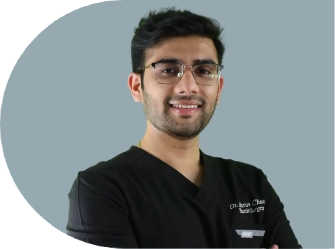
Meet Our Dermatologist!

Conclusion
Botox and thread lifts are not interchangeable treatments. Botox is best suited for dynamic expression lines, while thread lifts are designed to address structural sagging and tissue descent. For patients experiencing both concerns, combining the two may provide a more comprehensive result. The best approach depends on your facial anatomy, skin laxity, wrinkle pattern, and individual goals. A dermatologist can assess these factors and recommend the treatment or combination that is most appropriate for you.
Further Reading
Is HIFU Skin Tightening Worth the Cost in Pune?
HIFU skin tightening promises a non-surgical lift, but is it worth the cost? A clear breakdown of who it works for, realistic results, and what to expect for Indian skin
Dermal Fillers vs Botox in Pune: Cost, Results, and Which to Choose
Dermal fillers and Botox are often confused but treat completely different concerns.
Laser vs Chemical Peel for Sun Damage and Dark Spots: Which Is Better?
Laser and chemical peels both treat sun damage and dark spots, but through different mechanisms.
PIH After Acne: Causes & Treatment | Clear Skin Pune
Post-inflammatory hyperpigmentation (PIH) is a flat dark mark after acne, not a scar. Learn why Indian skin is prone to it and how Clear Skin Pune treats it.
Have thoughts? Please let us know
We are committed not only to treating you, but also educating you.