
How to Get Rid of Dark Knuckles: Causes, Home Remedies & Professional Treatments

Written by Clear Skin Content Team | Medically Reviewed by Dr. Dhanraj Chavan on September 09, 2021
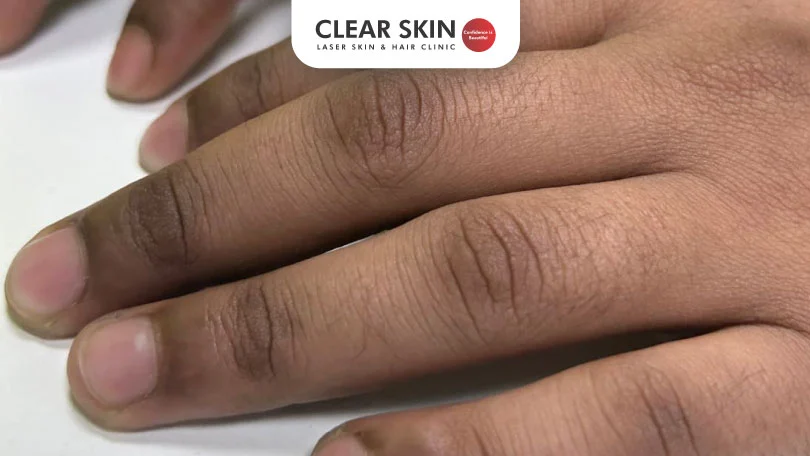
Dark knuckles, those stubborn patches of skin that appear darker than the rest of your hand, are a common concern. They can affect anyone, regardless of skin type, and the root cause isn’t always obvious. The good news: with the right approach, you can effectively lighten dark knuckles and, in many cases, prevent them from returning.
This guide covers everything a dermatologist would want you to know, causes, home remedies that actually work, clinical ingredients to look for, and when professional treatment is necessary.
Table Of Content
- What Are Dark Knuckles?
- What Causes Dark Knuckles?
- How To Get Rid Of Dark Knuckles Fast And Permanently?
- What Home Remedies Work Best for Dark Knuckles?
- When Should I Consult a Doctor for Dark Knuckles?
- Best Skincare Ingredients for Dark Knuckles
- Professional Treatments for Dark Knuckles
- When Should You See a Dermatologist?
- Conclusion
What Are Dark Knuckles?
Dark knuckles occur when the skin over your knuckle joints produces excess melanin, the pigment responsible for skin colour. This overproduction makes the knuckle area appear darker than the surrounding skin. The medical term for this is knuckle hyperpigmentation, and it can range from a subtle discolouration to pronounced dark patches.
Dark knuckles are not merely a cosmetic issue. In some cases, they signal an underlying medical condition that needs attention, which is why identifying the cause matters before choosing a treatment.
What Causes Dark Knuckles?
Dark knuckles, often a result of excessive melanin production leading to hyperpigmentation, can be both frustrating and embarrassing. These patches make certain areas of the skin appear darker than the rest. Common culprits include:
Acanthosis Nigricans
Dark knuckles may result from this skin condition characterized by dark, velvety patches often associated with insulin resistance.
Prediabetes and Diabetes
Elevated blood sugar levels linked to prediabetes or diabetes can contribute to darkening of the skin on the hands.
B12 Deficiency
Insufficient vitamin B12 levels may cause hyperpigmentation, potentially leading to dark knuckles.
Dermatomyositis
This inflammatory muscle disease can manifest with skin changes, including darkening, affecting areas such as the knuckles.
Scleroderma
A connective tissue disorder, scleroderma, may cause skin tightening and darkening, impacting the appearance of the knuckles.
Drug Reactions
Certain medications may lead to skin discoloration, including darkening of the knuckles as a potential side effect.
Polycystic Ovary Syndrome
Hormonal imbalances in PCOS can influence melanin production, contributing to dark knuckles among other skin changes.
Identifying the root cause is crucial for effective treatment, and consulting with a dermatologist can provide personalised insights into your specific needs.
How To Get Rid Of Dark Knuckles Fast And Permanently?
Addressing dark knuckles swiftly and permanently is a common concern, if you’re wondering how to remove dark knuckles in 1 week then let us tell you that doing so is not possible. Finding effective solutions is crucial. Let’s explore a variety of approaches, both home remedies and professional treatments, to help you achieve the desired results.
What Home Remedies Work Best for Dark Knuckles?
Home remedies work best for mild-to-moderate hyperpigmentation without an underlying medical cause. Consistency matters , most remedies require 4–8 weeks of regular use before visible results appear.
1. Lemon Juice
Lemon juice contains citric acid, which mildly inhibits melanin production and gently exfoliates dead skin cells.
How to use: Apply fresh lemon juice to the knuckles with a cotton ball. Leave for 10–15 minutes, then rinse thoroughly. Use 3–4 times per week. Always apply SPF 30+ sunscreen afterwards , lemon juice increases photosensitivity.
2. Aloe Vera Gel
Aloe vera contains aloesin, a compound shown to inhibit tyrosinase , the enzyme that drives melanin synthesis. It also deeply hydrates, preventing dryness that worsens dark patches.
How to use: Apply pure aloe vera gel to the knuckles and leave for 30 minutes before rinsing. Use daily for best results.
3. Turmeric Paste
Curcumin, the active compound in turmeric, has documented skin-lightening and anti-inflammatory properties.
How to use: Mix 1 teaspoon of turmeric powder with enough water or milk to form a paste. Apply to the knuckles for 15–20 minutes, then rinse. Use every other day. Note: turmeric can temporarily stain skin , rinse thoroughly.
4. Honey and Lemon Blend
Honey moisturises while lemon brightens , a useful combination for dark patches that are also dry and rough.
How to use: Mix equal parts raw honey and fresh lemon juice. Massage into the knuckles for 10 minutes, then rinse with lukewarm water. Use 3 times per week.
5. Sugar and Honey Scrub (Exfoliation)
Dead skin cell build-up makes dark knuckles appear more pronounced. Regular gentle exfoliation removes this layer and promotes skin renewal.
How to use: Mix 1 tablespoon of sugar with 1 tablespoon of honey. Massage in circular motions over the knuckles for 5 minutes. Rinse with warm water. Repeat 2–3 times per week, avoid more frequent use, as over-exfoliation damages the skin barrier.
6. Oatmeal, Yogurt, and Cucumber Mask
Oatmeal soothes, yogurt contains lactic acid (a natural AHA that speeds cell turnover), and cucumber has mild brightening properties.
How to use: Blend equal parts oatmeal, sour yogurt, and grated cucumber. Apply to the knuckles and leave for 30 minutes. Rinse with cool water. Use twice a week.
7. Vitamin E Oil
Vitamin E is a fat-soluble antioxidant that supports skin repair and reduces oxidative stress, a known contributor to hyperpigmentation.
How to use: Pierce a vitamin E capsule and massage the oil into the knuckles until absorbed. Best applied at night. Use daily.
When Should I Consult a Doctor for Dark Knuckles?
If you suspect your dark knuckles may be related to an underlying health issue, it’s essential to consult with a dermatologist. They can provide valuable insights and recommend a suitable course of action based on your specific situation.
Additionally, it’s crucial to seek professional advice when home remedies are not providing the desired results or if the dark knuckles are getting worse. Persistent or worsening symptoms may indicate an underlying issue that requires medical attention. A dermatologist can conduct a thorough examination, identify any potential health concerns, and suggest appropriate treatments or interventions to address the root cause of the dark knuckles. Don’t hesitate to seek professional help if your efforts at home are not yielding positive outcomes.
Best Skincare Ingredients for Dark Knuckles
If home remedies aren’t producing results, look for over-the-counter products containing these clinically proven ingredients:
Kojic Acid — Inhibits tyrosinase and is one of the most effective OTC brighteners. Look for 1–4% concentrations in serums or creams. Apply at night and always use SPF during the day, as kojic acid increases sun sensitivity.
Vitamin C (10–20% concentration) — Neutralises free radicals, inhibits melanin synthesis, and brightens existing pigmentation. A Vitamin C serum applied in the morning under sunscreen is an evidence-backed approach for knuckle hyperpigmentation.
Alpha Hydroxy Acids (AHAs) — Glycolic and lactic acid chemically exfoliate the skin surface, accelerating cell turnover and fading dark patches. Start with low concentrations (5–10%) and build tolerance gradually.
Retinoids — Retinol (OTC) and tretinoin (prescription) accelerate skin cell renewal and reduce melanin clustering. Among the most studied ingredients for hyperpigmentation — most users see results after 12+ weeks of consistent use.
Professional Treatments for Dark Knuckle
For stubborn hyperpigmentation that doesn’t respond to home care, dermatological treatments offer faster and more lasting results.
Topical Prescription Creams
Dermatologists may prescribe combinations of hydroquinone, topical retinoids, and corticosteroids, prescription-strength formulations that work more aggressively than OTC products. Topical Vitamin D compounds and keratolytic agents are also used in cases linked to acanthosis nigricans.
Chemical Peels
Chemical peels use controlled application of acids (glycolic, salicylic, TCA) to remove the top layers of skin, taking hyperpigmentation with them. Multiple sessions are typically needed for knuckle darkening, and the treatment also improves overall skin texture.
Laser Treatment for Dark Knuckles
Q-switched Nd:YAG laser treatment targets and fragments melanin deposits in the skin without damaging surrounding tissue. It is one of the most effective options for persistent, deep-set knuckle hyperpigmentation. Results appear gradually over several sessions and are long-lasting when combined with maintenance skincare and daily SPF.
Microdermabrasion
Microdermabrasion uses a controlled device to gently abrade the skin surface, removing dead cells and stimulating renewal. It is a gentler option well-suited to mild-to-moderate discolouration and is often combined with chemical peels for enhanced results.
All these approaches, like any skin pigmentation treatment, are most effective when customised to your specific skin type and the underlying cause of your hyperpigmentation.
When Should You See a Dermatologist?
See a dermatologist if:
- Dark knuckles appeared suddenly or are worsening rapidly
- You have accompanying symptoms, unusual fatigue, increased thirst, weight changes (possible diabetes or PCOS)
- Home remedies haven’t produced visible results after 8–10 weeks
- Skin darkening is accompanied by thickening or a velvety texture (possible acanthosis nigricans)
- You want to rule out an underlying medical cause before starting treatment
A dermatologist can run targeted tests, confirm or rule out systemic causes, and design a treatment plan appropriate for your skin type and condition severity.
Do You Know?
Roughly 250 Patients Are Treated
Everyday By These Dermatologists
(You are one click away from flawless skin)
Meet Our Dermatologist!





Conclusion
In conclusion, dealing with dark knuckles involves identifying the underlying causes and applying effective treatments. Home remedies such as exfoliation with natural ingredients and specific blends like honey and lemon juice can help lighten dark patches. However, for persistent issues or underlying health conditions, consulting a Best dermatologist is essential.
Professional treatments like topical retinoids, laser therapy, and microdermabrasion offer effective solutions for achieving even-toned skin. By combining these approaches, you can restore the natural beauty of your hands. For personalized advice, book a consultation with a dermatologist.
Further Reading
Best Pigmentation Treatment for Indian Skin in 2026: Ranked by Results
Compare pigmentation treatments for Indian skin, including Pico laser, Q-Switch laser, chemical peels, and topical therapies before choosing the right option.
Chemical Peel vs Laser for Active Acne: Which Works Faster on Indian Skin?
Find out whether chemical peels or laser treatment is better for active acne. Compare benefits, costs, downtime, and treatment timelines for Indian skin
Best Acne Treatment Clinic in Pune: What to Look for Before You Book
Choose the right acne treatment clinic in Pune with confidence. Know how dermatologists treat acne, acne marks, and scars with personalised care.
Under Eye Dark Circles Treatment – Causes, Types & Dermatologist Solutions
Vascular, pigmented, and structural, your dark circle type determines your treatment. A dermatologist explains how to identify your type and which treatments actually work.
Have thoughts? Please let us know
We are committed not only to treating you, but also educating you.