
Best Treatments for Pigmentation on Face: Clear Skin Solutions

Written by Clear Skin Content Team | Medically Reviewed by Dr. Dhanraj Chavan on August 25, 2026
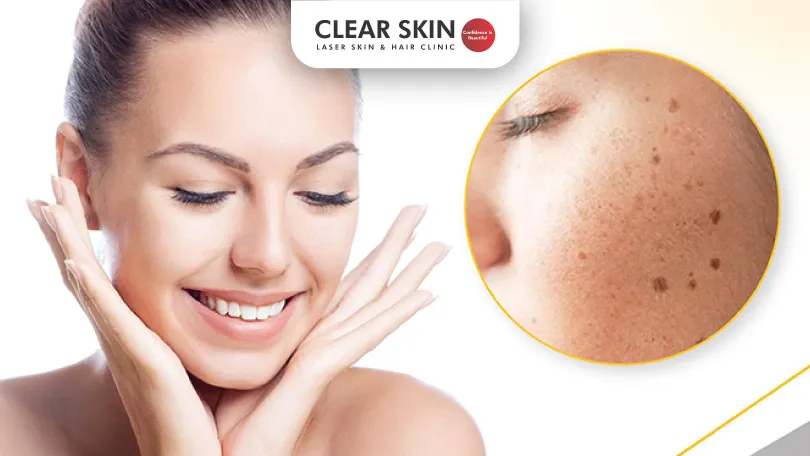
Want even-toned, clear skin? Explore the best remedies and treatments for facial pigmentation and start your journey to brighter skin today
If you have been applying brightening creams for months without results, the most likely reason is not that the products are weak. It is that the treatment does not match the type of pigmentation you have.
Melasma does not respond the same way as post-acne dark spots. Sun spots require a different approach from freckles. And what works for lighter skin can actively worsen pigmentation in darker Indian skin tones. Before choosing any treatment, the first step is identifying what type of pigmentation you are dealing with.
Table Of Content
- Why Pigmentation Type Determines Treatment?
- Pigmentation Type: Match Your Signs to the Right Treatment
- Treatments for Pigmentation: What Each One Does
- Pigmentation and Indian Skin: What Is Different
- What Happens When Pigmentation Goes Untreated?
- Questions Patients Ask Before Booking a Pigmentation Consultation
- Conclusion
Why Pigmentation Type Determines Treatment?
Facial pigmentation is not a single condition. It is a group of conditions that share one symptom (darker patches of skin) but have different causes, depths, and treatment responses. Applying the wrong treatment can waste months and, in some cases, trigger a rebound that makes the pigmentation darker. Understanding your type is the foundation of effective treatment.
The four most common types of facial pigmentation seen in Indian patients:
Melasma appears as symmetrical brown or grey-brown patches on the cheeks, forehead, and upper lip. It is driven by hormones and UV exposure, worsens with sun exposure and oral contraceptives, and has a strong genetic component. It is the most common pigmentation type in Indian women.
Post-inflammatory hyperpigmentation (PIH) appears after any injury or inflammation to the skin: acne, a cut, a burn, a rash, or a dermatological procedure. It presents as dark spots or patches at the site of previous inflammation. Indian skin (Fitzpatrick IV-VI) is significantly more prone to PIH than lighter skin types because more melanin is produced in response to any inflammatory trigger.
Solar lentigines (sun spots) are well-defined, flat brown spots caused by cumulative UV exposure. They appear on areas with the most sun exposure: cheeks, nose, forehead, and the tops of hands. Unlike melasma, they are not symmetrical and are not hormonally driven.
Freckles (ephelides) are small, flat spots that are genetic in origin. They appear in childhood or early adulthood and typically darken with sun exposure and lighten in lower-UV months.
All About Skin Pigmentation (स्किन पिगमेंटेशन कारण और उपाय) | ClearSkin, Pune
Pigmentation Type: Match Your Signs to the Right Treatment
|
Pigmentation Type |
How It Looks |
Common Triggers |
First-Line Treatment |
What to Avoid |
|
Melasma |
Symmetrical brown/grey patches on cheeks, forehead, lip |
Hormones, sun, OCP use |
Topical Rx agents + Q-switched or Pico laser |
IPL, aggressive peels |
|
PIH (post-acne/post-rash) |
Dark spots at previous inflammation sites |
Acne, trauma, procedures |
Chemical peels + topical brighteners |
Anything that re-inflames skin |
|
Sun spots |
Defined flat brown spots, sun-exposed areas |
Cumulative UV exposure |
Q-switched Nd:YAG or Pico laser |
None specific, responds well to laser |
|
Freckles |
Small, scattered flat spots, darken in summer |
Genetics + UV |
Q-switched laser, IPL (for light skin) |
IPL on Fitzpatrick IV-VI |
See pigmentation before and after results from Clear Skin patients
Treatments for Pigmentation: What Each One Does?
Chemical Peels
Chemical peels work by exfoliating the superficial layers of skin to accelerate turnover and bring unpigmented skin cells to the surface. The type and strength of peel is matched to your pigmentation type and skin tone.
Superficial peels (glycolic acid 20 to 50%, lactic acid, mandelic acid) are used for PIH and mild sun damage in Fitzpatrick IV-VI skin. They have a lower risk of post-peel PIH than medium-depth peels and are used in a series of 4 to 6 sessions spaced 2 to 4 weeks apart.
Medium-depth peels (TCA 15 to 35%, Jessner’s) address deeper pigmentation and are suitable for lighter skin types or carefully selected darker skin patients under close dermatologist supervision. Incorrect use on Fitzpatrick IV-VI skin is a leading cause of iatrogenic PIH.
Mandelic acid peels are particularly useful for Indian skin because mandelic acid has a larger molecular size, penetrating more slowly and reducing the risk of irritation-induced PIH. Many dermatologists prefer mandelic as a first peel for Indian patients.
Q-Switched Nd:YAG Laser
The Q-switched Nd:YAG laser targets melanin in the skin with ultra-short nanosecond pulses. It is safe for all skin types including Fitzpatrick IV-VI and is the standard first-line laser for melasma, solar lentigines, and PIH at Clear Skin. The laser shatters melanin granules into smaller particles that are cleared by the body’s lymphatic system over 4 to 8 weeks following each session.
Most patients need 4 to 8 sessions spaced 3 to 4 weeks apart. Results are gradual. Patients typically see 30 to 40 percent improvement by session 3 and cumulative improvement through the full course. Sun protection between sessions is not optional: UV exposure after laser treatment triggers rebound melanin production.
Pico Laser
Pico laser delivers energy in picosecond (trillionth of a second) pulses, which is approximately 100 times shorter than Q-switched pulses. This ultra-fast delivery shatters melanin into even smaller fragments with less thermal damage to surrounding tissue. Pico laser is particularly effective for stubborn melasma, deeper pigmentation, and cases where Q-switched laser alone has not produced adequate clearance.
Topical Treatment Protocols
Topical agents are used as standalone treatment for mild PIH or as maintenance and adjunct therapy alongside laser or peels for melasma and sun damage. Key prescription agents used in India:
Hydroquinone (2 to 4%) inhibits the enzyme responsible for melanin synthesis. It is the most studied depigmenting agent but should not be used continuously for more than 3 to 4 months without dermatologist supervision.
Tranexamic acid (oral or topical) has strong evidence specifically for melasma in Indian skin. It works through a different pathway to hydroquinone and is particularly useful when hormonal drivers are active.
Azelaic acid (15 to 20%) targets melanin-producing cells selectively, making it a good option for PIH in darker skin. It has an additional anti-inflammatory effect that reduces ongoing PIH formation from residual acne.
Retinoids (tretinoin, adapalene) accelerate skin turnover and enhance the penetration and effect of other depigmenting agents. They also have direct effects on melanin distribution. A common dermatologist prescription combines hydroquinone, tretinoin, and a mild steroid in a triple combination cream for melasma.
Combination Protocols
The most effective pigmentation treatment protocols combine topical agents, chemical peels, and laser in a phased approach. A typical protocol for Indian melasma patients: 6 to 8 weeks of topical priming (to reduce melanin production and reduce PIH risk from subsequent procedures), followed by a series of mandelic peels or low-fluence Q-switched laser sessions, followed by topical maintenance with SPF 50 daily. This multi-modal approach addresses different depths of pigmentation and different mechanisms simultaneously.
Pigmentation and Indian Skin: What Is Different?
For Indian patients (Fitzpatrick IV-VI), several clinical realities shape treatment selection in ways that are often not reflected in general information sources.
PIH risk is higher. Any procedure that causes surface inflammation in darker skin triggers melanin production. This means that a peel or laser that is appropriate for Fitzpatrick II-III skin can cause rebound darkening in Fitzpatrick IV-VI if parameters are wrong. At Clear Skin, all laser and peel parameters are calibrated specifically for darker Indian skin tones.
IPL is not the right tool for Indian skin. IPL (Intense Pulsed Light) delivers a broad spectrum of wavelengths that is absorbed by surface melanin as well as the target follicle or pigmented lesion. In darker skin, this creates a significant risk of surface burns and PIH. IPL is frequently listed as a “pigmentation treatment” on general health sites but is not routinely used at Clear Skin for Indian patients for this reason. Q-switched Nd:YAG and Pico laser are the preferred modalities.
Melasma in Indian women often has a hormonal component. PCOS affects a significant proportion of Indian women and directly stimulates androgen-driven melanin production. Oral contraceptives used in PCOS management can simultaneously worsen melasma. Dermatological management of melasma works best when the hormonal driver is addressed concurrently, ideally with a gynaecologist or endocrinologist.
Pune’s UV index is high year-round. Unlike Northern India with seasonal UV variation, Pune’s UV index remains high across most months. This means melasma and sun-spot patients in Pune face a year-round re-triggering risk that requires consistent SPF 50 application, not just summer precautions.
What Happens When Pigmentation Goes Untreated?
PIH that is not treated typically does not resolve on its own within a clinically meaningful timeframe. In Fitzpatrick IV-VI skin, untreated PIH after acne can persist for 12 to 24 months. Each new inflammatory trigger (new acne breakout, new skin irritation) adds a new layer of dark spots. Without treatment, the skin’s cumulative pigmentation burden increases with each cycle.
Melasma worsens progressively with UV exposure. Each summer without adequate treatment and sun protection deposits additional melanin into deeper skin layers, making the condition harder to clear and requiring a longer treatment course. Patients who begin melasma treatment in their early 30s typically achieve clearance in one treatment course. Patients presenting with a decade of untreated melasma typically require 2 to 3 courses and longer maintenance.
Questions Patients Ask Before Booking a Pigmentation Consultation
Which pigmentation treatment is best for Indian skin?
It depends on the pigmentation type. For melasma, the combination of topical Rx agents (hydroquinone, tranexamic acid) with low-fluence Q-switched Nd:YAG or Pico laser is the current evidence-based standard for Indian skin. For PIH after acne, mandelic acid peels and azelaic acid topicals are first-line. For sun spots, Q-switched laser delivers reliable results. IPL is generally not used for Fitzpatrick IV-VI because of the PIH risk from its broad spectrum of wavelengths.
How many sessions does pigmentation treatment take?
This depends on the type and depth of pigmentation. PIH after acne typically responds well to 4 to 6 peel sessions. Melasma, which involves deeper dermal pigment and an ongoing hormonal driver, typically requires 6 to 10 laser sessions and ongoing topical maintenance. Your dermatologist will estimate session count at your first consultation after assessing your pigmentation depth and type.
Can pigmentation come back after treatment?
Yes, if triggers are not managed. Melasma has a strong recurrence tendency if sun protection is inadequate or if the hormonal driver (PCOS, OCP use) remains active. PIH recurs if the underlying acne is not controlled. Solar lentigines return with continued unprotected sun exposure. Treatment clears existing pigmentation. Preventing recurrence requires maintenance: daily SPF 50, trigger management, and periodic maintenance sessions.
Is pigmentation treatment safe for dark skin?
Yes, but laser and peel selection is critical. Fitzpatrick IV-VI skin is well-treated with Q-switched Nd:YAG laser, Pico laser, and superficial mandelic or lactic acid peels. Medium-depth peels and IPL carry higher PIH risk in darker skin and require careful dermatologist selection and calibration. At Clear Skin, all treatment parameters are adjusted for Indian skin tones.
What is the difference between melasma and regular dark spots?
Melasma is hormonally driven and UV-triggered. It presents as symmetrical brown or grey-brown patches, typically on the cheeks, forehead, and upper lip, and worsens with sun exposure and hormonal changes (pregnancy, OCP use). Regular dark spots (solar lentigines, PIH) are not symmetrical and are not driven by hormones. The treatment protocols are different: melasma requires hormonal management alongside topical and laser treatment; PIH and sun spots do not.
How long before I see results from pigmentation treatment?
Chemical peels typically show visible improvement within 2 to 4 weeks of the first session. Q-switched laser results emerge gradually over 4 to 8 weeks after each session as the broken-down melanin is cleared by the lymphatic system. Most patients see significant visible improvement by sessions 3 to 4. Full clearance of melasma typically takes 3 to 6 months of consistent treatment.
Do I need to stop using my skincare products before a consultation?
Not necessarily. Bring a list of your current skincare products to your consultation. Your dermatologist will review them and advise on which to continue, which to pause before procedures, and which to replace with more appropriate alternatives. Specifically, if you are using tretinoin or strong acids, you may be asked to pause 5 to 7 days before a peel or laser session.
Do You Know?
Roughly 250 Patients Are Treated
Everyday By These Dermatologists
(You are one click away from flawless skin)
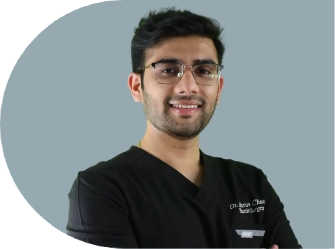
Meet Our Dermatologist?

Conclusion
Your dermatologist will assess your pigmentation type using clinical examination and, where needed, a Wood’s lamp (UV light that reveals whether pigment is superficial or deep dermal). This depth assessment is critical: superficial pigment responds faster to peels and topical agents, while deep dermal pigment requires laser. You will receive a phased treatment plan that accounts for your skin tone, pigmentation type, and any active hormonal or inflammatory drivers.
Clear Skin’s dermatologists have treated thousands of patients for pigmentation across Pune including patients with Fitzpatrick IV-VI skin, melasma complicated by PCOS, and long-standing PIH that had not responded to over-the-counter products. See pigmentation before and after results.
Book your pigmentation consultation at Clear Skin, Pune
Further Reading
Gym & Sweat Acne: Causes & Prevention | Clear Skin Pune
Gym acne (acne mechanica) is caused by sweat, heat, and friction. Learn where it appears, why Pune’s humidity worsens it, and how to prevent breakouts.
Best Treatments for Back Acne and Body Scars
Struggling with back acne and body scars? Learn about effective home remedies and professional treatments to achieve clear, blemish-free skin.
Melasma Treatment Reviews in Pune | Clear Skin
Real Clear Skin Pune patient results for melasma treatment – see before and after outcomes after laser and chemical peel, and what to expect.
Skin Treatments for Anti-Aging
Discover the best skin treatments for anti-ageing to reduce wrinkles, fine lines, and achieve glowing skin. Explore non-surgical options and expert tips for youthful skin.
Have thoughts? Please let us know
We are committed not only to treating you, but also educating you.