
Eliminating Black Nose Spots: Clearing Up Black Dots

Written by Clear Skin Content Team | Medically Reviewed by Dr. Dhanraj Chavan on January 27, 2026
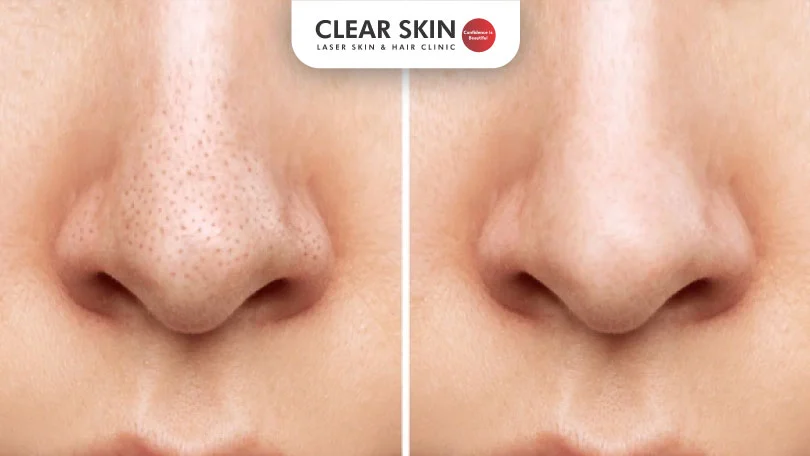
Call them black spots, black dots, or blackheads; they are frustrating. Usually, they go unnoticed for long. But no sooner than one notices black spots, they want to get rid of them.
Black dots on the nose are one of the most common skin concerns we see at Clear Skin Clinic. Many people try scrubs, pore strips, and home remedies repeatedly, only to notice that the dots return within days.
This leads to an important question most blogs don’t answer properly:
Are these black dots actually blackheads, and can they really be removed naturally?
Let’s clear the confusion first. Once you understand what these dots are, managing them becomes much easier and safer.
Table Of Content
- What Are the Black Dots on Your Nose?
- What Causes Black Spots on the Nose?
- How to Remove Black Spots on the Nose?
- Conclusion
What Are the Black Dots on Your Nose?
In most cases, the tiny black dots you see on your nose are not blackheads.
They are usually sebaceous filaments.
Sebaceous filaments are natural structures inside pores that help move oil (sebum) from the sebaceous glands to the skin surface. When this oil mixes with dead skin cells and comes in contact with air, it appears dark or greyish.
This is why:
-
The dots are evenly spread
-
They reappear quickly after removal
-
They are more visible on the nose
True blackheads, on the other hand, are a type of acne and are fewer, larger, and more irregular in appearance.
What Causes Black Spots on the Nose?
In most cases, the black dots you see on your nose are sebaceous filaments, not blackheads.
Sebaceous filaments are natural oil channels inside your pores. They help move sebum (oil) from the oil glands to the skin surface.
When this oil mixes with dead skin cells and gets exposed to air, it looks dark or black.
That’s why:
-
The dots are small and evenly spaced
-
They come back quickly after cleaning
-
They’re most visible on the nose (oil-rich area)
This is normal skin behaviour, not poor hygiene.
Other causes of black dots on the nose
1. Excess oil production
Oily or combination skin produces more sebum, which fills pores faster and makes dots more visible.
2. Enlarged pores
Larger pores hold more oil and dead skin, making sebaceous filaments appear darker.
3. Dead skin buildup
When dead skin isn’t shed properly, it mixes with oil and darkens the pore opening.
4. Oxidation (air exposure)
The black colour is not dirt. It’s oxidation of oil when it comes in contact with air.
5. True blackheads (less common)
These are a type of acne. They are:
-
Larger
-
Irregular
-
Fewer in number
They usually need acne-focused treatment.
How to Remove Black Spots on the Nose?
Most black spots on the nose are not dirt and not always blackheads.
In many people, they are sebaceous filaments, which are a normal part of the skin.
Once you understand this, removing and managing them becomes much easier and safer.
Understand what those black spots really are
1. Sebaceous filaments (most common)
These are tiny pores filled with natural oil (sebum).
When the oil comes in contact with air, it turns dark. That’s why they look like black dots.
They:
-
Are small and evenly spaced
-
Appear more on the nose
-
Come back quickly after cleaning
Sebaceous filaments cannot be removed permanently, because they are part of normal skin function.
2. Blackheads (less common)
Blackheads are a type of acne.
They:
-
Are slightly bigger
-
Look irregular
-
Do not appear evenly spaced
These can be treated and reduced long-term with the right care.
Why black spots keep coming back
Even after cleaning, black spots return because:
-
The nose produces more oil than other areas
-
Pores refill naturally with oil
-
Over-cleaning makes skin produce even more oil
This is normal and does not mean your skin is dirty.
The right way to remove or reduce black spots
The goal is not to force them out, but to keep pores clean and balanced.
1. Gentle cleansing (twice daily)
Use a mild face wash.
Avoid scrubbing hard or washing too often.
Why this helps:
It removes excess oil without triggering more oil production.
2. Salicylic acid (2–3 times a week)
Salicylic acid goes inside the pores and helps dissolve oil buildup.
This is one of the most effective ingredients for black spots on the nose.
Do not use it daily unless advised by a Top Dermatologist.
3. Clay mask (once a week)
Clay absorbs excess oil and makes pores look cleaner for a few days.
This reduces the appearance, not the structure of pores.
4. Moisturising is essential
Many people skip moisturiser thinking it causes oiliness.
In reality:
-
No moisturiser → skin produces more oil
-
More oil → darker black spots
Use a light, non-comedogenic moisturiser daily.
5. Sunscreen every day
Sun exposure thickens the skin and makes pores look larger and darker over time.
Daily sunscreen helps prevent this slow worsening.
Do You Know?
Roughly 250 Patients Are Treated
Everyday By These Dermatologists
(You are one click away from flawless skin)
Meet Our Dermatologist!





Conclusion
Removing black dots on the nose naturally is achievable with consistent care and the right remedies. Techniques such as regular exfoliation, using natural astringents like lemon juice, and incorporating green tea or aloe vera can effectively minimize these imperfections.
However, it’s crucial to maintain a regular skincare routine and avoid harsh treatments that may irritate your skin. For persistent issues or more tailored advice, consulting a Best dermatologist at Pune can provide you with professional guidance. For more tips and detailed information, visit the Clear Skin Clinic Pune.
Further Reading
Pregnancy Acne: All You Need to Know About Pimples in Pregnancy!
Pregnancy Acne: All You Need to Know About Pimples in Pregnancy!
Best Acne Scar Treatments in Pune: Laser vs Chemical Peel
Confused between laser and chemical peel for acne scars? Discover which acne scar treatment in Pune suits your skin best at Clear Skin Clinic.
Can Food Reduce Melanin? What Actually Helps Skin Pigmentation
Discover the best foods to naturally reduce melanin levels for a glowing complexion.
Why Pune’s Climate Triggers More Acne Breakouts Than Other Cities
Discover why Pune’s unique climate – with humidity ranging from 36% to 92%, summer heat reaching 38°C, and urban pollution – creates perfect conditions for acne breakouts and how to adapt your skincare.
Have thoughts? Please let us know
We are committed not only to treating you, but also educating you.