
Is Laser Hair Removal Safe in Pune Clinics? What to Check

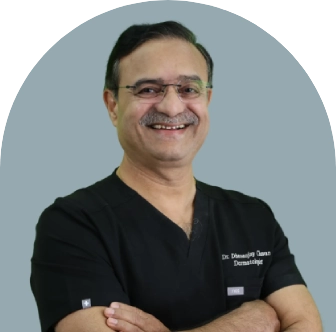
Written by Clear Skin Content Team | Medically Reviewed by Dr. Dhanraj Chavan on March 07, 2026
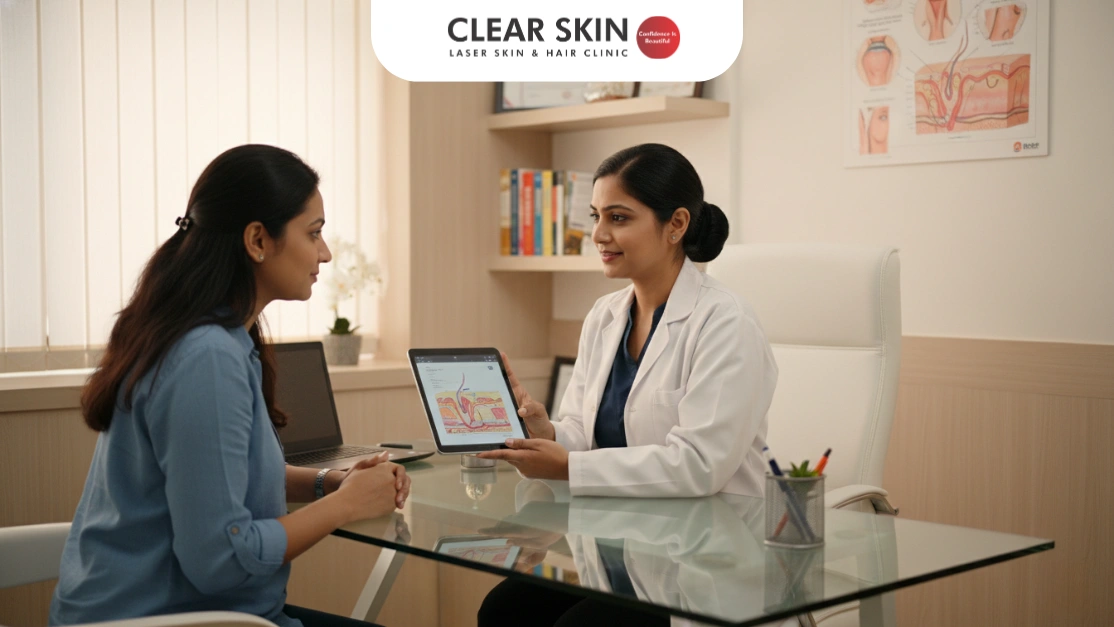
Laser hair removal, also known as laser hair reduction in medical terms, is a medical procedure that uses concentrated light energy to reduce unwanted hair growth permanently. The laser targets melanin – the pigment inside each hair follicle – converting light into heat that disables the follicle without damaging surrounding skin. This principle is called selective photothermolysis.
The procedure is approved for use by dermatologists and trained medical professionals. In Pune clinics, it is performed on the face, underarms, legs, back, chest, and bikini area and other body areas for both men and women. Most patients require 6-8 sessions spaced 4-6 weeks apart to complete a full treatment course.
Safety depends on three factors: the laser technology used, the skill of the treating doctor or technician, and whether the device settings are matched to the patient’s specific skin type. For Indian patients – who predominantly fall in Fitzpatrick skin types III to V – this last factor is especially important. The higher melanin content in darker skin requires specific wavelengths and settings to prevent pigmentation changes or burns.
Clear Skin Clinic in Pune uses diode laser and Erbium Nd:YAG laser technology for laser hair removal. The clinic has a 4.8/5 rating.
Full treatment information is available on the Clear Skin laser hair removal page.
Table Of Content
- Key Facts About Laser Hair Removal Safety at Clear Skin Clinic, Pune
- Key Treatment Attributes
- Why Laser Hair Removal Safety Matters More for Indian Skin
- Which Laser Technologies Are Used in Pune Clinics?
- The Pune Clinic Safety Checklist – 7 Things to Verify
- What Happens at Your First Consultation at Clear Skin Pune?
- Safe Laser Hair Removal Before and After Care – What Clinics Should Tell You
- Common Side Effects vs Warning Signs – Knowing the Difference
- Frequently Asked Questions
- As Verified By External Sources
- Is Laser Hair Removal at Clear Skin Clinic, Pune the Right Choice?
Key Facts About Laser Hair Removal Safety at Clear Skin Clinic, Pune
- Laser hair removal works by selective photothermolysis – targeting follicular melanin without damaging surrounding skin.
- Most Indian patients have Fitzpatrick skin type III-V, requiring longer wavelengths (808nm-1064nm) for safe treatment.
- Diode laser (808nm) is the standard technology for Fitzpatrick skin types III-V in clinical settings.
- Each session lasts 15-60 minutes depending on the treatment area.
- A standard treatment course requires 6-8 sessions spaced 4-6 weeks apart.
- Patch testing before the first session is mandatory to assess skin response at Clear Skin Pune.
- IPL (Intense Pulsed Light) is not a true laser and carries higher risk for darker Indian skin tones.
Key Treatment Attributes
|
Attribute |
Details |
|
Technology Used |
Diode Laser (808nm) and Erbium Nd:YAG Laser |
|
Session Duration |
15-60 minutes per session |
|
Sessions Required |
6-8 sessions, spaced 4-6 weeks apart |
|
Recovery Time |
None to minimal – mild redness resolves in 24 hours |
|
Ideal Candidates |
Adults with Fitzpatrick skin types III-V, dark terminal hair |
|
Not Suitable For |
Fitzpatrick type VI (very dark skin), active tan, pregnancy |
|
Safety Mechanism |
Integrated contact cooling system protects skin surface |
|
Clinic Experience |
35+ years, 4.8/5 rating, 33 verified LHR reviews |
Why Laser Hair Removal Safety Matters More for Indian Skin
Where Indian Skin Falls on the Fitzpatrick Scale
The Fitzpatrick scale classifies skin from Type I (very fair, always burns) to Type VI (very dark, never burns). Most people in Pune fall in types III to V – medium brown to dark brown skin that tans easily and rarely burns.
This matters for laser safety because of how lasers interact with melanin. The more melanin in your skin, the more the laser energy can be absorbed by the skin surface rather than by the hair follicle deep below. That surface absorption is what causes burns, blistering, and post-inflammatory hyperpigmentation (PIH) when the wrong settings or technology are used.
According to a review published in the American Journal of Clinical Dermatology, patients with darker skin types (Fitzpatrick IV-VI) are at higher risk for pigmentation changes if treated with the wrong laser or incorrect settings. This is not a reason to avoid lasers – it is a reason to choose a clinic carefully.
The Melanin Competition Problem
Think of it like this: your hair follicle and your skin surface are both competing for the laser’s energy. In fair skin (Fitzpatrick I-II), the hair follicle wins easily because there is little melanin in the skin surface. In Indian skin (Fitzpatrick III-V), the skin surface contains significant melanin too, which “competes” for that energy.
The solution is to use a longer wavelength laser that penetrates deeper into the skin before it is absorbed. Longer wavelengths bypass the epidermal melanin and reach the follicle more efficiently. This is why the choice of laser technology – not just any laser – determines safety outcomes for darker skin.
Why IPL Is Riskier for Darker Indian Skin Tones
IPL stands for Intense Pulsed Light. It is technically not a laser – it emits a broad spectrum of multiple wavelengths rather than a single focused beam. That broad spectrum means the energy scatters across different depths and targets all melanin-rich structures in the skin, not just the hair follicle.
For Fitzpatrick skin types V-VI, clinical guidelines recommend against IPL as a first-line treatment due to higher rates of adverse events including burns and post-inflammatory hyperpigmentation. A 2013 comparative study in NCBI’s StatPearls database notes that longer-wavelength devices are safer for darker skin, with IPL generally avoided as a primary choice.
Patients in Pune should specifically ask any clinic: “Is this a true diode laser or is it IPL?” The answer changes the risk profile significantly for Indian skin.
Which Laser Technologies Are Used in Pune Clinics?
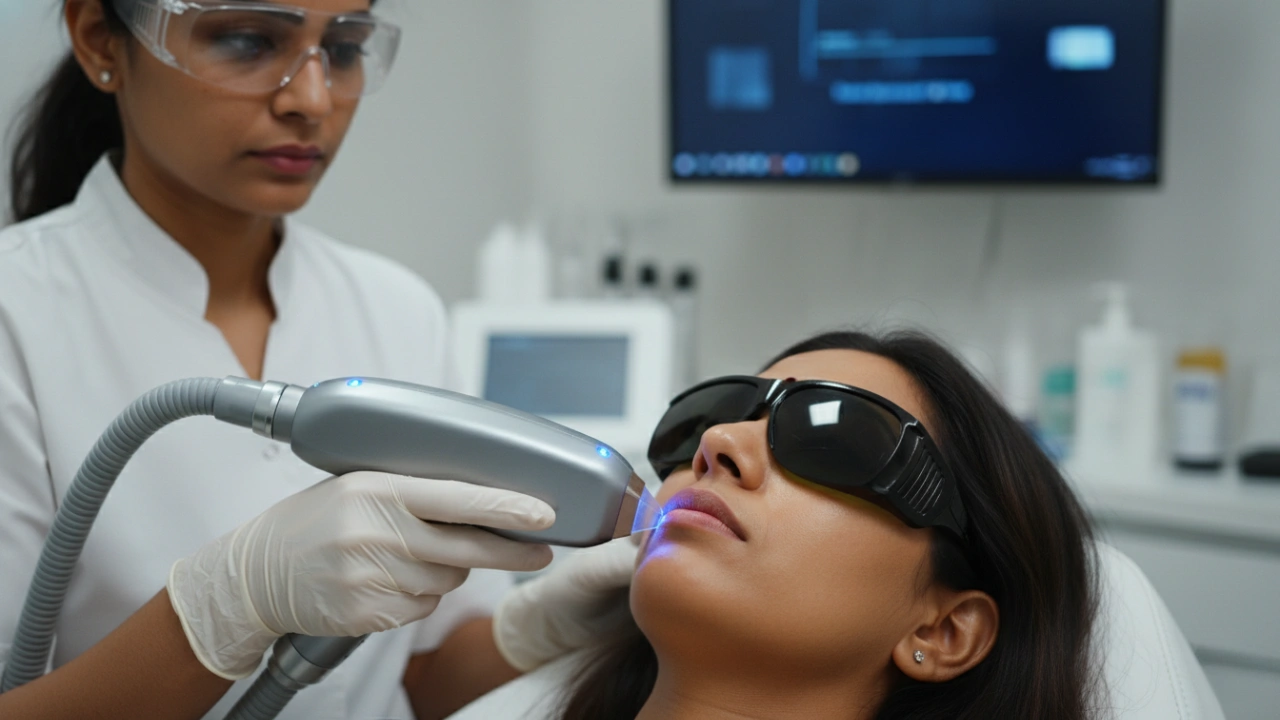
Diode Laser – The 808nm Standard
The diode laser operates at a fixed wavelength of approximately 808nm. This wavelength falls in the near-infrared range and is strongly absorbed by follicular melanin while allowing reasonable skin surface penetration.
Clear Skin Clinic Pune uses diode laser technology for hair removal in patients with Fitzpatrick skin types III-V. You can review the full treatment page for specific protocols and pricing. The diode laser delivers pulses of energy combined with an integrated contact cooling system – a chilled sapphire tip that cools the skin surface simultaneously with each laser pulse. This cooling mechanism is what makes the treatment both safer and more comfortable for Indian skin types.
A randomised controlled trial published in the British Journal of Dermatology found diode laser produced significantly greater hair reduction than IPL at 12-month follow-up (69.2% vs 52.7%), with no severe side effects for either technology. Diode laser was more effective but required fewer total sessions, making it more cost-effective over a full treatment course.
Nd:YAG Laser – The 1064nm Option for Very Dark Skin
For patients with Fitzpatrick skin type V or VI – the darkest skin tones – the Nd:YAG laser operating at 1064nm is considered the safest first-line option. The 1064nm wavelength has lower melanin absorption than 808nm, meaning it passes through the melanin-rich epidermis with minimal absorption before reaching the follicle.
A 2013 study in the Journal of Drugs in Dermatology treating patients with Fitzpatrick types IV-VI using a long-pulsed Nd:YAG laser found effective hair reduction with no epidermal damage when appropriate settings were used. The key phrase there is “appropriate settings” – the clinician must correctly assess the patient’s skin type and adjust fluence and pulse duration accordingly.
IPL – Why It’s Technically Not a Laser
IPL devices are often marketed alongside lasers in non-medical beauty clinics and even home-use devices. Unlike a laser, IPL emits light across a broad spectrum of 500-1200nm. This range targets multiple chromophores in the skin – not only follicular melanin but also haemoglobin and surface pigmentation.
For light skin (Fitzpatrick I-III) with dark hair, IPL can produce reasonable results. For darker Indian skin tones, the broad spectrum dramatically increases the risk of epidermal damage. At Clear Skin Clinic, IPL treatments exist for other indications, but diode laser is the technology used for hair removal in darker skin type patients.
The Pune Clinic Safety Checklist – 7 Things to Verify
Before booking laser hair removal at any Pune clinic, patients should verify these seven points directly.
1-3: The Non-Negotiables
1. Is a qualified dermatologist overseeing treatment?
Laser hair removal should be prescribed and supervised by a qualified MBBS dermatologist or skin specialist, not just a technician or beautician. The dermatologist must assess your skin type, review your medications, and determine treatment parameters. At Clear Skin Clinic, each new laser hair removal patient is assessed by a dermatologist before treatment begins.
2. Is the equipment a certified medical-grade laser?
Ask directly: “What laser machine do you use, and is it medically certified?” Medical-grade diode lasers used in dermatology clinics are maintained to clinical standards and calibrated regularly. Home-use or salon-grade IPL devices are not equivalent. The machine type and maintenance record affects both safety and results.
3. Is a patch test performed before the first session?
A patch test involves applying the laser at clinical settings to a small area of skin 24-48 hours before full treatment. It confirms how your specific skin type responds to that particular machine’s settings. Skipping this step is a red flag – it means the clinic has not properly assessed your individual skin response.
4-7: What Distinguishes Safe Clinics from Risky Ones
4. Does the device have an integrated cooling system?
Cooling protects the skin surface during laser delivery. Contact cooling (chilled sapphire tip), cryogen spray cooling, or air cooling are all accepted methods. A laser system without cooling is significantly more likely to cause surface burns in Indian skin types. Ask specifically: “How does your laser protect the skin surface during treatment?”
5. Does the doctor assess your Fitzpatrick skin type before setting parameters?
Treatment parameters – fluence (energy density), pulse duration, and spot size – must be customised to your skin type. A clinic that uses the same settings for every patient is not practising safe laser treatment protocol. Your skin type assessment should happen during the consultation, not be assumed based on appearance alone.
6. Are the treating staff certified in laser operation?
Laser operators should hold formal certification in laser safety. Ask whether the person performing your treatment is a trained technician under dermatologist supervision, or a dermatologist themselves. Either is acceptable – but a salon staff member with no formal laser training is not.
7. Is there a no-tanning policy enforced before treatment?
Active tanning – whether from sun exposure, self-tanners, or recent beach holidays – temporarily raises your Fitzpatrick skin type and dramatically increases the risk of burns and PIH. Safe clinics will ask about recent sun exposure and postpone treatment if your skin is tanned. If a clinic shows no concern about your recent sun exposure, treat that as a warning sign.
What Happens at Your First Consultation at Clear Skin Pune?
Skin Type Assessment Process
At Clear Skin Clinic, the first consultation involves a structured skin type assessment. The dermatologist evaluates your natural skin tone using the Fitzpatrick phototype scale, checks for any active tanning, and notes areas of existing hyperpigmentation or sensitivity.
This assessment determines the laser wavelength, energy settings, pulse duration, and number of sessions required for your specific skin. It also identifies areas that may need modified settings – for example, bony areas like the upper lip or chin require lower fluence than larger flat areas like the back.
What the Doctor Reviews Before Approving Treatment
The dermatologist reviews your full medical history before approving laser sessions. Several factors can temporarily or permanently contraindicate treatment. Medications like retinoids, photosensitising antibiotics, and certain acne drugs increase skin sensitivity to laser energy. Hormonal conditions such as PCOS often cause hair growth and are a common reason patients seek laser hair reduction in Pune – these patients can safely proceed, but the dermatologist may recommend a longer treatment course due to ongoing hormonal stimulation of hair follicles.
Active skin infections, open wounds, or recent sunburn in the treatment area require postponement. Pregnancy is a full contraindication – laser hair removal is not performed during pregnancy at Clear Skin.
If you have PCOS and are considering laser hair removal, the PCOS and laser hair removal article explains what to expect from treatment outcomes.
Setting Realistic Expectations on Sessions and Outcomes
Laser hair removal targets hair follicles in the active growth phase (anagen phase). At any given time, only a portion of your hair is in this phase. This is why multiple sessions are required – each session catches a different cohort of follicles in their active phase.
For Indian skin types III-V in Pune, expect 6-8 sessions to achieve significant permanent reduction. The word “permanent” here means the treated follicles do not regrow – but new follicles can become active over time, especially in hormonally sensitive areas. Some patients schedule a maintenance session annually after their initial course.
Patients reviewed at Clear Skin’s reviews page show consistent improvement across 6 sessions, which aligns with clinical data for diode laser in Fitzpatrick III-V skin types.
Safe Laser Hair Removal Before and After Care – What Clinics Should Tell You
Pre-Treatment Dos and Don’ts
Starting 4-6 weeks before your first session, stop all waxing, threading, and epilating. These methods remove the hair shaft from the follicle – the exact structure the laser needs to target. Shaving is the only acceptable hair removal method between sessions, as it removes the visible hair while leaving the follicle intact.
Avoid direct sun exposure for at least two weeks before each session. If your work or lifestyle involves significant sun exposure, apply SPF 50+ daily and discuss timing with your doctor. Do not use self-tanners for six weeks prior.
Pre-session shaving instructions vary by clinic. Your clinic will advise you specifically on whether to arrive pre-shaved or with natural hair growth – follow their guidance, as protocols differ based on individual assessment needs and the technology being used.
On the day of treatment, arrive with clean skin – no lotions, creams, deodorants, or cosmetics on the treatment area.
Post-Treatment Care
Mild redness and slight warmth in the treated area are normal and typically resolve within 2-24 hours. Apply a gentle fragrance-free moisturiser and SPF 50+ sunscreen immediately after treatment and continue sunscreen use daily for two weeks.
Avoid heat exposure for 48 hours post-treatment. This includes hot showers, saunas, steam rooms, and intense exercise. Heat may aggravate post-inflammatory response and increase the risk of PIH.
You will notice hairs appearing to “grow” in the days after treatment – this is not regrowth but the treated follicles shedding the damaged hair shaft. It typically occurs 1-3 weeks post-session. Do not wax or thread these hairs out. Shaving is fine.
Monsoon-Specific Considerations in Pune
Pune’s monsoon season (June to September) creates specific challenges for laser hair removal patients. High humidity, increased sweating, and friction from clothing can aggravate post-treatment skin in the 48-hour window after sessions.
During monsoon, schedule sessions early in the week and avoid scheduling them the day before outdoor events or activities. The moisture barrier disruption from sweating can increase PIH risk in darker skin types, particularly in areas like the underarms and bikini line where friction is higher.
Additionally, overcast monsoon skies create a false sense of UV safety. UV radiation penetrates cloud cover significantly – SPF 50+ remains essential in the weeks following any laser session, even on overcast Pune days. For a comprehensive guide to managing skin during Pune’s climate extremes, read Clear Skin’s monsoon skincare guide.
Common Side Effects vs Warning Signs – Knowing the Difference
Normal Temporary Reactions
The following are expected and self-resolving after laser hair removal in clinical settings:
Redness in the treated area lasts 2-24 hours. This is a normal inflammatory response to the heat energy delivered. It is equivalent to mild sunburn and resolves with moisturiser and SPF.
Mild swelling around individual follicles, giving a temporarily “bumpy” appearance like goosebumps. This is called perifollicular oedema and indicates the follicle has absorbed the laser energy as intended. It resolves within a few hours.
A sensation of warmth or tingling in the treated area for a few hours post-session. This is normal and can be soothed with a cold pack wrapped in a clean cloth.
For a detailed breakdown of what to expect, Clear Skin’s guide on laser hair removal side effects covers the full spectrum of normal versus abnormal responses. The treatment process guide also explains what happens during and between sessions.
Red Flags That Indicate Poor Technique or Wrong Laser Choice
The following reactions indicate the laser settings were incorrect for your skin type, or the technology used was not appropriate. Contact your clinic immediately if you experience:
Blistering or weeping in the treated area. This indicates thermal burn from excessive fluence or incorrect settings for your skin type.
Dark brown or grey crusting that does not shed naturally within a week. Superficial crusting can be normal on very dense hair areas, but persistent or deep crusting indicates epidermal injury.
Immediate whitening of the skin at the treatment site. This is called immediate pigment darkening or, in severe cases, epidermal ablation – both indicate the laser energy was not matched to your skin type.
Post-Inflammatory Hyperpigmentation – The Biggest Risk for Indian Skin
Post-inflammatory hyperpigmentation (PIH) is the most common adverse outcome of laser hair removal in Indian skin. It presents as darkening of the treated area – the opposite of what patients want – and can take weeks to months to resolve.
PIH occurs when the laser causes enough thermal injury to trigger melanocyte activation in the skin. Darker skin types have more reactive melanocytes, making them more prone to PIH even from properly performed treatments.
The risk of PIH is reduced by: using the correct wavelength for your skin type, performing a patch test, avoiding tanning before treatment, applying SPF consistently post-treatment, and treating any existing hyperpigmentation before starting the laser. Clear Skin’s full guide on PIH treatment covers prevention and treatment in detail.
Frequently Asked Questions
Is laser hair removal safe for Indian skin tone?
Yes, laser hair removal is safe for Indian skin when performed with the correct laser technology and settings for your specific Fitzpatrick skin type. Most Indians fall in Fitzpatrick types III-V. Diode laser (808nm) is the standard technology for these skin types, while Nd:YAG (1064nm) is preferred for very dark skin (Fitzpatrick V-VI).
The key safety factors are correct wavelength selection, integrated cooling, and proper fluence calibration by a qualified dermatologist. When these conditions are met, Indian skin responds well to laser hair removal with no permanent side effects.
Which laser is best for dark skin – diode or Nd:YAG?
For most Indian patients (Fitzpatrick III-IV), the diode laser at 808nm is the standard safe choice. For patients with very dark brown skin (Fitzpatrick V-VI), the Nd:YAG laser at 1064nm is safer because its longer wavelength is less absorbed by epidermal melanin.
Published clinical research in the Journal of Drugs in Dermatology found Nd:YAG effective and safe in Fitzpatrick IV-VI patients with proper settings. Your dermatologist should assess your Fitzpatrick type at consultation and select technology accordingly – not apply a one-size-fits-all protocol.
Is IPL safe for Indian skin?
IPL (Intense Pulsed Light) carries higher risk for Indian skin tones (Fitzpatrick IV-VI) compared to a true laser. IPL uses a broad spectrum of multiple wavelengths, which scatters energy across different depths and targets all melanin in the skin, not only the hair follicle. This increases the risk of surface burns, PIH, and uneven results in darker skin types.
Clinical guidelines from StatPearls (NCBI) note that longer-wavelength lasers are recommended for Fitzpatrick IV-VI and that IPL is generally not the first-line treatment for darker skin. Patients with lighter Indian skin (Fitzpatrick III) can safely use IPL with proper settings, but a qualified dermatologist should make this determination – not a beauty salon.
How many sessions are needed for laser hair removal in Pune?
Most patients at Clear Skin Clinic require 6-8 sessions for significant permanent hair reduction. The exact number depends on your Fitzpatrick skin type, hair density, treatment area, and any underlying hormonal conditions like PCOS. Patients with Fitzpatrick IV-V may require slightly more sessions than lighter skin types because the treatment parameters need to be conservative to protect the skin surface.
Sessions are spaced 4-6 weeks apart, meaning a full course takes 6-9 months. Some patients with PCOS or hormonal hair growth require annual maintenance sessions after their initial course is complete. Individual results from Clear Skin Pune patients can be reviewed at the reviews page.
What should I check before choosing a laser hair removal clinic in Pune?
Before booking, verify these seven things with any Pune clinic: (1) Is a qualified dermatologist supervising treatment? (2) Is the equipment a medical-grade certified laser – specifically diode or Nd:YAG? (3) Is a patch test performed before the first session? (4) Does the device have an integrated cooling system? (5) Does the doctor assess your Fitzpatrick skin type and customise settings? (6) Are the treating staff formally trained in laser operation? (7) Does the clinic enforce a no-tanning policy before sessions?
A clinic that cannot answer all seven questions clearly is not operating to the standard required for safe laser treatment on Indian skin types.
Can men get laser hair removal safely in Pune?
Yes, laser hair removal is equally safe for men. Men commonly seek treatment for the back, chest, shoulders, beard shaping, and underarms. The diode laser protocol is the same for men and women – safety depends on skin type and treatment area, not gender.
The main consideration for men is beard and facial hair: these areas have denser, coarser terminal hair and may require more sessions and more conservative settings due to proximity to sensitive facial structures. Clear Skin’s detailed guide to laser hair removal for men covers area-specific protocols and what to expect from male facial hair treatment.
Is laser hair removal safe during Pune’s monsoon season?
Laser hair removal can be performed year-round in Pune, including during the monsoon. However, the post-treatment period requires more careful management during monsoon months (June-September). High humidity and sweating in the 48 hours after treatment can aggravate post-inflammatory responses in darker skin types. Schedule sessions early in the week to give your skin a full recovery window.
Apply SPF 50+ consistently – overcast monsoon skies still transmit significant UV radiation. Avoid friction from wet clothing on treated areas. If you experience unusual irritation during Pune’s monsoon after a session, contact your dermatologist before your next appointment. With these precautions, monsoon is a perfectly reasonable time to continue your laser hair removal course.
As Verified By External Sources
Cited in NCBI StatPearls – Fitzpatrick Skin Type Laser Recommendations StatPearls (National Center for Biotechnology Information) confirms that longer wavelength lasers are recommended for Fitzpatrick skin types IV-VI to reduce risk of epidermal injury, and that IPL is generally not the first-line choice for darker skin types.
Published in American Journal of Clinical Dermatology A comprehensive peer-reviewed review of laser and light treatments for Fitzpatrick IV-VI skin types confirms that longer wavelengths reduce adverse events and that prospective data supports diode laser and Nd:YAG as safer options for darker skin.
Published in British Journal of Dermatology (RCT) A randomised controlled trial comparing diode laser vs IPL found diode laser produced 69.2% hair reduction at 12 months vs 52.7% for IPL, with no severe adverse effects. Diode laser was more effective with fewer treatments required.
Published in Journal of Drugs in Dermatology Clinical study on Nd:YAG laser in Fitzpatrick IV-VI patients confirmed effective hair reduction without epidermal damage when appropriate settings and cooling protocols were used.
Clear Skin Clinic Listed on Practo, Pune Clear Skin Clinic is listed on Practo as a verified dermatology practice in Pune, with patient reviews for laser hair removal services.
Do You Know?
Roughly 250 Patients Are Treated
Everyday By These Dermatologists
(You are one click away from flawless skin)
Meet Our Dermatologist!

Is Laser Hair Removal at Clear Skin Clinic, Pune the Right Choice?
Laser hair removal is safe for Indian skin when three conditions are met: the right laser technology for your skin type, a qualified dermatologist overseeing treatment, and a proper pre-treatment assessment including patch testing. At Clear Skin Clinic Pune, these conditions are standard practice across all six Pune locations – Prabhat Road, Pune Station, Pimple Saudagar, Baner, Kharadi, and NIBM.
Before booking anywhere in Pune, use the seven-point checklist in this article. Any clinic that cannot answer all seven questions clearly is not equipped to safely treat Indian skin types III-V with laser hair removal.
To book a consultation or speak with a dermatologist about your skin type and suitability, contact Clear Skin Clinic directly.
Phone: +91-95845 84111 Book online: clearskin.in/contact-us/
Further Reading
20 Tips to Say Farewell to Puffy Eyes and Feel Refreshed Again
Discover 20 powerful tips and home remedies to banish them for good.
Post-Acne Marks vs Scars – What Pune Patients Should Know
Confused about post-acne marks and scars? Learn the key differences, why Pune’s climate affects healing, and which treatments work best at Clear Skin Clinic Pune.
Complete Guide to Acne: Types and Expert Treatment in Pune
Comprehensive acne treatment in Pune by Dr Dhanraj Chavan. Expert care for all acne types, affordable prices, & Free consultation. Book now!
Effective Tips to Remove Dark Spots on Hands
Expert guide to removing dark spots on hands in 2026. Latest natural remedies, medical treatments, and prevention tips from Dr Dhanraj Chavan.
Have thoughts? Please let us know
We are committed not only to treating you, but also educating you.