
How Laser Hair Removal Works on Indian Skin Tones?
Written by Clear Skin Content Team | Medically Reviewed by Dr. Dhanraj Chavan on March 13, 2026
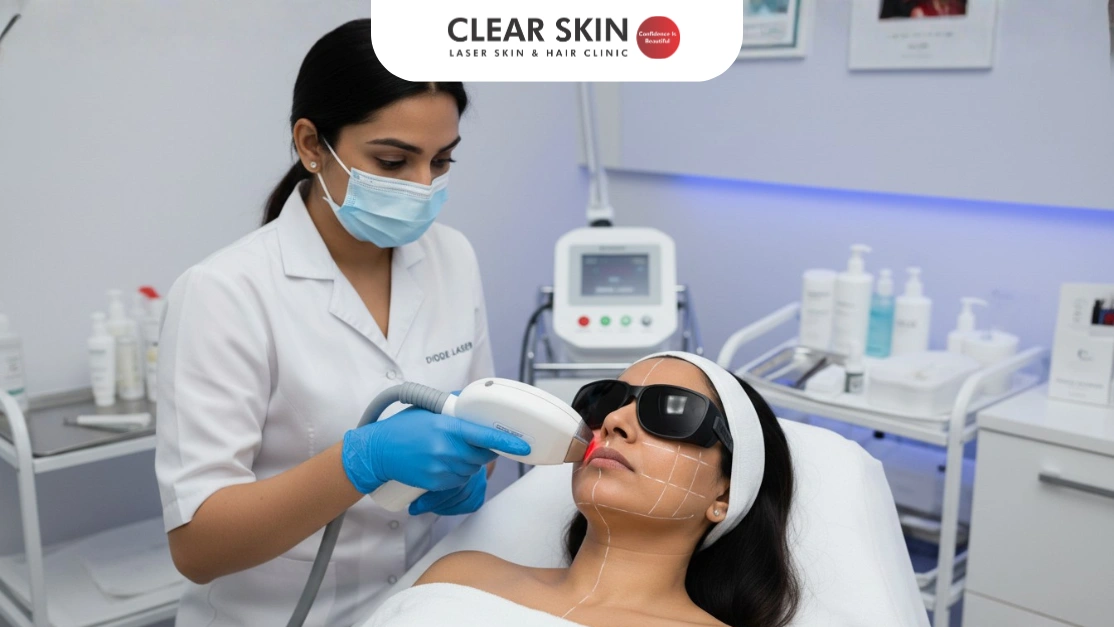
Laser hair removal (also known as laser hair reduction) uses concentrated light energy to target and destroy hair follicles. The laser emits a specific wavelength that is absorbed by melanin in the hair shaft and follicle.
This absorption converts light energy into heat. The heat damages the follicle’s growth center, preventing future hair production.
Indian skin typically falls under Fitzpatrick skin types IV, V, or VI. These skin types contain higher melanin levels compared to lighter skin tones.
The melanin in darker skin can also absorb laser energy. This creates a unique challenge requiring specialized laser technology and settings.
Diode lasers operating at 810nm wavelength and Nd:YAG lasers at 1064nm wavelength are considered safe for Indian skin. These wavelengths penetrate deeper while minimizing surface melanin absorption.
Treatment requires multiple sessions because hair grows in cycles. Only hair in the active growth phase (anagen) responds to laser treatment.
Most patients need 6-8 sessions spaced 4-6 weeks apart. Each session typically lasts 20-60 minutes depending on the treatment area.
Clear Skin Clinic uses FDA-approved Diode and Nd:YAG laser technology specifically calibrated for darker skin tones. The success rate is 80-90% hair reduction after completing the full treatment series.
Table Of Content
- Key Facts About Laser Hair Removal on Indian Skin at Clear Skin Clinic
- Understanding Indian Skin and Laser Hair Removal
- How Laser Hair Removal Works: The Science?
- Laser Types Safe for Indian Skin Tones
- What Clear Skin Clinic Uses and Why?
- Risks and How to Avoid Them on Indian Skin?
- Pre-Treatment Precautions for Indian Skin
- What to Expect During Treatment?
- Aftercare for Indian Skin Tones
- Results: What Indian Patients Can Realistically Expect?
- Frequently Asked Questions
- External Recognition & Verification
- Conclusion
Key Facts About Laser Hair Removal on Indian Skin at Clear Skin Clinic
- Indian skin typically falls under Fitzpatrick types IV-VI with higher melanin levels
- Diode (810nm) and Nd:YAG (1064nm) lasers are safe and effective for darker skin tones
- Treatment requires 6-8 sessions spaced 4-6 weeks apart for optimal results
- Clear Skin Clinic uses FDA-approved Diode and Nd:YAG laser technology for Indian skin
- Each session lasts 20-60 minutes depending on treatment area size
- Higher melanin content requires customized laser settings to prevent hyperpigmentation
- Success rate of 80-90% hair reduction after a complete treatment series
Understanding Indian Skin and Laser Hair Removal
Indian skin presents unique characteristics that require specialized laser hair removal approaches. The key factor is melanin concentration, which affects how skin responds to light-based treatments.
Key Treatment Attributes
|
Attribute |
Details |
|
Treatment Duration |
20-60 minutes per session depending on area |
|
Technology/Device Used |
Diode Laser (810nm) and Nd:YAG Laser (1064nm) – FDA approved |
|
Recovery Time |
Minimal to no downtime, mild redness resolves within a few hours |
|
Success Rate |
80-90% hair reduction after 6-8 sessions |
|
Ideal Candidates |
Fitzpatrick skin types IV-VI with dark, coarse hair |
|
Sessions Required |
6-8 sessions spaced 4-6 weeks apart |
What is the Fitzpatrick Skin Scale?
The Fitzpatrick scale classifies skin types based on their response to UV radiation. Developed in 1975 by dermatologist Thomas Fitzpatrick, it ranges from Type I (very fair) to Type VI (deeply pigmented).
Indian skin typically falls into three categories. Type IV appears as light to moderate brown with minimal burning and easy tanning.
Type V presents as dark brown skin that rarely burns and tans very easily. Type VI represents deeply pigmented skin that never burns.
Each type contains different melanin concentrations. Higher melanin levels provide natural sun protection but require adjusted laser parameters.
The Fitzpatrick scale helps dermatologists select appropriate laser settings. This ensures safe and effective treatment for darker skin tones.
Why Indian Skin Requires Special Consideration?
Melanin exists in both hair follicles and surrounding skin tissue. Laser energy targets melanin to destroy hair-producing structures.
In lighter skin, there is a high contrast between dark hair and light skin. The laser easily distinguishes between the two targets.
Indian skin contains more epidermal melanin. This reduces the contrast between hair and skin.
Older laser technologies couldn’t differentiate effectively. They risked damaging skin tissue along with hair follicles.
This led to complications like burns and hyperpigmentation. Post-inflammatory hyperpigmentation (PIH) remains the primary concern for darker skin tones.
Modern laser systems address these challenges. Diode and Nd:YAG lasers use specific wavelengths that penetrate deeper.
They bypass much of the surface melanin. This allows them to target hair follicles while protecting surrounding skin.
The Role of Melanin in Laser Hair Removal
Melanin acts as the chromophore or target for laser energy. Hair follicles contain concentrated melanin in their structure.
When laser light hits melanin, it converts to thermal energy. This heat reaches temperatures of 60-70 degrees Celsius.
The intense heat damages stem cells in the follicle bulge. These stem cells are responsible for producing new hair.
Damaged stem cells cannot regenerate hair effectively. This results in permanent or long-lasting hair reduction.
The selectivity principle governs this process. Proper wavelength selection ensures hair melanin absorbs more energy than skin melanin.
Pulse duration also matters significantly. Longer pulse durations allow heat to dissipate from skin while maintaining follicle damage.
Skin pigmentation treatment expertise helps manage these parameters safely. Experience with darker skin tones ensures optimal outcomes.
How Laser Hair Removal Works: The Science?
Understanding the scientific mechanism helps patients make informed decisions. The process involves several biological and physical principles working together.
The Melanin Absorption Process
Laser hair removal relies on selective photothermolysis. This principle targets specific tissue while sparing surrounding structures.
The laser emits monochromatic light at a specific wavelength. For Indian skin, 810nm (Diode) or 1064nm (Nd:YAG) wavelengths work best.
Melanin in hair has peak absorption around 600-1100nm. This range allows effective targeting of hair pigment.
When melanin absorbs light energy, electron excitation occurs. The excited electrons release energy as heat.
This thermal energy conducts through the hair shaft. It reaches the follicle bulb and destroys growth centers.
The surrounding skin experiences minimal heating. Cooling mechanisms protect the epidermis during treatment.
Advanced systems use contact cooling or cryogen spray. These technologies maintain skin temperature while heating follicles, minimising thermal injury.
How Hair Growth Cycles Affect Treatment
Hair grows in three distinct phases throughout its lifecycle. Understanding these phases explains why multiple sessions are necessary.
The anagen phase is the active growth period. Hair is attached to the follicle and contains abundant melanin.
Laser treatment is most effective during anagen. The follicle is metabolically active and vulnerable to heat damage.
The catagen phase is a transitional period. Hair detaches from the blood supply and stops growing.
During catagen, laser effectiveness decreases significantly. The follicle enters a resting state with reduced activity.
The telogen phase is the resting period. Hair remains in the follicle but is not actively growing.
Telogen hair eventually sheds naturally. New anagen hair then begins growing from the follicle.
At any given time, different follicles are in different phases. Only 20-30% of body hair is in the anagen phase at a given time.
This explains why 6-8 sessions are required. Each session targets the hair currently in the growth phase.
Spacing sessions 4-6 weeks apart allows new hair to enter anagen. This ensures comprehensive coverage over the treatment series.
Why Multiple Sessions Are Necessary
Single laser sessions cannot achieve complete hair removal. The hair growth cycle biology makes repeated treatments essential.
Each treatment targets only actively growing hair. The remaining 70-80% of follicles are dormant or resting.
These dormant follicles will eventually activate. They produce new hair that requires treatment.
Session spacing must align with growth cycles. Too-frequent treatments waste time and resources.
Too-long intervals allow excessive regrowth. This can extend the overall treatment timeline.
The complete laser hair removal process typically spans 12-18 months. This timeframe covers all growth cycles comprehensively.
Body area also affects session requirements. Facial hair may need 8-10 sessions due to hormonal influences.
Body hair often responds well in 6-8 sessions. Areas with coarser, darker hair show better results.
Laser Types Safe for Indian Skin Tones
Not all laser technologies are equally safe for darker skin. Wavelength and pulse characteristics determine safety and effectiveness.
Diode Laser (810nm) – Best for Fitzpatrick IV-V
Diode lasers emit 810nm wavelength light energy. This wavelength balances melanin absorption with safe penetration depth.
The 810nm wavelength targets hair melanin effectively. It also penetrates deep enough to avoid excessive surface absorption.
Diode systems work well for Fitzpatrick Type IV skin. They also treat Type V skin safely with proper settings.
Diode technology offers fast treatment times. Large spot sizes allow quick coverage of body areas.
The technology includes integrated cooling systems. These protect the epidermis while targeting follicles.
Pulse duration can be adjusted for different hair types. Coarser hair requires longer pulses for effective heating.
Based on clinical experience treating Indian patients, 80-90% hair reduction is achievable with Diode lasers after completing 8 sessions at appropriate intervals.
Nd:YAG Laser (1064nm) – Safest for Fitzpatrick V-VI
Nd:YAG lasers use 1064nm wavelength, the longest in hair removal. This wavelength has minimal epidermal melanin absorption.
The longer wavelength penetrates deeper into tissue. It bypasses surface melanin almost entirely.
This makes Nd:YAG the safest option for very dark skin. Fitzpatrick Type VI patients benefit most from this technology.
However, the deeper penetration has trade-offs. Follicle heating is less efficient compared to shorter wavelengths.
More sessions may be required for optimal results. Energy settings must be higher to achieve follicle destruction.
The gold standard for very dark skin types remains Nd:YAG technology. Its safety profile outweighs the efficiency trade-offs.
Pain levels may be slightly higher with Nd:YAG. The higher energy and deeper penetration increase thermal sensation.
Why IPL is NOT Recommended for Darker Skin Tones
Intense Pulsed Light (IPL) is often confused with laser technology. IPL uses broad-spectrum light rather than monochromatic laser light.
The broad spectrum includes multiple wavelengths simultaneously. This reduces selectivity for hair melanin.
IPL cannot distinguish between skin and hair melanin effectively. This creates high risk for Indian skin tones.
The non-specific targeting leads to epidermal damage. Burns, blistering, and hyperpigmentation occur frequently.
IPL may work on very light skin with dark hair. For Fitzpatrick Type IV and above, risks outweigh benefits.
Professional dermatology organizations discourage IPL for darker skin. The technology lacks the precision required for safe treatment.
Patients should specifically inquire about laser type. Facilities using IPL should be avoided for Indian skin treatment.
What Clear Skin Clinic Uses and Why
Clear Skin Clinic uses both Diode and Nd:YAG (Erbium Nd:YAG) laser technology for hair removal. Both FDA-approved systems are specifically calibrated for Indian skin tones.
The Diode laser offers the optimal balance for Fitzpatrick IV-V patients. It combines safety, effectiveness, and treatment speed.
For patients with deeper skin tones or a history of PIH, Nd:YAG technology provides an added safety margin. The 1064nm wavelength minimizes epidermal melanin absorption, reducing the risk of post-treatment darkening.
Dr. Dhanraj Chavan has extensive experience treating Indian skin. His 10+ years of practice has refined treatment protocols.
Each patient undergoes thorough skin assessment before treatment. Fitzpatrick type, hair characteristics, and medical history are evaluated.
Patch testing is performed on a small area first. This confirms appropriate settings before full treatment begins.
The clinic’s laser systems include advanced cooling technology. Contact cooling protects the epidermis throughout each pulse.
Energy fluence is adjusted based on individual response. Conservative starting settings minimize risk while ensuring efficacy.
Laser Hair Removal at Clear Skin Clinic follows evidence-based protocols. These protocols are specifically designed for Indian patients.
Risks and How to Avoid Them on Indian Skin?
Understanding potential risks allows patients to make informed decisions. Proper precautions minimize these risks significantly.
Post-Inflammatory Hyperpigmentation (PIH) – The Primary Risk
PIH represents the most common complication on Indian skin. It appears as darkened patches in treated areas.
The condition occurs when melanocytes become overactive. Inflammation or injury triggers excess melanin production.
Laser treatment can trigger this inflammatory response. Excessive heat or improper settings increase PIH risk.
While initial redness may occur immediately, the darkening (PIH) typically becomes fully visible 2 to 4 weeks after the procedure. It can last several months without proper management.
Prevention focuses on conservative energy settings. Starting with lower fluence reduces inflammatory stimulus.
Gradual energy is increased over sessions to optimize results safely. This approach balances efficacy with safety.
Pre-treatment skin preparation also helps prevent PIH. Avoiding sun exposure for 4 weeks before treatment reduces risk.
Sunscreen use must be consistent and thorough. SPF 50+ broad-spectrum protection is essential.
Post-treatment care includes anti-inflammatory skincare. Gentle cleansers and moisturizers support skin recovery.
If PIH develops, topical lightening treatments address darkening effectively.
Burns and Blistering – How Proper Settings Prevent This
Thermal injury occurs when excessive energy heats the epidermis. This manifests as burns, blisters, or crusting.
Burns result from inappropriate laser settings. Too-high fluence overwhelms the skin’s cooling mechanisms.
Inadequate pulse duration can also cause burns. Short pulses don’t allow heat dissipation from the epidermis.
Modern laser systems prevent burns through built-in safeguards. Skin type settings limit maximum energy output.
Contact cooling or cryogen spray provides additional protection. These mechanisms actively cool the epidermis during treatment, minimising thermal injury.
Experienced operators recognize early warning signs. Immediate whitening or excessive erythema indicates overtreatment.
Treatment should stop if warning signs appear. Settings must be adjusted before continuing.
Proper technique also prevents thermal injury. Overlapping pulses or slow movement can cause excessive heating.
Trained technicians maintain appropriate treatment speed. They ensure even coverage without dangerous heat accumulation.
Choosing an Experienced Dermatologist – Why It Matters
Operator experience dramatically affects treatment outcomes. Knowledge of darker skin behavior is essential for safe results.
Dermatologists understand skin physiology and pathology. This expertise guides appropriate parameter selection.
Experience with Indian patients provides critical insights. Different individuals respond differently to identical settings.
A skilled practitioner recognizes subtle response variations. They adjust treatment based on real-time observations.
Board-certified dermatologists have formal training in laser physics. They understand wavelength, fluence, and pulse duration interactions.
Choosing the right provider impacts both safety and results. Credentials and experience should be verified before treatment.
Consultation appointments reveal provider expertise. Ask specific questions about treating darker skin tones.
Providers should discuss Fitzpatrick typing and customization. Generic one-size-fits-all approaches indicate inadequate expertise.
Before-and-after photos of similar skin types demonstrate capability. Results on patients matching your skin tone matter most.
Pre-Treatment Precautions for Indian Skin
Proper preparation significantly reduces complication risk. Following pre-treatment guidelines optimizes safety and results.
Sun exposure must be avoided for 4 weeks before treatment. Tanned skin increases melanin content and PIH risk.
Self-tanning products are also prohibited. These products darken the epidermis artificially.
Waxing, plucking, and threading must stop 6 weeks before treatment. These methods remove the hair follicle, which needs to remain intact for treatment.
Shaving is permitted and often encouraged. The hair shaft remains in the follicle for laser targeting.
Certain medications increase photosensitivity. Antibiotics like tetracycline and doxycycline heighten light sensitivity.
Retinoid use should pause 2 weeks before treatment. These products thin the epidermis and increase sensitivity.
Chemical peels and microdermabrasion are contraindicated. Skin must be intact and healthy for safe treatment.
Medical conditions like active herpes require pre-treatment prophylaxis. Antiviral medication prevents outbreak triggered by laser heat.
The dos and don’ts of laser hair removal provide comprehensive preparation guidance. Following these recommendations ensures optimal safety.
What to Expect During Treatment?
Understanding the treatment process reduces anxiety and improves experience. Each session follows a systematic protocol designed for safety.
Consultation and Patch Testing
The first visit focuses on assessment and planning. Medical history, skin type, and treatment goals are discussed.
Fitzpatrick skin type is formally determined. This may involve visual assessment and questionnaire.
Hair characteristics are evaluated thoroughly. Color, thickness, and growth patterns affect treatment planning.
Previous hair removal methods are documented. This information helps predict response and schedule treatments.
Realistic expectations are established during consultation. Results vary by individual, and outcomes are discussed based on hair type, skin type, and treatment area.
Patch testing occurs before full treatment begins. A small area receives test pulses at conservative settings.
The test area is monitored for 24-48 hours. Skin response guides final parameter selection.
Excessive redness, pain, or darkening indicates adjustment needs. Settings are modified accordingly for safe treatment.
The Treatment Session Step-by-Step
Treatment begins with thorough skin cleansing. Makeup, lotions, and oils are completely removed.
The treatment area is shaved before every session, after a hair assessment is performed. Shaving cuts the hair at skin level, providing a direct pathway from the surface to the hair root for laser light transmission.
Protective eyewear is provided to both patient and operator. Laser light can damage eyes without protection.
A cooling gel may be applied to treatment areas. This enhances comfort and protects the epidermis.
The laser handpiece is positioned against the skin. Contact ensures proper energy delivery and cooling activation.
Each pulse delivers laser energy to a small area. Modern systems have spot sizes ranging from 10-18mm.
The handpiece moves systematically across the treatment zone. Overlapping is minimized to prevent overtreatment.
Patients feel a warm or snapping sensation with each pulse. Discomfort is generally tolerable without anesthesia.
Smaller areas like the upper lip take 10-15 minutes. Larger areas like full legs require 45-60 minutes.
Sensations and Comfort Measures
Laser hair removal sensations vary by individual. Most describe it as rubber band snapping or hot pinpricks.
Pain tolerance differs significantly among patients. Areas with thinner skin or more nerve endings are more sensitive.
The face and bikini area tend to be slightly more uncomfortable. Arms and legs are generally well-tolerated.
Clear Skin Clinic uses integrated cooling technology. Contact cooling numbs the skin before each pulse.
Topical anesthetic cream is available for sensitive patients. Application 30-60 minutes before treatment provides numbness.
Most patients tolerate treatment without anesthesia. The cooling mechanisms provide adequate comfort.
Taking over-the-counter pain medication beforehand can help. Ibuprofen or acetaminophen reduces discomfort slightly.
Avoiding caffeine on treatment day is recommended. Caffeine can increase skin sensitivity.
Immediate Aftereffects on Indian Skin
Mild redness appears immediately after treatment. This resembles a mild sunburn and is completely normal.
The redness typically resolves within the next few hours. Darker skin may show less visible redness initially.
Slight swelling may occur in treated areas. This is particularly common on the face and bikini area.
The treated hair remains visible initially. Follicles take 1-2 weeks to shed the damaged hair.
Some patients experience temporary darkening. While initial redness may occur immediately, the darkening (PIH) typically becomes fully visible 2 to 4 weeks after the procedure. Early intervention prevents prolonged hyperpigmentation.
White crusting or blistering indicates overtreatment. This requires immediate dermatologist assessment.
Most patients resume normal activities immediately. Exercise and hot showers should be avoided for 24 hours.
Aftercare for Indian Skin Tones
Post-treatment care is crucial for optimal results and complication prevention. Indian skin requires specific aftercare considerations.
Sun Protection – Critical for Preventing Hyperpigmentation
Sun exposure is the primary PIH trigger after laser treatment. UV radiation stimulates melanocyte activity.
Treated skin is particularly vulnerable to pigmentation. Inflammation increases melanin production sensitivity.
Broad-spectrum SPF 50+ sunscreen is mandatory. Application should occur every 3 hours during sun exposure.
Physical sunscreens with zinc oxide or titanium dioxide work best. These provide immediate protection without chemical absorption.
Protective clothing adds an extra safety layer. Wide-brimmed hats and long sleeves are recommended.
Avoiding direct sun exposure entirely is ideal. Preferably stay indoors during peak UV hours (10 AM – 4 PM).
This sun protection must continue for 4 weeks post-treatment. Melanocytes gradually return to normal activity over this period.
Skincare Products to Avoid
Consult a dermatologist before using any product on recently treated skin.
Certain products can irritate treated skin. Avoiding these prevents inflammation and complications.
Retinoids and retinol must be paused for 2 weeks. These products increase skin sensitivity and dryness.
Alpha hydroxy acids (AHAs) and beta hydroxy acids (BHAs) are contraindicated. Glycolic acid and salicylic acid can cause irritation.
Fragrance-containing products increase irritation risk. Choose fragrance-free gentle formulations.
Harsh physical exfoliants damage the skin barrier. Avoid scrubs and loofahs on treated areas.
Hot water strips natural oils from skin. Use lukewarm water for cleansing.
Alcohol-based toners dry and irritate skin. Switch to hydrating, soothing toners.
Stick to gentle, hypoallergenic products. Simple ingredient lists reduce irritation risk.
Managing Temporary Side Effects
Most side effects resolve without intervention. Proper home care accelerates healing and improves comfort.
Redness and mild swelling respond well to cold compresses. Apply ice wrapped in cloth for 10-15 minutes.
Aloe vera gel provides soothing anti-inflammatory benefits. Pure aloe without additives works best.
Gentle moisturizers maintain skin barrier function. Look for ceramides and hyaluronic acid.
Over-the-counter hydrocortisone cream can reduce inflammation. Use sparingly and only as directed.
Avoid scratching or picking at treated areas. This can introduce infection or worsen inflammation.
If blistering occurs, keep the area clean and dry. Contact your dermatologist for guidance.
Persistent swelling beyond 48 hours warrants evaluation. This may indicate an adverse reaction.
Any signs of infection require immediate attention. Increased pain, warmth, or pus are warning signs.
When to Schedule Your Next Session
Treatment intervals depend on hair growth cycles. Spacing must allow new anagen hair to develop.
Most body areas require 4-6 week intervals. This aligns with typical hair growth patterns.
Facial hair often needs more frequent treatments. 3-4 week intervals may be appropriate.
The first 2-3 sessions typically use 4-week spacing. Later sessions may extend to 6-8 weeks.
Hair regrowth becomes finer and slower with treatment, with a progressively slower growth rate between sessions. Intervals naturally extend as follicles weaken.
Missing scheduled sessions disrupts the treatment timeline. Consistency ensures comprehensive follicle targeting.
Some flexibility exists for scheduling. A few days’ variance doesn’t significantly impact results.
Avoid scheduling during active skin conditions. Eczema, psoriasis flares, or infections require healing first.
Plan around sun exposure and vacations. Avoid treatment immediately before beach trips or outdoor events.
Results: What Indian Patients Can Realistically Expect
Understanding realistic outcomes helps set appropriate expectations. Individual results vary based on multiple factors.
Timeline for Visible Hair Reduction
Immediate hair loss does not occur after treatment. The damaged hair sheds gradually over 1-3 weeks.
This shedding appears as hair “growing” out. The follicle pushes out the damaged shaft.
Gentle exfoliation can speed shedding. Avoid aggressive scrubbing that irritates skin.
After the first session, hair reduction averages 10-25%. This varies by treatment area and individual response.
Subsequent sessions show cumulative effects. Each treatment targets newly active follicles.
By session 3-4, noticeable reduction becomes apparent. Hair grows back finer, lighter, and slower.
Maximum results appear after completing all sessions. The 80-90% reduction typically manifests at 6-8 sessions.
Some patients need additional sessions for stubborn areas. Hormonal influences or genetics may affect response.
Complete hair elimination is not achievable for everyone. Fine, light hairs may persist after treatment, though these are often barely visible and require minimal maintenance.
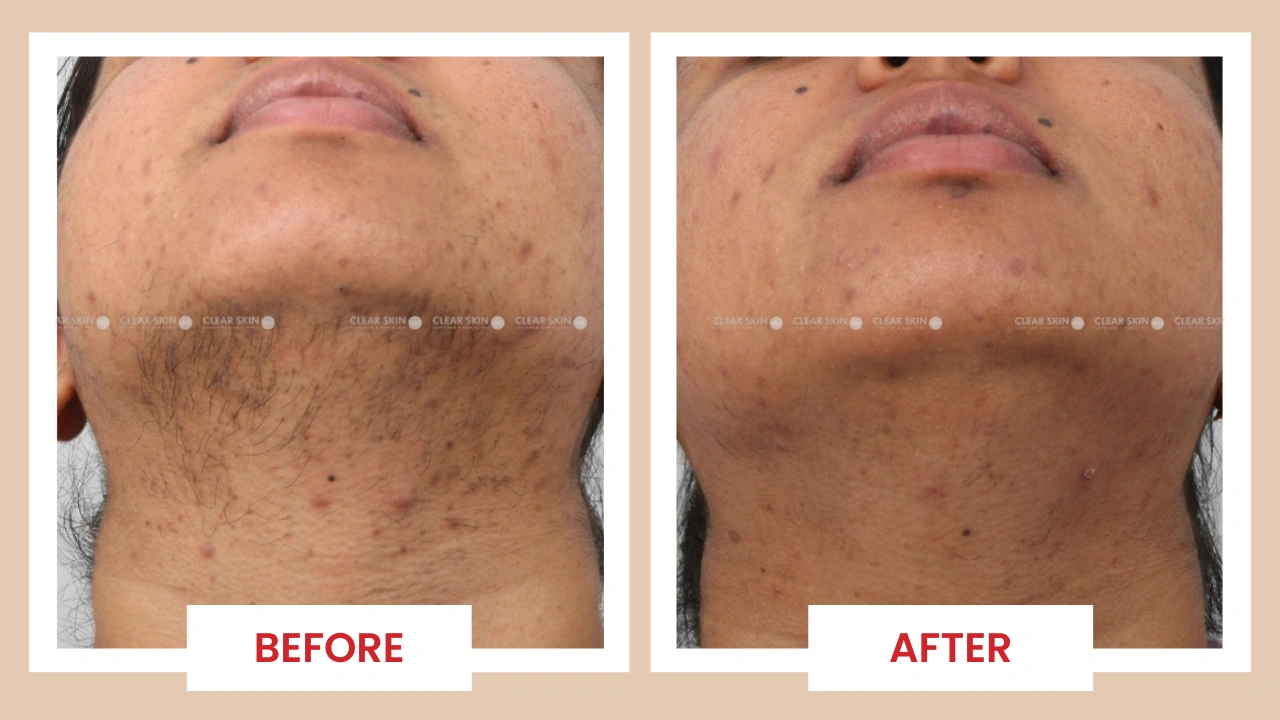
Laser Hair Removal results vary. Before-and-after photos from Clear Skin Clinic demonstrate typical outcomes.
Maintenance Sessions – Why They’re Sometimes Needed
Hormonal changes can reactivate dormant follicles. Pregnancy, menopause, or PCOS can trigger new growth.
Maintenance sessions address this new growth. One session every 12-18 months often suffices.
Some patients never require maintenance. Their follicles remain permanently disabled.
Others need periodic touch-ups. Maintenance sessions are determined by hormonal factors, hair growth cycle, the treatment area, and every individual’s hair and skin type.
Body areas respond differently to treatment. Facial hair often requires more maintenance.
Hormonal areas like the chin and upper lip are most affected. Fluctuating hormones may stimulate follicle activity.
Arms and legs typically require less maintenance. Hormonal influence is minimal in these areas.
Bikini and underarm areas fall somewhere in between. Moderate hormonal sensitivity exists in these regions.
Maintenance sessions are typically shorter and easier. Fewer active follicles mean quicker treatments.
Factors That Affect Results
Multiple variables influence treatment outcomes. Understanding these helps set realistic expectations.
Hair color significantly impacts effectiveness. Dark, coarse hair responds best to laser treatment.
Light, fine hair contains less melanin. This makes it harder to target effectively.
Red and blonde hair have minimal melanin content. Standard laser wavelengths cannot target these effectively.
Gray or white hair lacks the target melanin needed in the hair follicle. These hairs do not respond to laser treatment.
Conditions like PCOS affect hair growth patterns. This may stimulate hair growth in unusual areas. Treatment works, but maintenance is often needed.
Medications may increase hair growth. Steroids, testosterone, and certain antidepressants are examples.
Hormonal stability plays a key role in long-term results. While younger patients may experience new growth due to fluctuating hormones, older patients with stable hormone levels often see more lasting results – provided the hair still contains enough pigment (melanin) for the laser to target.
Genetics may predict an individual’s response to treatment. Family patterns in hair growth and texture can give useful clues.
Sun exposure during treatment undermines results. UV radiation may potentially reactivate treated hair follicles.
Before and After Expectations for Indian Skin
Indian skin requires specific outcome considerations. Realistic expectations ensure patient satisfaction.
Treated areas should show significant hair reduction. 80-90% hair reduction may be achieved after a complete series of sessions.
The remaining hair will be finer and lighter. It becomes nearly invisible from normal viewing distance.
Skin texture often improves with treatment. Ingrown hairs disappear as follicles are destroyed.
Some patients experience slight skin lightening. This results from reduced post-shaving inflammation.
Others may develop temporary darkening. This resolves with proper sun protection and time.
Permanent scarring is extremely rare with proper technique. Experienced dermatologists minimize this risk.
Treatment does not change skin color permanently. Natural skin tone returns after any temporary changes.
Hair growth reduction is not 100% guaranteed. Individual biology affects final outcomes.
Patience is essential throughout the treatment process. Results accumulate gradually over multiple sessions.
Before-and-after photos from Clear Skin Clinic show effective outcomes on Indian skin. Men’s laser hair removal results show effective outcomes on Indian skin.
Frequently Asked Questions
Is laser hair removal safe for Indian skin tones?
Yes, laser hair removal is safe for Indian skin tones when performed correctly. Modern Diode and Nd:YAG laser systems are specifically designed for darker skin types.
These lasers use wavelengths that penetrate deep into the skin. They target hair follicles while minimizing surface melanin absorption.
The key is choosing an experienced dermatologist. They must understand Fitzpatrick skin typing and appropriate settings.
Proper parameter selection prevents complications. Energy fluence, pulse duration, and cooling must be optimized.
Indian skin falls under Fitzpatrick types IV, V, or VI. These types require conservative initial settings with gradual increases.
Pre-treatment and post-treatment care are essential. Avoiding sun exposure reduces hyperpigmentation risk significantly.
Clear Skin Clinic has successfully treated thousands of Indian patients. Dr. Dhanraj Chavan’s 10+ years of experience ensures safe protocols.
Which laser is best for Fitzpatrick type IV or V skin?
Diode laser (810nm wavelength) is generally best for Fitzpatrick IV and V skin. This wavelength balances effectiveness with safety for medium to dark skin tones.
Diode lasers penetrate deep enough to target follicles. They also minimize excessive melanin absorption in the epidermis.
The technology works efficiently on dark, coarse hair. Indian patients typically have this hair type.
For very dark Fitzpatrick V or VI skin, Nd:YAG may be preferred. The 1064nm wavelength offers maximum safety margins.
Nd:YAG has minimal epidermal melanin absorption. This virtually eliminates burn and hyperpigmentation risk.
However, Nd:YAG requires higher energy settings. Treatment may be slightly more uncomfortable.
Clear Skin Clinic uses both Diode and Nd:YAG laser technology. This allows treatment to be tailored to each patient’s specific skin type.
Individual assessment determines the best approach. Skin type, hair characteristics, and medical history all factor into selection.
Can laser hair removal cause hyperpigmentation on Indian skin?
Laser hair removal can cause temporary hyperpigmentation on Indian skin if not performed correctly. This condition is called post-inflammatory hyperpigmentation (PIH).
PIH occurs when melanocytes become overactive after inflammation. Excessive laser heat can trigger this response.
While initial redness may occur immediately, the darkening (PIH) typically becomes fully visible 2 to 4 weeks after the procedure. It presents as brown patches in treated areas.
Proper technique and settings minimize this risk. Experienced dermatologists use conservative energy levels initially.
Adequate cooling protects the epidermis during treatment. This minimises thermal injury that can trigger PIH.
Pre-treatment sun avoidance is crucial. Tanned skin has elevated melanin levels.
Post-treatment sun protection prevents UV-induced darkening. SPF 50+ sunscreen is mandatory for 4 weeks, reapplied every 3 hours during sun exposure.
Most cases of PIH resolve spontaneously. Some may take 2-6 months to fade completely.
Treatment can accelerate fading if needed. Topical lightening agents and chemical peels help.
The risk is manageable with proper precautions. Choosing an experienced provider is the most important factor.
How many sessions will I need if I have darker skin?
Darker skin typically requires the same 6-8 sessions as lighter skin. However, individual factors may extend this to 8-10 sessions.
Hair growth cycles, not skin color, determine session numbers. All patients need multiple treatments to target follicles and achieve better results.
Each session treats hair in the active growth phase. This represents only 20-30% of total follicles.
Sessions must be spaced 4-6 weeks apart. This allows dormant follicles to enter the growth phase.
Darker skin may require more conservative initial settings. Lower energy levels mean slower initial progress.
Energy increases gradually over sessions. This allows safe escalation while monitoring response.
Facial hair often needs 8-10 sessions. Hormonal influences stimulate continuous growth.
Body hair typically responds well in 6-8 sessions. Arms and legs show excellent results.
Coarser, darker hair responds better to treatment. Fine, light hair may require additional sessions.
Individual biology affects total session requirements. Some patients achieve goals in 6 sessions; others may need 10.
Maintenance sessions may be needed long-term. Hormonal changes can reactivate some follicles.
Does laser hair removal work on all body areas for Indian skin?
Yes, laser hair removal works on virtually all body areas for Indian skin. Face, underarms, bikini, legs, arms, chest, and back can all be treated safely.
The effectiveness varies slightly by area. Coarse hair on body areas responds excellently.
Facial hair can be more challenging. Hormonal influences create persistent growth patterns.
Underarms and bikini areas show excellent results. These areas have dark, coarse hair ideal for treatment.
Arms and legs respond very well. Results are typically long-lasting in these zones.
Chest and back treatment works effectively for men. These areas often have dense, dark hair.
Some areas have limitations. Very fine facial hair may not respond optimally.
Blonde, red, gray, or white hair does not respond. These hairs lack the target melanin needed in the hair follicle.
Sensitive areas require extra precautions. Bikini and underarm areas may need topical anesthesia.
All body areas need the same sun protection. Hyperpigmentation risk exists wherever treatment occurs.
Clear Skin Clinic treats all body areas. Experience with Indian patients ensures safe, effective results.
Can I get laser hair removal if I have PCOS?
Yes, women with PCOS can get laser hair removal. In fact, it’s one of the most effective long-term hair management options for PCOS-related hirsutism.
PCOS causes excess androgen production. This stimulates hair growth in male-pattern areas.
Laser treatment effectively reduces this growth. It targets and destroys the stimulated follicles.
However, PCOS patients often need more sessions. Active hormones continue stimulating follicles.
Maintenance treatments are typically necessary. New follicles may activate over time.
Combining laser with medical PCOS management optimizes results. Hormonal treatments reduce ongoing stimulation.
Metformin or oral contraceptives help control androgens. This minimizes new follicle activation.
The laser provides visible, long-lasting reduction. Even with maintenance, it beats constant waxing or threading.
Indian women have higher PCOS prevalence. This makes laser an important treatment option.
Dr. Dhanraj Chavan has extensive PCOS treatment experience. Protocols are tailored for hormonal hair growth patterns.
What should I do if I experience skin darkening after treatment?
If skin darkening appears after treatment, contact your dermatologist immediately. Early intervention prevents prolonged hyperpigmentation.
Mild darkening within 2-3 weeks can be normal. This often resolves spontaneously with consistent sun protection.
Apply SPF 50+ sunscreen religiously. Reapply every 3 hours during sun exposure.
Avoid direct sun exposure completely if possible. Preferably stay indoors during peak UV hours.
Use gentle, fragrance-free skincare products. Irritation can worsen hyperpigmentation.
If darkening persists beyond 4 weeks, treatment may be needed. Your dermatologist can prescribe topical lightening agents.
Hydroquinone creams reduce melanin production. Use only under dermatologist supervision.
Chemical peels can accelerate pigment fading. Gentle formulations work best on post-laser skin.
Do not attempt aggressive home treatments. These can worsen inflammation and darkening.
Future laser sessions may need parameter adjustments. Lower energy levels prevent recurrence.
Most cases resolve completely with proper management. Patience and sun protection are essential.
How long should I avoid sun exposure before and after treatment?
Avoid sun exposure for 4 weeks before treatment. This allows any tan to fade and melanin levels to normalize.
Tanned skin has elevated epidermal melanin. This increases hyperpigmentation and burn risk.
Use SPF 50+ sunscreen daily during this period. Apply even on cloudy days.
Avoid tanning beds completely. These provide concentrated UV exposure.
Self-tanning products must also be stopped. These darken the epidermis artificially.
After treatment, sun avoidance is even more critical. Protect treated areas for at least 4 weeks post-treatment.
Inflamed skin is highly vulnerable to pigmentation. UV radiation triggers excessive melanin production.
Wear protective clothing when outdoors. Wide-brimmed hats and long sleeves provide physical protection.
Physical sunscreens work best post-treatment. Zinc oxide or titanium dioxide formulations are ideal.
Reapply sunscreen every 3 hours in the sun. More frequent application may be needed if sweating.
Preferably stay indoors from 10 AM to 4 PM. This ensures optimal results and prevents the most common complication.
Is diode laser better than Nd:YAG for Indian skin?
The answer depends on your specific Fitzpatrick skin type. Diode laser (810nm) works best for Types IV and V, while Nd:YAG (1064nm) is safest for Type VI.
Diode lasers offer good melanin absorption. They effectively target dark hair follicles.
The 810nm wavelength penetrates adequately deep. It bypasses much of the surface melanin.
Diode systems work efficiently for most Indian patients. Treatment times are shorter than Nd:YAG.
Results often require fewer sessions with Diode. The wavelength provides effective follicle heating.
Nd:YAG lasers use the longest wavelength. The 1064nm light has minimal epidermal absorption.
This makes Nd:YAG the safest option for very dark skin. Burn and hyperpigmentation risk is minimized.
However, Nd:YAG requires higher energy settings. The deeper penetration reduces follicle heating efficiency.
More sessions may be needed for optimal results. Treatment can be more uncomfortable.
For Fitzpatrick Type IV and most Type V patients, Diode is preferable. It balances safety, effectiveness, and comfort.
For Type VI or those with PIH history, Nd:YAG may be safer. The conservative approach prevents complications.
Clear Skin Clinic uses both Diode and Nd:YAG laser technology. This allows the most appropriate system to be selected for each patient.
Can laser hair removal lighten my skin tone?
No, laser hair removal does not permanently lighten natural skin tone. Any color changes are temporary and related to inflammation or tanning.
Some patients notice temporary lightening after treatment. This results from reduced post-shaving inflammation.
Chronic razor use creates micro-inflammation. This triggers melanin production and darkening.
When shaving stops, this inflammation resolves. The skin returns to its natural tone.
This may appear as “lightening” compared to pre-treatment. It’s actually normalization, not bleaching.
Temporary darkening is more common than lightening. Post-inflammatory hyperpigmentation can occur.
This darkening resolves with proper care. Sun protection and time restore normal color.
The laser itself does not affect melanocyte function permanently. It targets hair follicles specifically.
Epidermal melanin is not destroyed by treatment. The wavelengths and settings are not designed for this.
If dramatic color change occurs, consult your dermatologist. This may indicate an adverse reaction.
Your natural skin tone will return after treatment. Any changes are temporary inflammatory responses.
Laser hair removal is for hair reduction, not skin lightening. It does not function as a pigmentation treatment.
External Recognition & Verification
Laser hair removal safety and effectiveness for Indian skin is well-documented in medical literature and regulatory approvals.
Published Research in Indian Journal of Dermatology: Multiple peer-reviewed studies confirm that patients with Fitzpatrick skin types IV-VI can safely undergo laser hair removal when proper wavelengths and parameters are used. Research shows that skin phototyping before treatment significantly reduces adverse events such as dyspigmentation and blistering.
FDA Device Approvals: Diode laser systems operating at 810nm wavelength have received FDA clearance for permanent hair reduction across all skin types. The FDA approval process requires extensive safety and efficacy data demonstrating that the technology can be safely adjusted for darker skin tones.
Clinical Studies on Darker Skin Effectiveness: Comparative studies of laser technologies for treating dark hair on Indian skin confirm that Diode laser technology delivers effective hair reduction after completing a series of sessions, with Nd:YAG showing a strong safety profile for the deepest skin tones. Both technologies are supported by clinical evidence for Fitzpatrick IV-VI skin.
Dermatology Professional Guidelines: The American Academy of Dermatology and international dermatology organizations have published guidelines specifically addressing laser hair removal for patients with skin of color. These guidelines emphasize the importance of wavelength selection, conservative fluence settings, and adequate cooling mechanisms.
Medical Literature Documentation: Numerous dermatology journals have published case studies and review articles on treating melanin-rich skin with laser technology. Studies show that when proper protocols are followed, Indian patients achieve excellent outcomes with minimal complications.
Do You Know?
Roughly 250 Patients Are Treated
Everyday By These Dermatologists
(You are one click away from flawless skin)
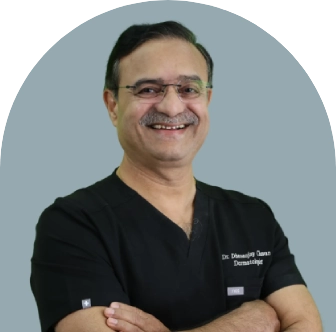
Meet Our Dermatologist!

Conclusion
Laser hair removal works effectively and safely on Indian skin tones when performed with appropriate technology and expertise. The key factors for success are using the right laser wavelength (Diode 810nm or Nd:YAG 1064nm), selecting conservative initial settings, and choosing an experienced dermatologist who understands Fitzpatrick skin types IV-VI.
Indian skin’s higher melanin content requires specialized consideration, but it does not prevent successful treatment. Modern laser systems can distinguish between hair follicle melanin and skin surface melanin, enabling safe and effective hair reduction.
Patients should expect 6-8 treatment sessions spaced 4-6 weeks apart, with 80-90% hair reduction as a realistic outcome after completing the full series. Proper sun protection before and after treatment is essential to prevent post-inflammatory hyperpigmentation.
Ready to experience smooth skin with laser technology designed for Indian skin tones? Contact Clear Skin Clinic today to schedule your consultation with Dr. Dhanraj Chavan and receive a personalized treatment plan based on your unique skin type and hair characteristics.
Further Reading
Best Serums for Acne-Prone Skin: Expert Tips
Find the best serums for acne-prone skin and expert advice to help you achieve a clearer complexion.
20 Tips to Say Farewell to Puffy Eyes and Feel Refreshed Again
Discover 20 powerful tips and home remedies to banish them for good.
Is Laser Hair Removal Safe in Pune Clinics? What to Check
Is laser hair removal safe for Indian skin in Pune clinics? A dermatologist-reviewed guide covering technology, Fitzpatrick skin types, and a 7-point clinic safety checklist.
Post-Acne Marks vs Scars – What Pune Patients Should Know
Confused about post-acne marks and scars? Learn the key differences, why Pune’s climate affects healing, and which treatments work best at Clear Skin Clinic Pune.
Have thoughts? Please let us know
We are committed not only to treating you, but also educating you.