
Freckle Removal by Laser: Sessions, Cost, and What Results to Expect
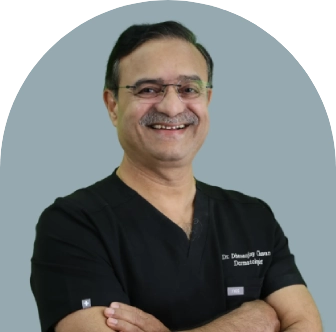
Written by Clear Skin Content Team | Medically Reviewed by Dr. Dhanraj Chavan on November 27, 2026
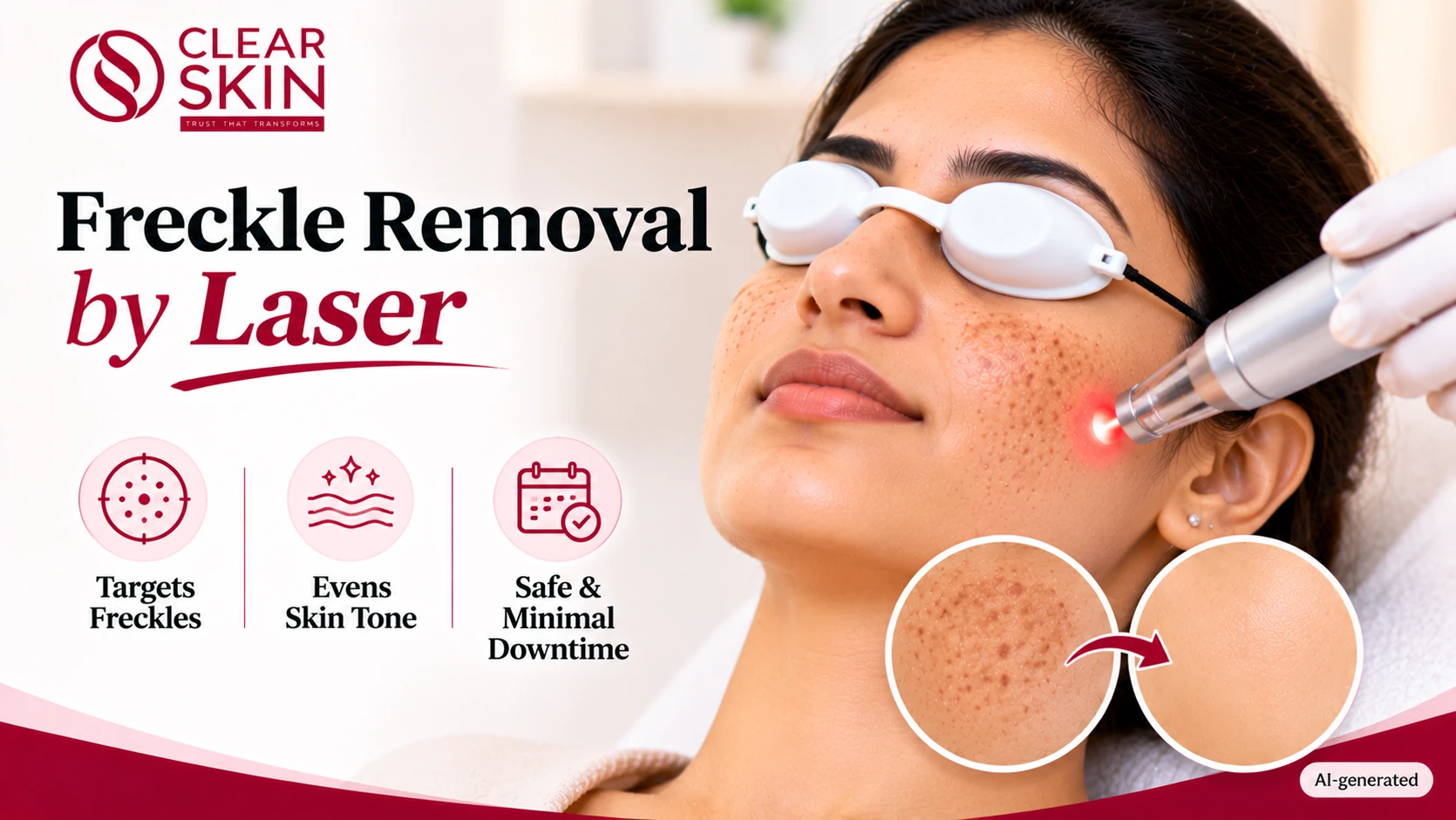
Have you noticed small brown spots appearing on your nose, cheeks or shoulders? You may call them freckles, but some could be solar lentigines or sun spots. Although they may look similar, identifying the type of pigmentation is important before choosing laser treatment.
Laser is the most targeted and effective approach to freckle removal because it delivers energy precisely to the melanin inside each spot without affecting the surrounding skin. The treatment takes seconds per spot; the spot darkens and crusts over the following days, then clears over 10–14 days as the crust falls off. Most individual freckles or solar lentigines clear in 1–3 sessions. For Indian skin (Fitzpatrick IV–VI), pico laser or low-fluence Q-switched Nd:YAG at 1064 nm is preferred over 532 nm to minimise post-inflammatory hyperpigmentation risk. Treated spots have low individual recurrence rates, new freckles can still form in adjacent areas with continued UV exposure, making sun protection essential to maintain results.
You have discrete brown spots, on the nose, cheeks, or shoulders, that you want removed. You have heard that laser can target individual spots precisely. You want to know what actually happens during and after treatment, how many sessions it takes, and whether the spots come back.
This article gives you a clinical and practical answer to each question.
Table Of Content
- At a Glance
- Two Types of Brown Spots, Why It Matters for Treatment?
- How Laser Removes Freckles?
- Which Laser Is Used, and Why It Matters for Indian Skin?
- Sessions: What to Expect?
- Results Timeline
- Post-Treatment Care, What Determines Outcome?
- Expert Insight
- Summary
- Frequently Asked Questions
- Conclusion
At a Glance
|
What freckles are |
Discrete flat brown spots caused by localised melanin concentrations, either UV-reactive ephelides or more persistent solar lentigines |
|
How laser removes them |
Laser energy is absorbed by the melanin in the spot, fragmenting it; the body clears the fragments; the spot fades over 10–14 days |
|
Sessions for individual freckles |
1–3 sessions per spot in most cases |
|
Sessions for clusters or multiple areas |
2–4 sessions |
|
Lasers used |
Q-switched Nd:YAG (532 nm or 1064 nm); Pico laser, preferred on Indian skin for lower PIH risk |
|
What happens after each session |
The spot darkens immediately, then crusts over 5–10 days, then clears, this is the expected sequence |
|
Do not do |
Pick or scrub the crust, this risks scarring and PIH |
|
Do freckles come back? |
Individual treated spots have low recurrence; new freckles can form with continued UV exposure |
|
Indian skin safety |
Pico laser or low-fluence Q-switched 1064 nm preferred; 532 nm must be used cautiously on Fitzpatrick IV–VI |
Two Types of Brown Spots, Why It Matters for Treatment?
The word “freckle” is used casually to describe several different types of brown spots. The clinical distinction matters because the two most common types behave differently and have slightly different treatment responses.
Ephelides, True Freckles
Ephelides are the classic freckles: flat, light-to-medium brown, symmetrically distributed on sun-exposed areas (nose, cheeks, upper arms, shoulders). They fade significantly during winter months and darken in summer with UV exposure. This seasonal variation is diagnostic, it confirms they are UV-reactive.
Ephelides are more common in lighter skin tones and in people with family history of freckling. On Indian skin they occur but are less common than in Caucasian populations. They are entirely benign and involve localised areas of higher melanin density within the epidermis, not abnormal cells, just concentrated pigment.
Treatment response: Ephelides typically respond well to 1–2 laser sessions. Because they are superficial and reactive, they can recur with continued sun exposure.
Solar Lentigines, Sun Spots
Solar lentigines (also called age spots or sun spots) are more common on Indian skin in adults, particularly those with significant cumulative UV exposure. They are flatter, slightly darker, and more defined than ephelides, and crucially, they do not fade seasonally. They represent more established pigment deposition and may sit slightly deeper than true freckles.
Solar lentigines become more common with age (hence “age spots”) but can appear in younger patients in India due to high UV index, outdoor occupations, and historically lower rates of sun protection use.
Treatment response: Typically 1–3 sessions per spot. Treated individual lentigines have low recurrence rates, but new ones can form in sun-exposed areas over time.
How Laser Removes Freckles?
The Freckles & Skin Pigmentation condition at Clear Skin Clinic is treated using the principle of selective photothermolysis, delivering laser energy at a wavelength specifically absorbed by the melanin in the target spot, while leaving surrounding skin largely unaffected.
What happens at the spot during treatment:
- Laser energy is absorbed by the dense melanin concentration in the freckle
- The energy causes rapid heating and mechanical disruption of the melanin granules, fragmenting them into smaller particles
- These smaller particles are cleared by the skin’s immune cells (macrophages) over the following 1–3 weeks
- As the melanin is cleared, the spot lightens
The immediate response: The spot typically appears darker or slightly whitened (frosting) immediately after the laser pulse. This is an expected, normal response, not a sign of damage. It represents the rapid heating and disruption of the melanin deposit.
The 5–10 day response: The spot forms a small, dry crust or scab. This is the compressed, damaged pigment matter at the surface. The critical instruction during this phase: do not pick, scrub, or attempt to remove the crust. The crust protects the healing skin below. Removing it prematurely, by scratching, exfoliating, or rubbing, risks scarring and post-inflammatory hyperpigmentation.
At 10–14 days: The crust falls off naturally, revealing clearer skin below. The final colour of the treated area may still appear slightly pink or lighter than surrounding skin at this point. Full assessment of the result is at 4–6 weeks.
Which Laser Is Used, and Why It Matters for Indian Skin?
Q-Switched Nd:YAG Laser
The Q switched ND Yag Laser operates at two wavelengths relevant to freckle treatment:
532 nm (green): Strongly absorbed by melanin and oxyhaemoglobin. Highly effective at targeting brown spots. On lighter skin tones (Fitzpatrick I–III), 532 nm produces excellent results with manageable PIH risk. On Indian skin (Fitzpatrick IV–VI), the higher baseline melanin in the surrounding skin also absorbs 532 nm energy, increasing the risk of non-specific thermal damage and PIH in the skin around the spot. Must be used with caution by an experienced operator who adjusts parameters for darker skin.
1064 nm (infrared): Less strongly absorbed by melanin. Penetrates deeper. On Indian skin, 1064 nm is safer than 532 nm for the skin surrounding the spot, but may be less efficient at fully clearing individual pigmented spots in a small number of sessions compared to 532 nm.
The treating dermatologist selects the wavelength based on skin tone, spot darkness and depth, and clinical judgment about the PIH risk trade-off.
Pico Laser
Pico Laser Treatment delivers energy in picosecond (trillionths of a second) pulses, far shorter than the nanosecond pulses of Q-switched systems. The result is a predominantly photomechanical effect: the melanin is physically shattered by the rapid energy delivery, with less thermal spread to surrounding tissue.
For freckle removal on Indian skin, pico laser is increasingly the preferred modality because:
- Significantly less heat generated in surrounding skin → lower PIH risk
- Effective melanin fragmentation at multiple wavelengths (532 nm, 1064 nm, 785 nm depending on system)
- Often clears individual spots in fewer sessions than Q-switched at comparable safety
The tradeoff: pico laser is typically higher in cost per session than Q-switched Nd:YAG.
What to Avoid for Freckle Removal on Indian Skin
IPL (Intense Pulsed Light): IPL emits broad-spectrum light across multiple wavelengths simultaneously. For freckle removal on lighter skin tones (Fitzpatrick I–III), it works reasonably well. For Indian skin (Fitzpatrick IV–VI), the broad thermal spectrum generates significant heat in the melanin-rich surrounding skin, with high PIH risk. IPL is not the appropriate tool for freckle or pigmentation treatment on darker skin tones.
Sessions: What to Expect?
Individual freckles / small number of discrete spots: Most individual ephelides or solar lentigines clear in 1–3 sessions. After session 1, assess at 4–6 weeks, the remaining pigment, if any, determines whether a second session is needed. Many patients with a small number of well-defined spots achieve satisfactory clearance after 1–2 sessions.
Multiple freckles or clusters across large areas: Widespread freckling across the face, nose, cheeks, and shoulders may require 2–4 sessions to address all spots progressively. Sessions are typically spaced 4–6 weeks apart, this allows full healing and assessment of each session’s result before adding more laser stimulus.
Deeper or more resistant solar lentigines: Older, darker, or more established solar lentigines, particularly those with a dermal pigment component, may require 2–4 sessions and may show gradual rather than complete clearance from each session. Pico laser typically handles resistant lentigines more effectively than Q-switched in fewer sessions.
Realistic result: Individual spots respond well in most patients. The important caveat is that cleared spots in a UV-exposed location can be replaced by new spots forming in adjacent skin with continued sun exposure, this is not recurrence of the treated spot, but new lesion formation. Sun protection prevents this from becoming a repeated cycle.
Results Timeline
|
Timepoint |
Expected observation |
|
Immediately after |
Spot appears darker, possibly with whitening (frosting). Surrounding skin unchanged. |
|
Days 1–3 |
Spot darkens further as crusting forms. Mildly tender to touch. |
|
Days 4–10 |
Crust dries and contracts. Do not pick or scrub. Continue SPF application around (not on) crusted area. |
|
Days 10–14 |
Crust falls off naturally. Area appears lighter, possibly slightly pink. |
|
Weeks 2–4 |
Pink fades. Final pigment level assessed. |
|
4–6 weeks |
Full result visible. Decision on second session made at this point if residual pigment remains. |
Post-Treatment Care, What Determines Outcome
The result from laser freckle removal is determined as much by aftercare compliance as by the treatment itself:
During crusting (days 5–10):
- Keep the area clean and dry
- Apply prescribed healing ointment as directed
- Do not apply makeup directly over the crust
- SPF 50+ on surrounding skin; avoid applying pressure to the crust itself
- No exfoliants, retinoids, or acids on the treated area until fully healed
- No swimming in chlorinated pools or saunas during crusting phase
After healing:
- Broad-spectrum SPF 50+ every morning, this is what determines whether new freckles form in the treated area
- No tanning, UV exposure is the primary driver of new freckle formation
- If the area appears slightly hypopigmented (lighter than surrounding skin) at 4–6 weeks, this usually resolves over 1–3 months as the treated melanocytes normalise
Expert Insight
“Laser freckle removal is one of the most satisfying treatments we do, the response is predictable and the results are visible,” says Dr. Dhanraj Chavan, Senior Dermatologist at Clear Skin Clinic. “The main thing I explain to patients before treatment is what will happen to the spot in the 10 days after the session, it looks worse before it looks better, and patients need to understand that the darkening and crusting are part of the process, not a complication. And the other message is sun protection: we can clear every existing spot, but new ones will form if the skin continues to have unprotected UV exposure.”
Summary
Laser freckle removal targets melanin selectively within discrete brown spots, ephelides and solar lentigines, clearing most individual spots in 1–3 sessions. The post-treatment sequence (immediate darkening → crusting over 5–10 days → crust falloff → clear skin at 10–14 days) is expected and must not be disrupted by picking. For Indian skin (Fitzpatrick IV–VI), pico laser or Q-switched 1064 nm is preferred over 532 nm to minimise PIH risk in the surrounding skin. See Freckles before-and-after results at Clear Skin Clinic. Sun protection after treatment is essential, not to prevent treated spots from returning, but to prevent new spots forming in UV-exposed areas.
Frequently Asked Questions
How long does it take to remove a tan with chemical peels?
A mild, recent sun tan typically shows visible improvement from session 2–3 of a peel course. A complete 4–6 session course spaced 2–4 weeks apart produces significantly clearer skin tone, with full results at 4–6 weeks after the final session. Longer-standing tan or tan combined with PIH takes more sessions. The timeline assumes consistent daily sun protection between sessions, without it, results will be slower and less complete.Is laser tan removal safe for Indian skin?
Q-switched Nd:YAG laser at 1064 nm in low-fluence toning mode has an established safety record for Indian skin (Fitzpatrick IV–VI) when used at correct parameters. The risk of post-inflammatory hyperpigmentation (PIH), a common concern for laser on darker skin, is low with low-fluence toning. The important caveat is that parameters must be set appropriately for Indian skin by an experienced operator. High-fluence laser or IPL for tan removal on Indian skin carries significant PIH risk. Confirm which specific laser and protocol will be used before proceeding.Can a de-tan facial permanently remove my tan?
No. Salon de-tan facials remove the topmost layer of dead, pigmented skin cells and produce temporary surface brightening. They do not reach the living epidermal cells or the melanin deposits integrated into them. Results typically last days to 2 weeks. For lasting tan removal, clinical treatment (chemical peels or laser) is required, combined with daily sun protection to prevent immediate re-tanning.I tan very quickly and easily, does that mean treatment won’t work for me?
Patients who tan easily have higher melanocyte reactivity, their melanocytes respond strongly to UV stimuli. This means treatment clears existing tan effectively (the same reactive melanocytes respond to peels and laser), but it also means UV exposure after treatment reactivates pigmentation faster than in people with lower melanocyte reactivity. For patients who tan quickly, the solution is rigorous sun protection throughout and after treatment, combined with regular maintenance sessions. The treatment works, the maintenance requirement is simply higher.Does tan removal treatment also help with dark patches and uneven skin tone?
Chemical peels and laser toning for tan also improve overall skin tone evenness and can reduce mild post-inflammatory hyperpigmentation (PIH) and superficial pigmented spots. However, deeper pigmentation (dermal PIH, melasma with dermal component, age spots in the dermis) may require additional or different treatment beyond the tan removal course. If uneven skin tone or dark patches persist despite completing a tan removal course, a dermatologist assessment determines the pigmentation type and appropriate next step.Do You Know?
Roughly 250 Patients Are Treated
Everyday By These Dermatologists
(You are one click away from flawless skin)
Meet Our Dermatologist!

Conclusion
If you have discrete brown spots, freckles or solar lentigines, that you want removed, laser treatment is the most targeted and effective approach available. The question is selecting the right laser for your skin tone and ensuring the aftercare protocol is followed correctly.
Find your nearest Clear Skin Clinic on Google Maps or call +91 95845 84111 to book a pigmented lesion assessment and get a treatment plan for your specific spots.
See a doctor before treatment if any brown spot has an irregular border, is multi-coloured, is growing rapidly, bleeds, or looks different from other spots, these features require dermatological assessment to rule out conditions other than benign pigmentation before any laser treatment proceeds.
Disclaimer: This article is for general educational purposes only. Pigmented lesion assessment by a qualified dermatologist before laser treatment is essential to confirm the spot is benign. This content does not replace clinical advice.
Further Reading
Tan Removal Treatment in Pune: Peel vs Laser vs Facial, What Actually Works
Tan removal in Pune ranges from salon facials to chemical peels to laser, and they don’t all do the same thing.
Why Melasma Comes Back After Treatment?
Melasma recurs after treatment because the melanocytes that caused it remain reactive to sun, heat, and hormones for life.
Anti-Aging Cost in Pune 2026 | Clear Skin
Anti-aging treatment cost in Pune 2026 – HIFU, Botox, fillers, and thread lift pricing, what affects it, and how to plan at Clear Skin.
Laser Toning for Melasma: Sessions, Cost, and Is It Safe for Indian Skin?
Laser toning uses low-fluence Q-switched Nd:YAG at 1064 nm to target melasma pigment without triggering post-inflammatory hyperpigmentation on darker skin
Have thoughts? Please let us know
We are committed not only to treating you, but also educating you.