
Laser vs Chemical Peel vs Topical Treatment for Melasma in Pune – What Actually Works?

Written by Clear Skin Content Team | Medically Reviewed by Dr. Dhanraj Chavan on October 23, 2025
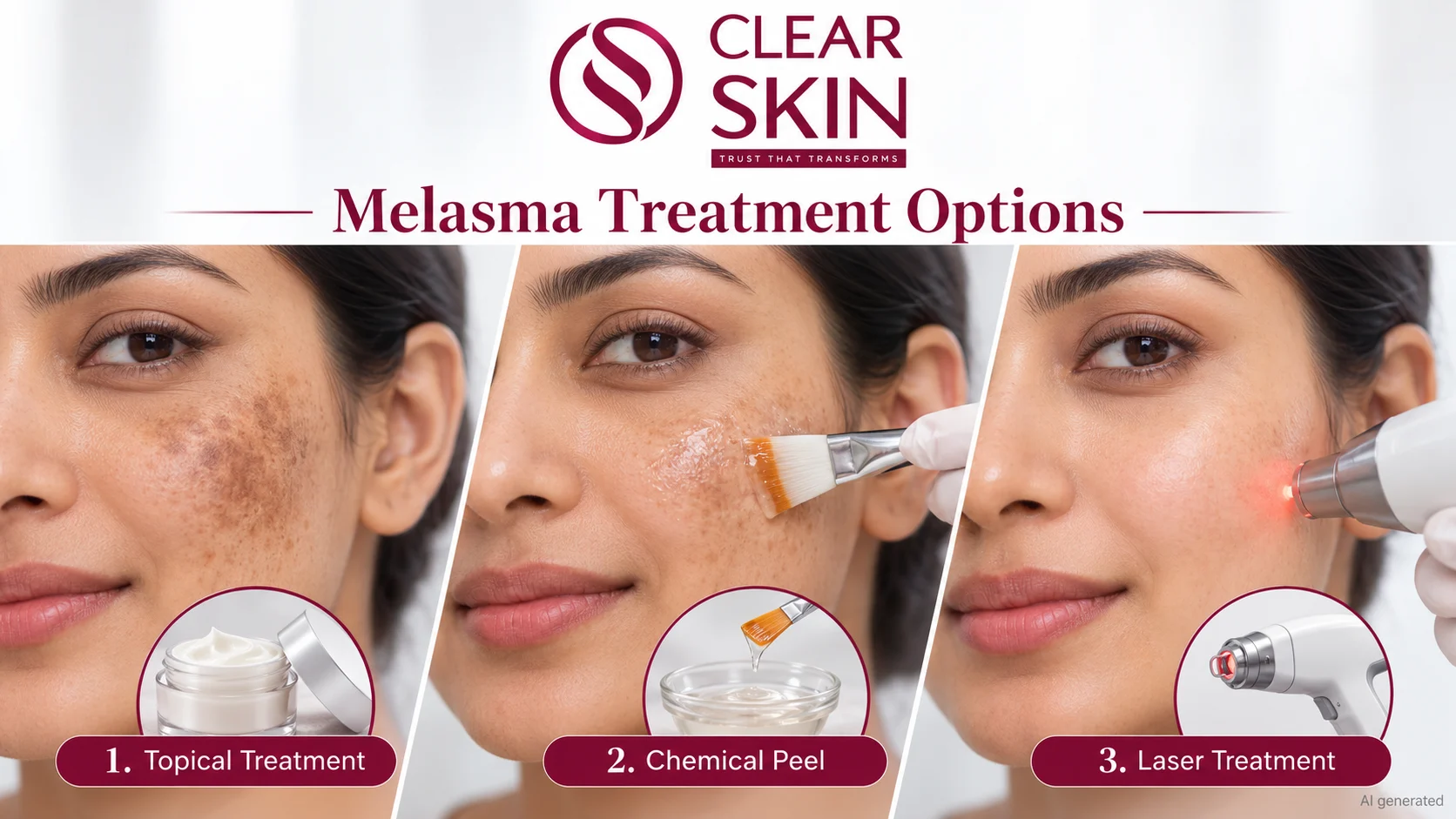
Laser, chemical peels, and topical treatment are all dermatologist-led options for melasma in Pune, and the key difference is the role each one plays. Topical treatment IS A prescription cream routine that forms the first-line foundation of every melasma plan. Chemical peels speed up the removal of surface pigment, and lasers target pigment that resists both. Melasma is a chronic pigmentation condition that causes brown or grey-brown patches on the face, and it is controllable rather than curable.
Published reviews report that hydroquinone-based topical treatment produces visible improvement in 60 to 80 percent of treated patients. Chemical peels and lasers add measurable benefit as supporting layers, not stand-alone cures. At Clear Skin Clinic, combined plans typically deliver a 50 to 70 percent reduction in visible pigment over 3 to 6 months. Dr. Dhanraj Chavan, MBBS, MD Dermatology, sequences all three options based on pigment depth, skin type, and triggers, as explained on the melasma treatment in Pune page.
Table Of Content
- Key Takeaways
- Side-by-Side Comparison
- Topical Treatment – The Foundation That Does Most of the Work
- Chemical Peels – Faster Surface Pigment Removal
- Laser Treatment – The Targeted Layer for Resistant Pigment
- Why Indian Skin Changes the Comparison?
- Cost Comparison in Pune
- Which Should You Choose?
- Frequently Asked Questions
- As Verified By
- The Bottom Line
Key Takeaways
- Topical treatment is the first-line option; hydroquinone improves melasma in 60 to 80 percent of patients.
- Chemical peels lift surface pigment faster; they work as an add-on, not a cure.
- Lasers such as Q-switched Nd:YAG treat pigment that resists creams and peels.
- Combination therapy outperforms any single method for melasma.
- Most combined plans show 50 to 70 percent pigment reduction over 3 to 6 months.
- Daily broad-spectrum sunscreen decides whether any result lasts.
- Aggressive peels or high-energy laser can worsen melasma in Indian skin.
Side-by-Side Comparison
| Factor | Topical Treatment | Chemical Peel | Laser (Q-switched Nd:YAG / Pico) |
|---|---|---|---|
| Role in the plan | First-line foundation | Add-on for surface pigment | Reserved for resistant or deeper pigment |
| How it works | Blocks pigment production daily | Exfoliates pigmented surface cells | Breaks pigment into fragments the body clears |
| Typical schedule | Daily use, reviewed at 8 to 12 weeks | 4 to 6 sessions, 2 to 4 weeks apart | 6 to 10 low-energy sessions, often monthly |
| First visible change | 4 to 8 weeks | After 1 to 2 sessions | Gradual, over several sessions |
| Downtime | None | Mild flaking or pinkness for a few days | Little to none at low energy |
| Main risk in Indian skin | Irritation from overuse | Post-peel darkening if too deep | Rebound pigment or light patches if overdone |
Topical Treatment – The Foundation That Does Most of the Work
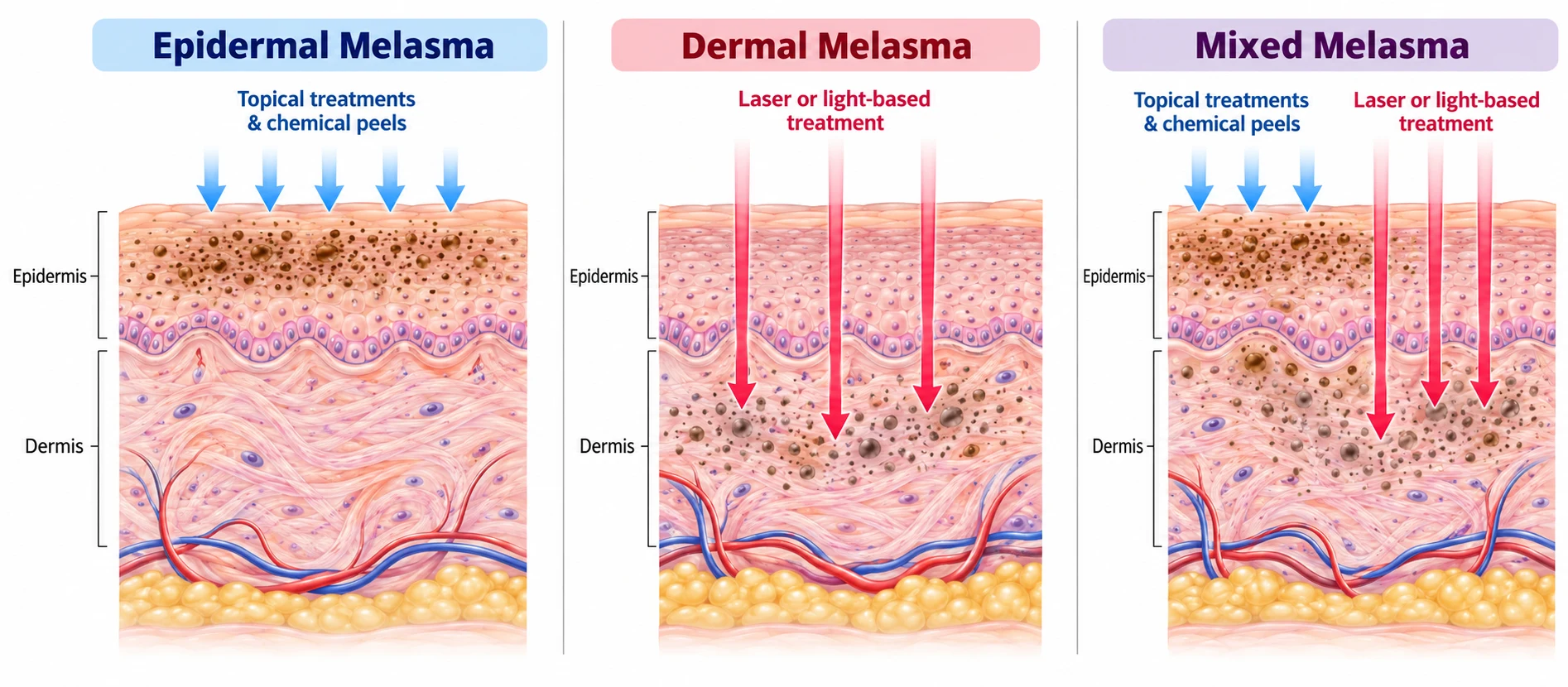
Topical treatment is the first-line therapy for melasma, and for surface-level (epidermal) pigment it does most of the work. The most studied agent is hydroquinone, which produces visible improvement or near-clearance in 60 to 80 percent of treated patients in published reviews. Dermatologists often prescribe it in a triple-combination cream with tretinoin and a mild steroid, used in supervised courses. An evidence-based review of melasma treatments confirms topical therapy as the standard starting point.
Gentler agents such as tranexamic acid, kojic acid, and azelaic acid suit sensitive skin and longer-term maintenance. Safety questions around stronger actives are covered in the tretinoin cream safety for melasma guide. Every topical plan is paired with broad-spectrum SPF 30 or higher sunscreen, because unprotected sun exposure reverses progress. Tinted iron-oxide formulas are preferred, as the best sunscreen for pigmentation answer explains.
Chemical Peels – Faster Surface Pigment Removal
A chemical peel removes pigmented surface cells so fresher, more even skin can replace them. Peels for melasma add speed when creams alone feel slow, with visible brightening often after the first 1 to 2 sessions. A comparative study of peeling agents for melasma found significant pigment-score reductions, with 15 percent TCA peels lowering MASI scores by an average of 8.5 points.
At Clear Skin Clinic, peels for melasma are kept superficial to medium depth, because deeper peels carry a real risk of post-inflammatory darkening in Indian skin. Patients have a short series spaced 2 to 4 weeks apart while continuing topicals and sunscreen. Peel selection by skin type is detailed on the chemical peel treatment in Pune page. A peel is a supporting layer in the plan, never a replacement for the daily topical routine.
Laser Treatment – The Targeted Layer for Resistant Pigment
Laser treatment for melasma uses very short pulses of light to break pigment into fragments the body clears naturally. Clear Skin Clinic uses the Q-switched Nd:YAG laser and the pico laser, both chosen for safety in Indian and darker skin tones. Sessions are kept low-energy and spaced out, often monthly, across 6 to 10 sessions. The technology is explained on the Q-switched Nd:YAG laser treatment in Pune page and in the Nd:YAG laser treatment for melasma guide.
Laser earns its place only for pigment that resists creams and peels, typically deeper (dermal) or mixed melasma. A review of laser and other melasma therapies notes that laser improvements can fade within 3 to 6 months without maintenance. Aggressive, high-energy laser is a common reason melasma comes back worse. This is why laser is always run alongside topicals and strict sun protection, never alone.
Why Indian Skin Changes the Comparison?
Indian skin types carry more baseline pigment, which changes how each option must be used. The same inflammation that lifts pigment can also trigger new pigment, so gentle settings beat aggressive ones. Post-inflammatory darkening after a deep peel or a hot laser session can look worse than the original melasma.
This is why Dr. Dhanraj Chavan starts with an assessment of pigment depth before choosing any tool. Epidermal melasma responds well to creams and peels, while dermal and mixed patterns may need the laser layer. Understanding your pattern starts with the types of melasma and how melasma differs from other dark patches, covered in the melasma vs hyperpigmentation guide. Hormonal triggers also make melasma more stubborn, as the hormonal connection to melasma explains.
Cost Comparison in Pune
Cost depends on the agents prescribed, the number of sessions, and the area treated. The figures below are typical 2026 market ranges in Pune.
| Option | Typical Cost in Pune |
|---|---|
| Topical treatment | Rs 500 to Rs 2,500 per month for prescription creams plus sunscreen |
| Chemical peel | Rs 1,500 to Rs 4,000 per session; 4 to 6 sessions in a series |
| Q-switched / pico laser | Rs 2,500 to Rs 6,000 per session; 6 to 10 sessions |
Topical treatment is the most economical route and remains part of every plan. Peels add a mid-range per-session cost, and laser is the largest investment, reserved for pigment that needs it. Your exact plan and cost are confirmed during a consultation.
Which Should You Choose?
To recap the comparison: topical treatment is the foundation for every melasma patient in Pune, chemical peels add speed for surface pigment, and Q-switched or pico laser targets resistant, deeper pigment. The decision comes down to pigment depth, skin sensitivity, and how your melasma has responded so far.
Start with topicals plus sunscreen if your melasma is new or untreated. Most epidermal melasma improves meaningfully on this foundation alone within 8 to 12 weeks. Add peels if progress feels slow after that window and your skin tolerates actives well. Consider laser only when patches persist after consistent creams and peels, or when assessment shows deeper pigment.
What actually works is the combination, sequenced correctly, with sun protection holding the result. Melasma care at Clear Skin Clinic follows this layered order under Dr. Dhanraj Chavan, alongside plans for related concerns on the skin pigmentation treatment in Pune page. Patient experiences with this approach are collected on the melasma reviews page.
Frequently Asked Questions
Which is best for melasma: laser, chemical peel, or creams?
No single option is best, because combination therapy outperforms any single method for melasma. Prescription creams are the proven first-line foundation.
Peels speed up surface pigment removal, and laser targets deeper, resistant pigment. Dr. Dhanraj Chavan sequences the three based on pigment depth and skin type.
How long does topical treatment take to work on melasma?
Most patients see the first visible softening of patches within 4 to 8 weeks of starting prescription topicals with daily sunscreen. A formal review of progress happens at 8 to 12 weeks.
Hydroquinone-based regimens improve melasma in 60 to 80 percent of treated patients. Deeper pigment takes longer and may need added layers.
Is laser treatment safe for melasma in Indian skin?
Yes, when the right laser is used at low energy by an experienced dermatologist. Clear Skin Clinic uses the Q-switched Nd:YAG and pico lasers, both suited to Indian skin tones.
High-energy or frequent laser sessions can trigger rebound pigmentation. Low-fluence settings, monthly spacing, and ongoing sun protection keep the treatment safe.
How many chemical peel sessions are needed for melasma?
Most melasma plans use 4 to 6 peel sessions, spaced 2 to 4 weeks apart. Visible brightening often appears after the first 1 to 2 sessions.
Peels are kept superficial to medium depth in Indian skin to avoid post-peel darkening. Creams and sunscreen continue throughout the series.
What happens if melasma comes back after treatment?
Melasma is chronic and recurrence-prone, so relapse is managed, not feared. Published reviews note results can fade within 3 to 6 months if sun protection and maintenance stop.
Clear Skin Clinic moves patients onto a maintenance routine of lighter topicals, periodic review, and daily sunscreen. A relapse is usually re-treated faster than the original course.
How much does melasma treatment cost in Pune?
Topical treatment typically costs Rs 500 to Rs 2,500 per month in Pune. Chemical peels run Rs 1,500 to Rs 4,000 per session, and Q-switched or pico laser Rs 2,500 to Rs 6,000 per session.
The total depends on how many layers your pigment needs. The exact plan and cost are confirmed at consultation.
As Verified By
The comparison above aligns with published dermatology evidence on melasma.
- Treatment of melasma with topical agents, peels and lasers: an evidence-based review confirms topicals as first-line, with peels and lasers as adjuncts.
- American Academy of Dermatology – Melasma Treatment lists hydroquinone-based therapy as the usual starting point and warns results need maintenance.
- Comparative Efficacy of Chemical Peeling Agents in the Treatment of Melasma reports significant MASI score reductions across peel types.
- Management of Melasma: Laser and Other Therapies reviews laser options and the 3 to 6 month recurrence window.
- British Association of Dermatologists – Melasma confirms there is no permanent cure and sun protection is essential.
- DermNet – Melasma describes melasma as chronic and relapsing, needing lifelong photoprotection.
Do You Know?
Roughly 250 Patients Are Treated
Everyday By These Dermatologists
(You are one click away from flawless skin)
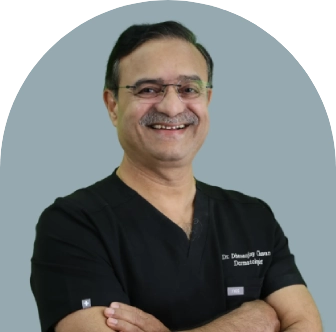
Meet Our Dermatologist!

The Bottom Line
Creams are the workhorse, peels are the accelerator, and laser is the specialist tool. For melasma in Pune, the honest answer to “what actually works” is a layered plan matched to your pigment depth, not a single machine or miracle cream. Book a skin assessment with Dr. Dhanraj Chavan at Clear Skin Clinic through the contact page to find out which combination your melasma actually needs.
Further Reading
Combining Acne Treatments: Peel, Laser & RF | Clear Skin
Can you combine acne treatments? Compare chemical peels, laser, RF microneedling and PRP, including treatment timing and safety considerations.
HydraFacial for Acne-Prone Skin: Safe or Not?
Is HydraFacial safe for acne-prone skin? Discover its benefits, risks, suitability for active acne and when to consult a dermatologist in Pune.
Acne Treatment for Men: Beard Acne, Shaving Bumps, and Gym Acne
Men’s acne has specific triggers , shaving, beard hair, gym sweat, and protein supplements , that women’s acne does not. Learn what is driving yours and how a dermatologist treats it.
Cortisone Injection for a Pimple: When It Works, Risks, and Cost
A cortisone injection can flatten a deep, painful pimple in 24–48 hours. Understand when it works, possible risks, and treatment costs.
Have thoughts? Please let us know
We are committed not only to treating you, but also educating you.