
Hormonal Acne and PCOS Acne Treatment for Women in Pune
Written by Clear Skin Content Team | Medically Reviewed by Dr. Dhanraj Chavan on October 19, 2026
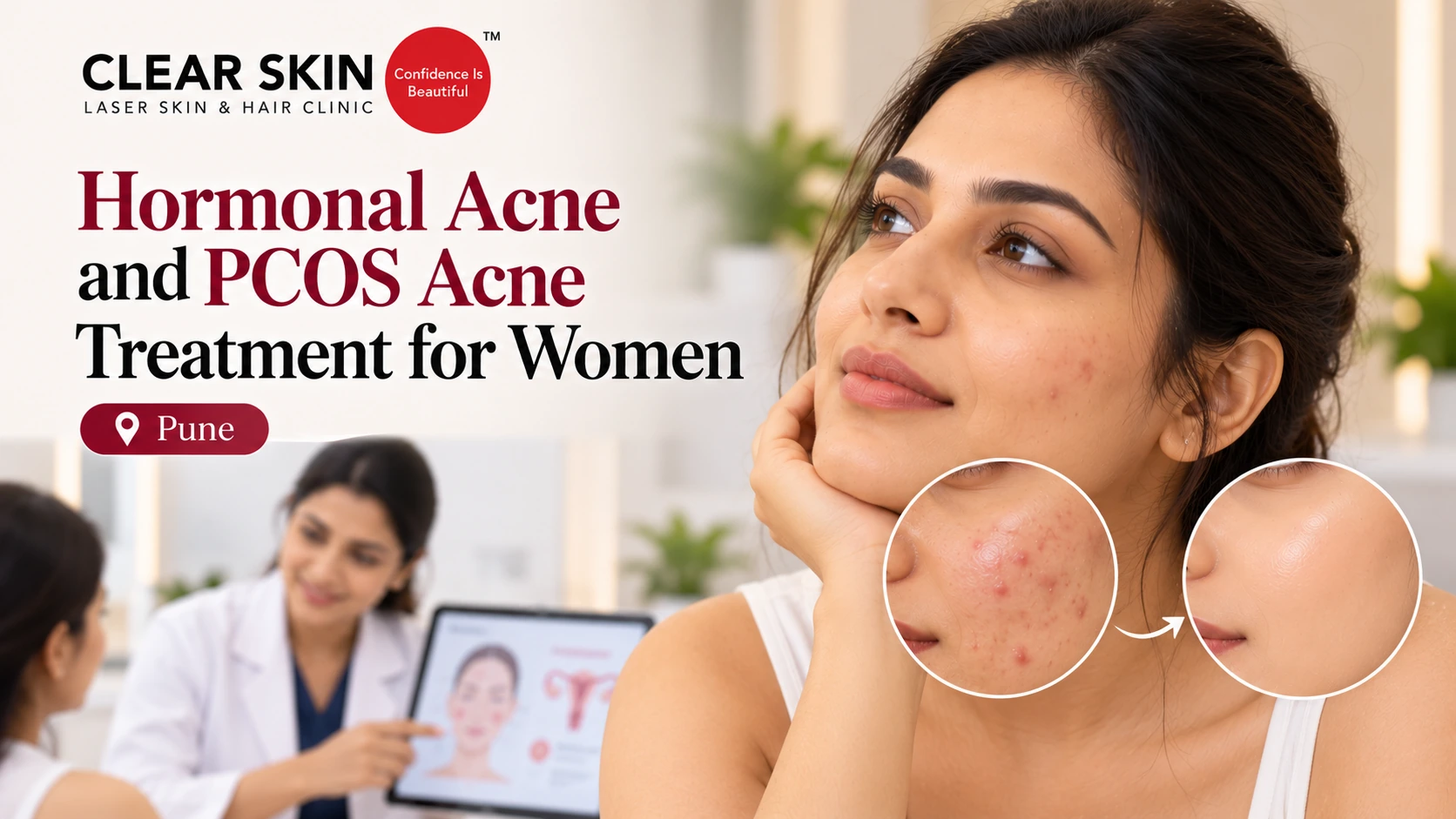
You are brushing your teeth on a Thursday night. Your period is three days away. And right on cue, a deep, tender pimple appears along your jawline that was not there that morning.
This is not the acne you had at fifteen. This is hormonal acne, and a dermatologist can read its pattern immediately.
If your breakouts cluster on your lower face, arrive before your period like clockwork, or come with a PCOS diagnosis, you have a hormone-driven problem. Treating it the same way as teenage acne will not work. This article explains the root cause, how PCOS specifically drives breakouts, and which treatments actually clear the skin.
Table Of Content
- What Is Hormonal Acne?
- How PCOS Causes Acne?
- Where Hormonal Acne Appears: The Face Map?
- How Dermatologists Diagnose Hormonal Acne?
- Treatment Options
- PCOS Acne vs Regular Hormonal Acne
- What to Expect: Timeline?
- Expert Insight
- Summary
- Frequently Asked Questions
- Conclusion
At a Glance
|
Condition |
Hormonal acne, PCOS-related acne |
|
Who it affects |
Women aged 20-45 |
|
Root cause |
Excess androgens (testosterone, DHT) |
|
Where it appears |
Jawline, chin, lower cheeks, neck |
|
Key diagnostic tests |
Testosterone, DHEAS, LH, FSH, fasting insulin |
|
Treatment options |
Spironolactone, OCP, chemical peels, RF microneedling, retinoids |
|
Time to results |
3-6 months |
What Is Hormonal Acne?
Hormonal acne is acne triggered by changes in androgen hormones, primarily testosterone and its more potent form, DHT. These hormones signal your sebaceous (oil) glands to produce more sebum. Excess sebum clogs pores, feeds acne-causing bacteria (C. acnes), and starts the inflammation that becomes a pimple.
Every woman produces androgens. The problem starts when levels rise too high, or when your skin’s oil glands are unusually sensitive to normal androgen levels. Both lead to the same result: excess oil, blocked pores, and persistent breakouts.
Hormonal acne differs from teenage acne in three specific ways. First, it appears on the lower face , the jawline, chin, and neck , not the forehead or nose. Second, it is deep and painful rather than superficial. Third, it follows a hormonal cycle: flaring in the week before your period and calming after it starts.
How PCOS Causes Acne?
PCOS (polycystic ovary syndrome) is the most common hormonal disorder in women of reproductive age. It chronically elevates androgens, which means acne becomes persistent rather than periodic.
Here is the direct chain. PCOS causes insulin resistance in many women. High insulin signals the ovaries to produce more testosterone. More testosterone means more sebum. More sebum means more acne. Each link feeds the next.
Women with PCOS often notice their acne is more widespread and harder to clear with standard products. It frequently comes with other androgen-related signs: facial hair (hirsutism), scalp hair thinning, and irregular or absent periods.
Treating PCOS acne without addressing the insulin resistance underneath it is like mopping the floor with the tap still running. You need both the internal correction and the topical treatment.
Where Hormonal Acne Appears: The Face Map?
Your dermatologist uses breakout location as a diagnostic clue.
Jawline and chin: The most common site. These pimples are usually deep (nodular), painful to the touch, and slow to heal. A breakout pattern that hugs the jawline almost always points to androgen excess.
Lower cheeks: When acne extends from the jaw up toward the lower cheekbones, it typically has a hormonal component.
Neck: Acne that tracks down from the jawline onto the neck is a strong sign of elevated androgens, not just skin hygiene problems.
Around the mouth: Perioral acne , pimples circling the mouth and upper lip , can be hormonally driven, particularly in women with elevated prolactin or thyroid imbalances.
If your breakouts are mostly on the forehead and nose, a different trigger is more likely: diet, pore-clogging products, or stress-related cortisol spikes.
How Dermatologists Diagnose Hormonal Acne?
Diagnosis starts with a clinical examination. Your dermatologist assesses the location, depth, and pattern of your breakouts, then asks about your menstrual cycle, contraception history, stress levels, and any known hormonal conditions.
Blood tests confirm the picture. A standard panel includes:
- Free and total testosterone: Elevated in most cases of androgen-driven acne
- DHEAS (dehydroepiandrosterone sulfate): High levels point to adrenal gland involvement
- LH and FSH ratio: An LH-to-FSH ratio above 2:1 is a classic PCOS marker
- Fasting insulin and blood glucose: Screens for insulin resistance underlying PCOS
- Prolactin and thyroid hormones: Checked when other markers are normal but acne AMH- test/ and USG- abdomen – pelvis are also indicators
Not every woman with hormonal acne has elevated androgens on paper. Some have normal hormone levels but oil glands that are unusually reactive to those levels. A dermatologist reads your labs alongside your clinical picture, not in isolation.
Treatment Options
Topical Treatments
Topical treatments address the skin surface. They work best when paired with an internal treatment that targets the hormone driver.
Retinoids (tretinoin, adapalene): Normalize skin cell turnover and prevent pore blockage. Tretinoin is the most effective prescription retinoid for hormonal acne. Results take 10-12 weeks, and initial purging (temporary worsening) in the first 4-6 weeks is normal and expected.
Azelaic acid: Reduces oil production, fights C. acnes bacteria, and fades the dark marks left by healed pimples. A good option for women who cannot tolerate retinoids.
Niacinamide: Reduces sebum output and calms redness. Works best as a supporting ingredient, not a standalone treatment.
Benzoyl peroxide alone is less effective for hormonal acne. The core problem is oil overproduction at gland level, not just surface bacteria.
Oral Medications
Oral medications target the hormonal root cause. A dermatologist or gynecologist prescribes these based on your blood work and clinical picture.
Oral contraceptive pills (OCPs): Combined pills containing anti-androgenic progestins , drospirenone or cyproterone acetate , reduce free testosterone and clear acne in 60-70% of women within 3-6 months. OCPs work well for women without PCOS who have cyclical hormonal acne.
Spironolactone: An anti-androgen medication that blocks androgen receptors in the skin at low doses (50-100mg daily). This directly reduces oil gland activity. It is one of the most effective treatments for hormonal acne in women and does not require a PCOS diagnosis to use.
Metformin: Used specifically for PCOS. It improves insulin sensitivity, which lowers androgen production from the ovaries. Works best when blood tests confirm insulin resistance.
Isotretinoin: Reserved for severe or treatment-resistant hormonal acne. It reduces oil gland size permanently. Your dermatologist will discuss suitability, monitoring requirements, and monthly cost if this is the right route for you.
Clinic Procedures
Procedures at Clear Skin Clinic clear existing damage while your oral medications address the root cause.
Chemical Peels: Salicylic acid and glycolic acid peels unclog pores, reduce oiliness, and fade post-acne hyperpigmentation (PIH). A course of 4-6 peels spaced 3-4 weeks apart produces visible results. Safe for Indian skin at the correct concentration.
Microneedling Radiofrequency (RF): Radiofrequency energy delivered through fine needles reduces sebaceous gland activity and stimulates collagen. It treats active hormonal acne and early scarring at the same time, which makes it particularly useful for women with PCOS whose skin has been congested for years.
Q-switched and Pico lasers: Target the dark pigmented marks left after pimples heal. Best used once active acne is under control, not during a flare.
PCOS Acne vs Regular Hormonal Acne
|
Cyclical Hormonal Acne |
PCOS Acne |
|
|
Pattern |
Flares before period |
Constant, not cyclical |
|
Other symptoms |
None, or mild PMS |
Irregular periods, facial hair, hair thinning |
|
Blood tests |
Often normal |
Elevated androgens, high LH:FSH, insulin resistance |
|
First-line oral treatment |
OCP or spironolactone |
Metformin, OCP with anti-androgenic progestin |
|
Time to clear |
3-4 months |
5-6 months (hormone correction takes longer) |
Women with PCOS benefit most from a two-specialist approach: a dermatologist for the skin and a gynecologist or endocrinologist for the hormone balance. Treating one side without the other slows results significantly.
What to Expect: Timeline?
Weeks 1-4: Your skin may look worse before it improves. Topical retinoids and oral medications are normalizing skin cell behaviour at a cellular level. This is purging, not failure.
Months 2-3: Breakout frequency decreases. Existing pimples heal faster. Oil production begins to reduce noticeably.
Months 3-6: Significant clearing in most women. New breakouts become infrequent. Post-acne dark marks begin to fade with continued treatment.
Beyond 6 months: Maintenance phase. Many women continue low-dose spironolactone or an OCP long-term, particularly if PCOS is the underlying driver. Annual reviews with a dermatologist track any hormonal changes over time.
Expert Insight
“Hormonal acne in women is often mismanaged because it looks like regular acne on the surface,” says Dr. Dhanraj Chavan, Senior Dermatologist at Clear Skin Clinic. “The real breakthrough comes when we treat both the skin and the hormone driver together. Procedures alone give temporary relief. Address the root cause, and the skin stays clear.”
Summary
Hormonal acne clusters on the jawline, chin, and neck. Androgen hormones drive excess oil production, which clogs pores and causes deep, painful pimples. PCOS amplifies this by chronically elevating androgens through insulin resistance. Treatment works on two tracks: regulate hormones with oral medications and clear the skin directly with procedures like chemical peels and RF microneedling. Most women see clear improvement within 3-6 months. Starting treatment earlier prevents permanent scarring.
Frequently Asked Questions
- Can hormonal acne go away on its own?
Mild cyclical hormonal acne may improve after menopause, when androgen levels naturally decline. Before that, it rarely resolves without treatment. PCOS-related acne does not clear on its own because the hormone imbalance driving it is ongoing. - Is spironolactone safe to take long-term?
Yes. At the doses used for acne (25-100mg daily), spironolactone is considered safe for long-term use in women. Your dermatologist will monitor blood potassium and blood pressure in the first few months, then at regular intervals. - Can I treat hormonal acne while trying to conceive?
Spironolactone and combined OCPs are not suitable during pregnancy or when actively trying to conceive. Safer alternatives include azelaic acid, topical clindamycin, and certain clinic procedures. Discuss your plans with your dermatologist and gynecologist before starting any treatment. - Does diet affect hormonal acne?
Yes. High-glycaemic foods , sugar, white rice, refined carbohydrates , raise insulin, which raises androgens. Dairy may also worsen hormonal acne in some women. A lower-GI diet reduces breakout frequency for most women, but it does not replace medical treatment. - How do I know if my acne is hormonal without blood tests?
The pattern is usually clear: deep pimples on the jawline and chin that worsen in the week before your period and improve after it starts. This pattern, especially in a woman over 20 with no teenage history, is a strong clinical indicator. Blood tests confirm the diagnosis and guide which oral medication is appropriate.
Do You Know?
Roughly 250 Patients Are Treated
Everyday By These Dermatologists
(You are one click away from flawless skin)
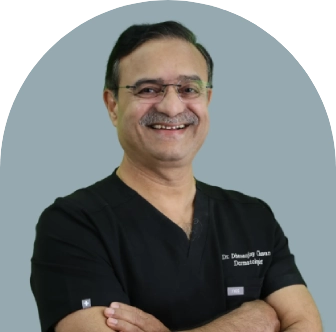
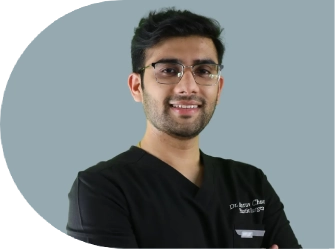
Meet Our Dermatologist!
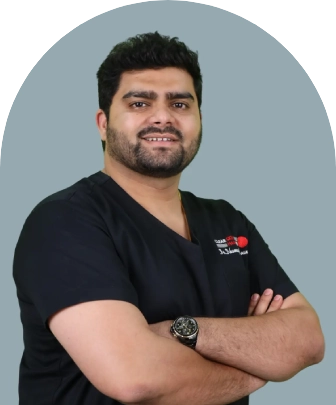
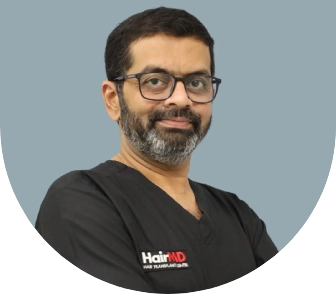

Conclusion
Hormonal acne and PCOS acne respond well to treatment , but only when the treatment matches the actual cause. Chasing products and salon facials without addressing the androgen excess at the root gives temporary relief at best. A dermatologist-led plan that pairs the right oral medication with targeted skin procedures is what produces lasting clarity.
The longer hormonal acne goes untreated, the higher the risk of permanent scarring from deep nodular breakouts. Starting early gives your skin the best chance of clearing completely, with no lasting marks.
Ready for a clear diagnosis? Visit the Acne & Pimple specialist team at Clear Skin Clinic. Call +91 95845 84111 or find your nearest clinic on Google Maps.
See a doctor urgently if your acne is accompanied by fever, rapidly spreading redness, or severe pain , these can be signs of a skin infection that requires prompt treatment. Call +91 95845 84111 or visit your nearest Clear Skin Clinic branch.
Further Reading
Anti-Aging Treatment Reviews from Pune Patients – HIFU, Fillers and Botox Results at Clear Skin
Laser and chemical peels both treat sun damage and dark spots, but through different mechanisms.
Tattoo Removal Reviews from Pune Patients – Results After Q-Switch Laser at Clear Skin
Laser and chemical peels both treat sun damage and dark spots, but through different mechanisms.
Dark Circles: Fillers vs PRP vs Laser in Pune
Under-eye dark circle treatment in Pune – fillers vs PRP vs laser compared on results, longevity, and cost. Reviewed by Dr. Dhanraj Chavan.
PIH After Acne: Causes & Treatment | Clear Skin Pune
Post-inflammatory hyperpigmentation (PIH) is a flat dark mark after acne, not a scar. Learn why Indian skin is prone to it and how Clear Skin Pune treats it.
Have thoughts? Please let us know
We are committed not only to treating you, but also educating you.