
How to Remove Dark Marks from Acne: An Dermatologist Guide

Written by Clear Skin Content Team | Medically Reviewed by Dr. Dhanraj Chavan on January 19, 2026
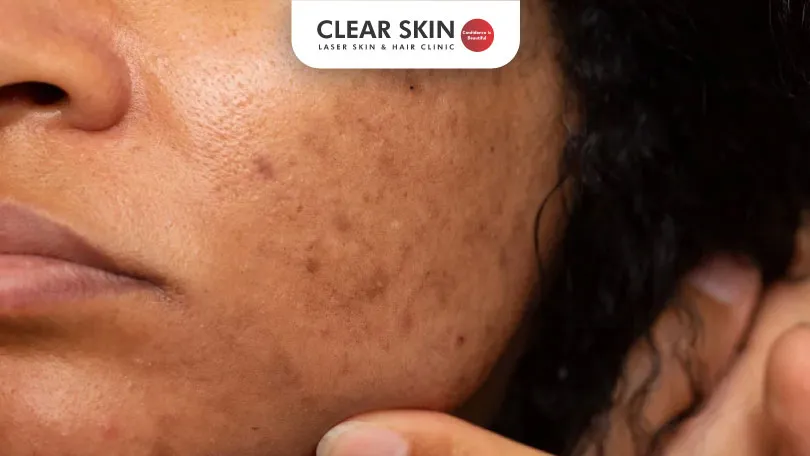
The battle with acne doesn’t always end when the pimple disappears.
Often, it leaves behind a stubborn reminder: a dark mark. As A Dermatologist with 10+ years of clinical practice at Clear Skin Clinic in Pune, one of the most common concerns my patients share is the frustration over these lingering spots, which can affect confidence long after the acne has cleared.
These marks, known as Post-Inflammatory Hyperpigmentation (PIH), are not permanent scars but require a targeted, scientific approach to resolve.
This guide will explain why these dark marks form and outline the most effective clinical treatments and at-home care we use to restore clear, even-toned skin.
Note: The information available in this blog is for informational purposes only. Make sure you consult your dermatologists or our experts before getting started.
Quick Summary
- What are they? Post-acne dark marks, or Post-Inflammatory Hyperpigmentation (PIH), are flat, discoloured spots left after an acne lesion heals. They are not true scars.
- Why do they occur? Inflammation from acne triggers an overproduction of melanin (the pigment that gives skin its colour), resulting in a dark spot. This is especially common in Indian skin tones.
- Best Clinical Treatments: Effective in-clinic procedures include Chemical Peels, Q-switched Laser Therapy, and Microneedling, which accelerate cell turnover and break down excess pigment.
- Essential Home Care: Daily use of a broad-spectrum sunscreen with SPF 30+ is non-negotiable to prevent spots from darkening.
- Key Ingredients: Incorporate products with Vitamin C, Niacinamide, and Alpha Arbutin into your routine to brighten skin and inhibit melanin production.
Table Of Content
- What Causes Dark Marks After Acne?
- The Best Clinical Treatments for Dark Spot Removal
-
Simple Skincare Routine for Healthy Skin at Home
- Common Myths About Dark Spot Treatments
-
Brightening Ingredients
-
Sun Protection
-
Why Choose Clear Skin Clinic in Pune for Your Treatment?
-
Frequently Asked Questions (FAQs)
- Conclusion
What Causes Dark Marks After Acne?
When you get an acne lesion, your skin’s immune system responds with inflammation to heal it. In this process, cells called melanocytes are stimulated to produce excess melanin. This overproduction of pigment gets deposited in the epidermis (top layer of skin) or dermis (deeper layer), creating a dark spot.
This phenomenon is medically termed Post-Inflammatory Hyperpigmentation (PIH). It’s crucial to understand that PIH is a pigmentation issue, not a scarring one.
- PIH: A flat, discoloured mark (brown, black, or even reddish). The skin texture is smooth.
- Acne Scar: A pitted (atrophic) or raised (hypertrophic) change in the skin’s texture caused by damage to collagen.
Indian skin (Fitzpatrick types IV-VI) has more active melanocytes, making us genetically more prone to developing PIH after any form of skin inflammation, including acne. Picking or squeezing pimples increases inflammation, significantly worsening the resulting dark mark
The Best Clinical Treatments for Dark Spot Removal
While a good skincare routine is foundational, clinical treatments offer faster, more dramatic results by targeting pigment at its source. At Clear Skin Clinic, we tailor treatments based on the individual’s skin type and the severity of their PIH.
1. Chemical Peels
A chemical peel is a trusted method for accelerating skin renewal. It involves applying a solution that exfoliates the top layer of skin, causing the pigmented cells to shed and revealing fresh, evenly-toned skin underneath.
- How it works: We use acids like Glycolic Acid, Salicylic Acid, or TCA in varying concentrations. Glycolic acid is excellent for exfoliation, while salicylic acid is oil-soluble and helps control active acne.
- What to expect: The procedure is quick, with minimal downtime. You might experience some mild redness and peeling for a few days. For optimal results, a series of 4-6 peels is usually recommended.
2. Laser Therapies (Q-switched Nd:YAG)
Laser therapy is a high-precision approach. We use Q-switched lasers, which deliver powerful beams of light in very short pulses. This energy is selectively absorbed by the melanin in the dark spots, shattering the pigment into tiny particles that the body’s immune system then clears away.
- The Science: The laser’s wavelength ($1064 \text{ nm}$) is specifically chosen to target melanin without harming the surrounding skin. This makes it very safe for Indian skin when performed by an expert.
- Clinical Insight: In my practice, I have seen patients achieve significant clearance in just 3-4 sessions. It is particularly effective for stubborn, deep-seated PIH that doesn’t respond to peels.
3. Microneedling
Also known as collagen induction therapy, microneedling uses a device with fine needles to create controlled micro-injuries in the skin. This process triggers the body’s natural healing cascade, boosting collagen and elastin production.
- How it helps PIH: It enhances the penetration of brightening serums applied during or after the procedure. It also helps normalise melanocyte activity and improves overall skin texture, making it great for patients with both PIH and mild acne scars. For even better results, we often combine microneedling with PRP (Platelet-Rich Plasma).
Simple Skincare Routine for Healthy Skin at Home
Clinical treatments must be supported by a consistent daily routine. This helps maintain results and prevent new spots from forming.
- Step 1: Gentle Cleansing: Use a non-comedogenic cleanser twice daily to remove dirt and oil without stripping the skin’s natural barrier.
- Step 2: Targeted Serum: Apply a serum containing brightening ingredients (more on this below).
- Step 3: Moisturise: A lightweight, oil-free moisturiser keeps the skin hydrated and supports its healing functions.
- Step 4: Sunscreen (Morning): This is the most critical step.
Common Myths About Dark Spot Treatments
Myth 1: Lemon juice and other home remedies can clear dark spots.
-
- Fact: Applying acidic substances like lemon juice directly to the skin can cause irritation, photosensitivity, and even worsen hyperpigmentation. These remedies are not scientifically validated and can be harmful.
Myth 2: The dark spots will fade on their own, so I don’t need treatment.
-
- Fact: While some very light spots may fade over many months, most will persist for years without intervention. Treatment significantly speeds up the process and prevents them from darkening.
Myth 3: Expensive creams are always better.
-
- Fact: The price tag doesn’t determine effectiveness; the ingredients do. A well-formulated product with proven ingredients is more valuable than a luxury cream without them.
Brightening Ingredients
Adding products with specific ingredients known for their brightening and pigmentation-reducing properties is crucial.
Here’s a closer look at each recommended ingredient:
1. Vitamin C
A powerhouse antioxidant, vitamin C not only helps in reducing the appearance of dark spots but also protects the skin from environmental damage by neutralizing free radicals. It inhibits the enzyme tyrosinase, reducing melanin production. For best results, look for serums or moisturizers with stable forms of vitamin C, such as L-ascorbic acid, at concentrations of 10–20%.
2. Niacinamide
Also known as vitamin B3, niacinamide works by decreasing melanin transfer to skin cells, effectively fading hyperpigmentation. It’s also renowned for its anti-inflammatory properties, which can reduce redness and irritation, making it ideal for sensitive skin types. Products containing 2-5% niacinamide are effective for daily use and can be found in serums, moisturizers, and toners.
3. Alpha Arbutin
A more stable and effective form of the skin-brightening agent arbutin, alpha arbutin works by inhibiting tyrosinase activity, thus preventing the formation of melanin. It’s particularly effective in combination with other ingredients like vitamin C and can be used twice daily for gradual but visible results.
These ingredients are not a magic wand. It can take several weeks to notice a reduction in pigmentation, and consistent use is crucial for maintaining results. Most importantly, consult your dermatologist before getting started.
Sun Protection
Sun exposure is the number one enemy of PIH.
UV rays stimulate melanin production, making your dark spots darker and undoing all your hard work.
- Choose Broad-Spectrum: Use a sunscreen with an SPF of 30 or higher and a PA+++ rating. This ensures protection against both UVB (burning) and UVA (ageing) rays.
- Apply Generously: Apply every morning as the last step of your skincare routine, even on cloudy days.
- Reapply: Reapply every 2-3 hours if you are outdoors, sweating, or swimming.
Why Choose Clear Skin Clinic in Pune for Your Treatment?
Treating PIH, especially on Indian skin, requires skill and precision. An inexperienced hand can easily make pigmentation worse.
- Expert Diagnosis: As Director and Chief Dermatosurgeon, I personally assess your skin to determine the type and depth of your pigmentation, ensuring we create a treatment plan that is both safe and effective for you.
- Advanced Technology: We invest in gold-standard technology, including US-FDA approved Q-switched lasers, that are proven to be safe and effective for Indian skin tones.
- Holistic Approach: We don’t just treat the spots; we address the root cause. We will help you manage any active acne to prevent new marks from forming. Our goal is long-term clear skin.
Frequently Asked Questions (FAQs)
Q: Can post-acne dark spots come back after treatment?
A: If you continue to have acne breakouts, new spots can form. Furthermore, without consistent sun protection, treated spots can darken again. This is why a comprehensive approach that includes acne management and sun care is essential.
Q: Are these clinical treatments safe for sensitive skin?
A: Yes, when performed by a qualified dermatologist. We can adjust the intensity of chemical peels, use specific laser settings, and take precautions to ensure the treatments are safe and comfortable for sensitive skin types.
Q: How many sessions will I need to see results?
A: This depends on the treatment and the severity of your pigmentation. Most patients begin to see a noticeable improvement after 2-3 sessions, with optimal results typically achieved after a series of 4-6 treatments.
Do You Know?
Roughly 250 Patients Are Treated
Everyday By These Dermatologists
(You are one click away from flawless skin)
Meet Our Dermatologist!





Conclusion
The journey to clear, blemish-free skin requires patience, consistency, and the right combination of treatments and skincare. By understanding the nature of post-acne dark spots and exploring the most effective solutions, you can significantly improve your skin’s appearance and health. But remember, its always important to consult a dermatologist before starting any treatment plan. Only a certified dermatologist can ensure your treatment plans are safe and bear results.
Further Reading
Gym & Sweat Acne: Causes & Prevention | Clear Skin Pune
Gym acne (acne mechanica) is caused by sweat, heat, and friction. Learn where it appears, why Pune’s humidity worsens it, and how to prevent breakouts.
Best Treatments for Back Acne and Body Scars
Struggling with back acne and body scars? Learn about effective home remedies and professional treatments to achieve clear, blemish-free skin.
Melasma Treatment Reviews in Pune | Clear Skin
Real Clear Skin Pune patient results for melasma treatment – see before and after outcomes after laser and chemical peel, and what to expect.
Best Treatment for Pigmentation on Face
Discover top treatments for pigmentation on the face. Get clear, even-toned skin with dermatologist-recommended pigmentation solutions in Pune.
Have thoughts? Please let us know
We are committed not only to treating you, but also educating you.