

Written by Clear Skin Content Team | Medically Reviewed by Dr. Dhanraj Chavan on March 25, 2026
Making oily skin fair and glowing comes down to three essentials: consistent cleansing with oil-free products, regular exfoliation to remove dead cells, and daily sun protection with non-comedogenic formulas. It is not about eliminating oil completely – your skin needs that natural moisture – but about balancing it while enhancing your natural glow.
If you are struggling with that persistent shine by midday or dealing with dark spots from previous breakouts, you are not alone. Nearly 60% of patients at Clear Skin Clinic Pune consult our dermatologists with oily skin concerns, especially during humid monsoon months. Our dermatologist-recommended skincare routine for oily skin covers the clinical framework our team follows with every consultation.
Dr. Dhanraj Chavan, Senior Dermatologist at Clear Skin Clinic, has spent over a decade treating oily skin conditions across Pune. The steps below reflect the clinical protocols his team uses, adapted for consistent at-home use.
Table Of Content
- Key Takeaways
- How to Make Oily Skin Fair and Glowing: 9 Essential Steps
- Makeup Tips for Oily Skin
- When to Consult a Dermatologist?
- Frequently Asked Questions
- Conclusion
Key Takeaways
- Cleanse twice daily with salicylic acid: Morning and evening cleansing removes excess sebum and pollutants, preventing clogged pores and the breakouts that cause dark spots.
- Exfoliate 2-3 times weekly: Chemical exfoliation with glycolic or lactic acid removes dead skin cells that make oily skin look dull, revealing brighter skin underneath.
- Never skip moisturizer: Dehydrated skin produces more oil to compensate – a lightweight, non-comedogenic gel moisturizer actually reduces excess sebum over time.
- Apply SPF 30+ every single day: UV exposure is the primary cause of dark spots and uneven skin tone. Daily sun protection is non-negotiable for achieving a fair, glowing complexion.
- Use clay masks weekly: A 15-minute clay mask once a week draws out impurities and reduces the greasy appearance that prevents oily skin from looking genuinely radiant.
How to Make Oily Skin Fair and Glowing: 9 Essential Steps
1. Cleansing: The Foundation of Your Routine
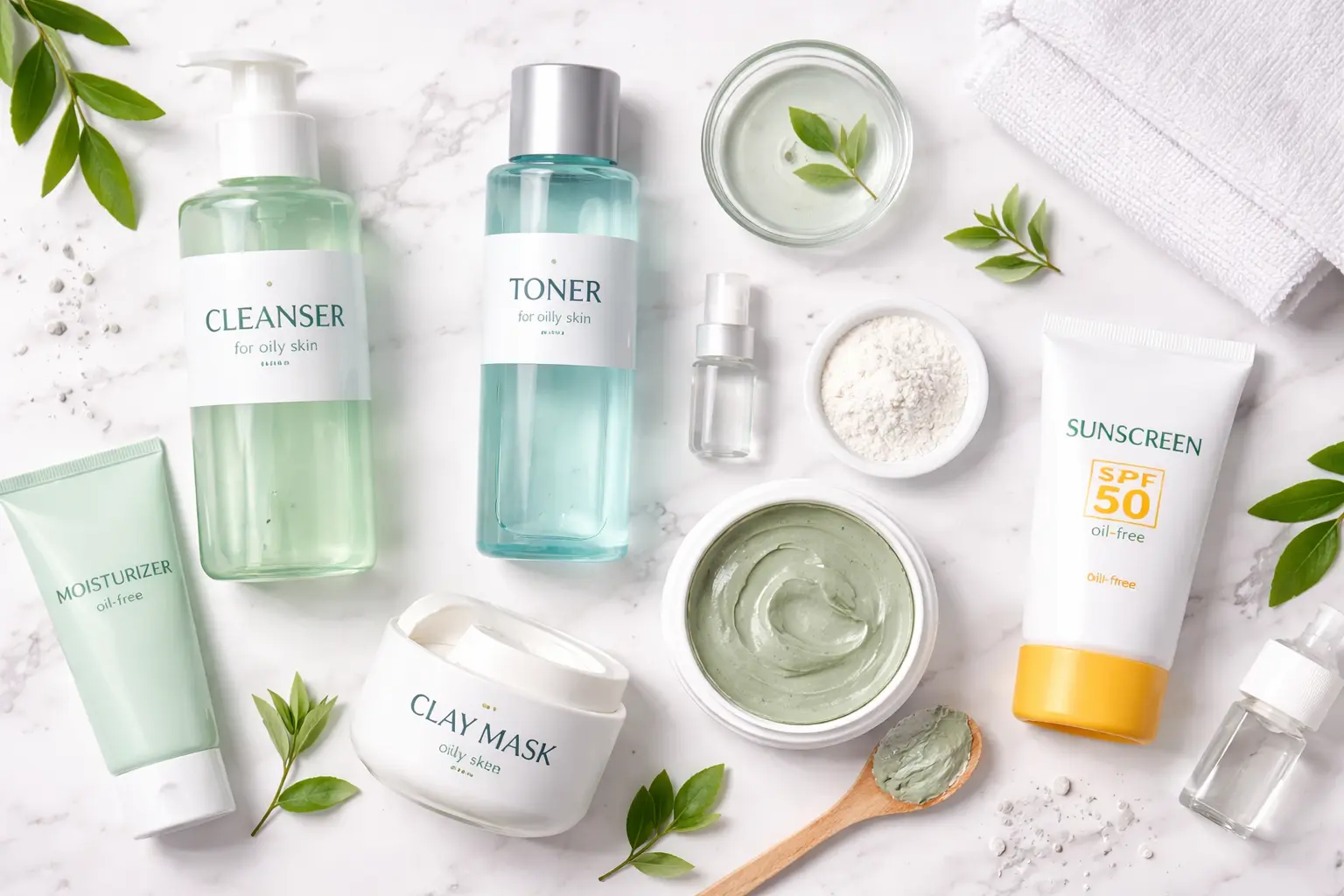
Cleansing is not just about washing your face – it is about doing it right. For oily skin, cleanse twice daily: once in the morning to remove the oil your skin produced overnight, and once at night to clear makeup, sunscreen, and the day’s accumulation of pollutants.
Look for gel-based or foaming cleansers containing salicylic acid (0.5-2%) or tea tree oil. Salicylic acid is a beta-hydroxy acid that penetrates oil to unclog pores, making it particularly suited for oily skin types. Wet your face with lukewarm water, apply a dime-sized amount, and gently massage in circular motions for 60 seconds before rinsing and patting dry.
Many patients at Clear Skin Clinic over-cleanse, especially during Pune’s hot summer months. Washing more than twice daily strips the skin of its natural oils, triggering sebaceous glands to produce even more oil as compensation – the opposite of the intended result.
2. Exfoliation: Revealing Your Natural Glow
Dead skin cells accumulate on your skin’s surface every day, creating a dull, uneven complexion. For oily skin, chemical exfoliants outperform physical scrubs. Our guide to exfoliation techniques for skin explains how to choose the right acid for your skin type.
Chemical exfoliants like alpha-hydroxy acids (AHAs) and beta-hydroxy acids (BHAs) dissolve the bonds between dead skin cells without harsh scrubbing (PMID 23688204). Glycolic acid brightens the surface layer, lactic acid is gentler for sensitive areas, and salicylic acid clears oil and debris from inside pores.
Start twice weekly and observe how your skin responds. Daily exfoliation causes redness, irritation, and rebound oiliness – a pattern our clinical team sees consistently in patients who overdo it.
3. Toning: Balancing Your Skin’s pH
A toner restores pH balance after cleansing – but its effectiveness collapses with the wrong formula. Alcohol-based toners strip moisture and trigger compensatory sebum; alcohol-free formulas with witch hazel or niacinamide turn your toner into an active oil-control tool instead. A 2006 study confirmed niacinamide significantly reduces casual sebum excretion rate compared to placebo (PMID 16999695), and for oily skin patients with breakout-related dark spots, niacinamide addresses both sebum and uneven pigmentation in a single step.
Witch hazel provides natural astringent properties without the irritation of alcohol. Apply toner to a cotton pad, swipe gently across your face and neck, and let it air dry before moving to the next step.
4. Moisturizing: Yes, Oily Skin Needs It Too
Skipping moisturizer dehydrates skin, causing sebaceous glands to produce more sebum to compensate – the single most common reason oily skin gets worse when patients try to manage it. The constraint is formula choice: only lightweight, non-comedogenic gel or water-based formulas work – heavier creams block pores and compound the problem. Hyaluronic acid can hold up to 1,000 times its weight in water, providing intense hydration without adding oil, and peer-reviewed evidence confirms that proper hydration reduces compensatory sebum output (PMC 5605218).
For oily skin patients at Clear Skin Clinic, switching to the right moisturizer consistently reduces midday shine within 2-3 weeks. Always look for “oil-free” and “non-comedogenic” on the label.
During Pune’s monsoon season (June-September), a lighter gel moisturizer is ideal due to increased humidity. Pune’s winter months (December-February) may call for something slightly richer, but still non-comedogenic.
5. Sun Protection: Non-Negotiable for Fair, Glowing Skin
To recap so far: making oily skin fair and glowing requires a four-step foundation – cleanse, exfoliate, tone, and moisturize with non-comedogenic formulas. The key decision at each step is choosing lightweight, oil-free products suited for oily skin. The steps below cover sun protection, treatments, and lifestyle factors that determine whether your routine delivers visible results.
UV exposure accounts for up to 80% of visible skin aging and is the primary driver of uneven skin tone in oily skin patients – but the mechanism matters specifically for oily skin. UV damage triggers the inflammatory cascade that produces post-inflammatory hyperpigmentation (PIH), the dark spots that appear after acne breakouts in oily skin. Without sun protection, every exfoliation and brightening step is partially undone by daily UV exposure. Use minimum SPF 30 broad-spectrum – our guide on how to choose sunscreen for oily skin covers formulations that protect without adding shine (AAD sunscreen guidance).
Pune’s UV index ranges from 7-11 (high to very high) during peak hours. Reapply sunscreen every two hours if outdoors between 11 AM and 3 PM. For persistent dark spots that do not resolve with sun protection alone, skin pigmentation treatment addresses the underlying melanin overproduction at a clinical level.
6. Face Masks: Weekly Deep Treatment
Clay masks deliver targeted oil control that daily cleansing cannot replicate – but the benefit window is specific. Bentonite and kaolin clays draw out impurities and excess sebum from inside pores, but overuse (more than twice weekly) strips the acid mantle and triggers compensatory oiliness. One 15-minute clay mask session per week controls oil and supports a clearer complexion without rebound effects. For brightening, vitamin C or turmeric masks used once or twice weekly complement clay sessions and address uneven skin tone from previous breakouts.
A home recipe our patients use regularly: one tablespoon multani mitti, half a teaspoon turmeric powder, enough rose water to form a paste. Apply for 15 minutes, then rinse with lukewarm water.
7. Diet and Hydration: Glow from Within
What you consume shows up on your skin – and the link between diet and oily skin is more specific than most patients expect. High-glycemic foods (white bread, sugary snacks) and dairy have documented associations with increased sebum production through insulin and IGF-1 pathways. The glycemic index of your diet matters more than whether a food is broadly labelled healthy. Antioxidant-rich foods (oranges, berries, carrots, spinach, walnuts) and green tea polyphenols support skin repair and reduce the inflammation that worsens oiliness and pigmentation.
Drinking 8 to 10 glasses of water daily maintains skin hydration from within, reducing the dehydration that drives compensatory sebum production. Stress increases cortisol, which directly stimulates sebaceous glands – prioritising sleep and stress management is a clinical variable in oil control, not optional lifestyle advice.
8. Home Remedies: Natural Brightening Treatments
Some traditional remedies have genuine evidence behind them, while others carry risks worth knowing before use. Raw honey has well-established antibacterial properties, making it effective for oily, breakout-prone skin. Aloe vera hydrates without greasiness and supports post-inflammatory hyperpigmentation fading over time.
Lemon juice requires caution – it is highly acidic, can irritate skin, and causes photosensitivity that worsens pigmentation. Never apply pure lemon juice directly to your face, and never use it before going outdoors. If using lemon at all, mix a few drops with one tablespoon raw honey and apply for 10-15 minutes only.
Ice therapy during Pune’s summers – a cloth-wrapped ice cube held on skin for 30-60 seconds – temporarily tightens pores and reduces surface oiliness. Always do a patch test with any natural ingredient before full-face application.
9. Consistency: The Real Secret
Skincare is not magic. You will not wake up with transformed skin after one night of following these tips. Your skin cells regenerate on a 28-day cycle, so at least one full cycle is needed before meaningful changes appear.
Over a decade at Clear Skin Clinic Pune, Dr. Dhanraj Chavan’s team has worked with more than 500 patients whose primary concern was oily skin and uneven complexion. Those who maintain consistency typically see noticeable improvement within 5 months. Start with the basics – cleanse, moisturize, sunscreen – and once those are habits, add exfoliation and masks one step at a time.
Oily Skin and Pigmentation: How to Glow Skin (त्वचा पे निखार कैसे लाये)| #AskDrDc Ep 7 | (In HINDI)
Makeup Tips for Oily Skin
An oil-controlling primer creates a barrier between your skin and makeup. Look for oil-free, matte-finish foundations – powder foundations often outperform liquid for very oily skin. Use translucent setting powder on your T-zone and blotting papers for midday touch-ups.
Always remove all makeup before bed using micellar water followed by your regular cleanser – sleeping in makeup triggers the breakouts that cause post-inflammatory hyperpigmentation.
When to Consult a Dermatologist?
While these steps work for most people with oily skin, underlying issues sometimes need clinical assessment. If you have followed a consistent routine for 3 months without improvements, professional evaluation is the right step.
For painful cystic acne, nodules, or severe breakouts, over-the-counter products will not be sufficient. Our acne treatment for oily skin covers prescription-level options including retinoids, oral antibiotics, and isotretinoin for cases where home care cannot address the severity (AAD acne overview).
Surface dark spots often respond to brightening ingredients, but deeper pigmentation from melasma or persistent PIH responds faster with professional intervention. Understanding the causes of hyperpigmentation after acne helps clarify which approach applies. We offer chemical peel treatment and carbon peel treatment among several approaches that work significantly faster than home remedies for persistent pigmentation.
If your oiliness and breakouts are linked to your menstrual cycle, or you are experiencing irregular periods or unusual hair growth, hormonal factors may need clinical assessment. Visit our Prabhat Road clinic (CII-5, Shardaram Park Opp. Ruby Hospital, Sasoon Road, Pune 411001) or locations in Baner, Kharadi, Pimple Saudagar, Pune Station, and NIBM. Contact us at +91-9584584111 to schedule a consultation.

Frequently Asked Questions
- Can oily skin actually become fair?
Yes, but fair means brighter and more even – not a different base skin tone, which is genetically fixed. What you can achieve is a clearer complexion by addressing hyperpigmentation, removing dead skin cells, and protecting against UV damage consistently. Most patients at Clear Skin Clinic see noticeable improvement in brightness and evenness within 5 months of a consistent routine.
- How long does it take to see results on oily skin?
Most people notice improvements in oil control within 2-3 weeks of a consistent routine. For improvements in skin tone and dark spots, expect 6-8 weeks – roughly one skin cell turnover cycle. Stubborn hyperpigmentation may require 3-6 months of consistent treatment.
- Should I use different products in monsoon vs. summer in Pune?
Yes. During monsoon (June-September), lighter gel-based products are essential since humidity drives oilier conditions. In summer (March-May), oil-controlling formulas become critical. In winter (December-February), even oily skin can feel dehydrated – a slightly richer but still non-comedogenic moisturizer may help.
Our guide on oily skin care in monsoon covers seasonal product recommendations for Pune’s specific climate conditions.
- Can I skip moisturizer if I have very oily skin?
No – skipping moisturizer dehydrates your skin, and sebaceous glands respond by producing more oil to compensate. The solution is choosing the right formula: lightweight, gel-based, or water-based and labelled “non-comedogenic.” Most patients at Clear Skin Clinic notice reduced midday shine within 2-3 weeks of switching to the correct moisturizer.
- Are natural remedies like lemon and honey safe for oily skin?
Honey is generally safe with well-documented antibacterial properties. Lemon juice requires caution – it is highly acidic and can cause photosensitivity, worsening the very pigmentation you are trying to treat.
Never apply pure lemon juice before sun exposure. Always do a patch test with any natural ingredient before full-face application.
- Why does my oily skin still look dull even though it is shiny?
Shine and glow are not the same thing. Excess sebum creates greasy shine while dead skin cells underneath block light reflection, making your complexion appear flat. Regular exfoliation, consistent cleansing, and brightening ingredients like vitamin C and niacinamide together shift skin from greasy-looking to genuinely radiant.
- Can drinking more water really improve oily skin?
Yes, to a degree. Dehydration prompts your body to produce more oil to compensate for moisture loss. Drinking 8-10 glasses of water daily supports moisture balance from within and can reduce compensatory sebum production – but water alone is not a complete solution without a consistent external routine.
- Is it normal for oily skin to get worse during certain times of the month?
Yes. Progesterone rises in the week or two before your period, stimulating sebaceous glands to produce more oil. If hormonal acne is severe or persistent, a dermatologist can assess whether clinical treatment targeting hormonal factors is appropriate – over-the-counter products typically cannot resolve the root cause on their own.
Conclusion
Popular Q&As
Discover why your lips are dark with our comprehensive guide covering causes, home remedies, professional treatments, and prevention tips from medical experts. Confused about whether diet causes acne? Get clear answers on food triggers, myths, and evidence-based guidance for better skin. Find the right medicine for acne vulgaris — from topical retinoids and benzoyl peroxide to oral antibiotics and hormonal options. Get ClearSkin’s dermatology-backed guide.
Why Are My Lips Dark? Causes, Treatments & Tips to Restore Your Natural Lip Color
What is the link between Acne and Diet?
Best Medicine for Acne Vulgaris?
We Got Your Back! Ask Us Anything On Your Mind!
Reach out to us on
Didn’t Find What You Were Looking?
Please Contact Us.
We are committed not only to treating you, but also educating you.