
Post-Acne Marks vs Scars – What Pune Patients Should Know

Written by Clear Skin Content Team | Medically Reviewed by Dr. Dhanraj Chavan on February 28, 2026
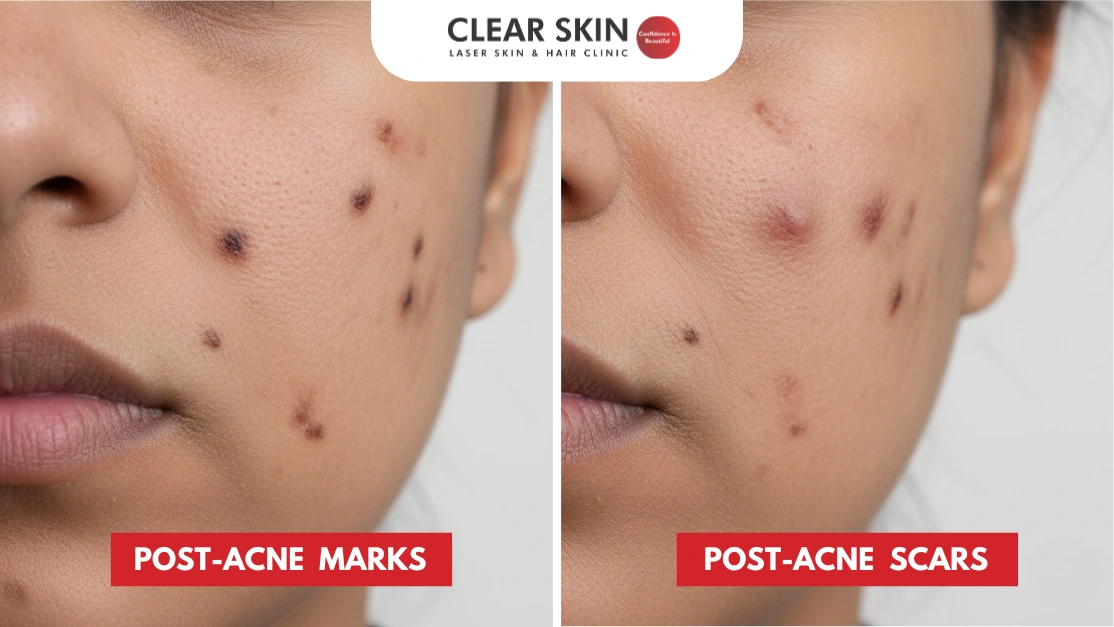
You’ve finally cleared your acne, but your skin still shows the battle scars. Those dark spots stare back at you every morning. Are they permanent? Will they fade? The confusion between post-acne marks and scars keeps many Pune patients from getting the right treatment.
Here’s the crucial difference: post-acne marks are flat, temporary discolorations that fade over time, while acne scars involve permanent texture changes that won’t improve without professional treatment. Understanding this distinction is the first step toward clearer skin, especially in Pune’s humid climate where healing takes longer than usual.
Table Of Content
- Key Takeaways
- Understanding the Difference: Marks vs Scars
- Why Pune’s Climate Makes the Difference?
- How to Tell What You Have: A Patient’s Guide
- Treatment Options at Clear Skin Clinic Pune
- Prevention: Your First Line of Defense
- Timeline Expectations: What’s Realistic?
- Common Mistakes Pune Patients Make
- When to See a Dermatologist?
- FAQ: Your Questions Answered
- Take Control of Your Skin Today
Key Takeaways
Understanding marks versus scars changes everything about your treatment approach:
- Post-inflammatory hyperpigmentation (PIH) creates flat dark spots that typically fade in 6-12 months with proper treatment and sun protection.
- Acne scars involve permanent structural damage to your skin’s texture – you can feel the difference when you run your finger across them.
- Pune’s monsoon humidity (70-80% from June to September) significantly slows the fading process and can trigger new breakouts that create additional marks.
- Prevention through early acne treatment saves you months of frustration – treating active acne promptly stops both marks and scars from forming.
- Professional treatments at Clear Skin Clinic can reduce your healing timeline by up to 50% compared to over-the-counter products alone.
Understanding the Difference: Marks vs Scars
The terms “post-acne marks” and “acne scars” get used interchangeably, but they’re completely different conditions requiring different treatments.
What Are Post-Acne Marks? (PIH and PIE)
Post-inflammatory hyperpigmentation (PIH) happens when your skin produces excess melanin in response to inflammation. After a pimple heals, it leaves behind a flat brown, tan, or dark brown spot where the inflammation occurred.
Post-inflammatory erythema (PIE) is similar but appears as red, pink, or purple marks. These are vascular changes where tiny blood vessels remain dilated after the acne lesion heals.
Both PIH and PIE are temporary conditions. Your skin will eventually return to its normal color as it completes its natural healing cycle. According to research published in the Journal of Dermatology, most acne-related PIH fades within several months to a year with appropriate treatment.
The key characteristic of marks is that they’re completely flat. When you run your finger across the affected area, you won’t feel any texture difference from the surrounding skin.
What Are Acne Scars?
Acne scars represent permanent structural changes to your skin. When severe acne damages the deeper layers of skin, your body attempts to repair this damage by producing new collagen fibers. Sometimes it produces too little collagen, creating indented scars. Other times it produces too much, forming raised scars.
These permanent changes alter your skin’s texture in ways that won’t improve on their own. The StatPearls medical database confirms that dermal scarring can be permanent without professional intervention.
There are three main types of acne scars: atrophic scars (the most common, appearing as indentations), hypertrophic scars (raised above skin level), and keloid scars (thick, raised scars that extend beyond the original wound area).
The Simple Touch Test
Here’s how you can tell the difference right now. Run your finger gently across the affected area of your skin.
If it feels completely smooth and flat, you’re dealing with post-acne marks. The discoloration is only in the pigment of your skin, not its structure.
If you feel a depression, pit, or raised bump, that’s an acne scar. The texture change confirms structural damage to the deeper layers of skin.
Many patients have both marks and scars simultaneously. This is actually common – you might have textured scars with PIH overlay, making them appear darker than the surrounding skin.
Why Pune’s Climate Makes the Difference?
Living in Pune adds unique challenges to healing post-acne marks. The city’s climate patterns directly impact how quickly your skin recovers and whether marks darken or fade.
Monsoon Humidity and Mark Healing
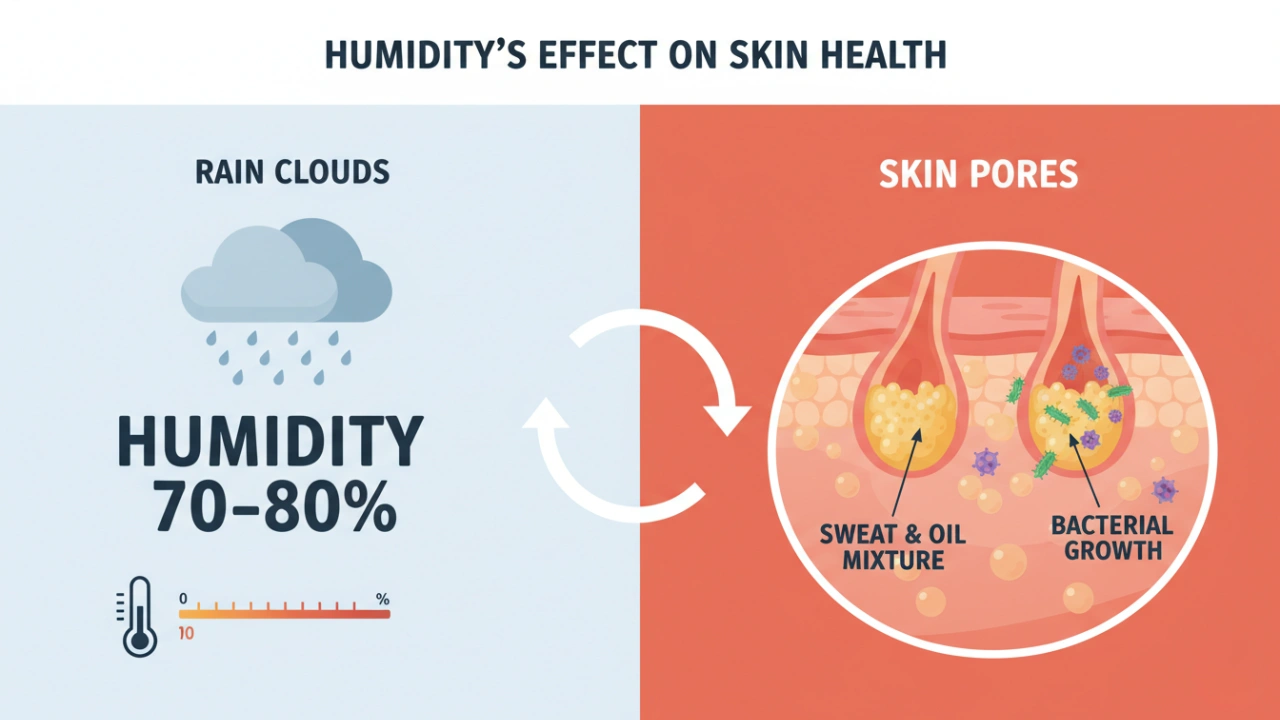
Pune experiences 70-80% humidity levels during monsoon season from June through September. This extreme moisture creates a perfect environment for skin problems.
When humidity is high, sweat doesn’t evaporate efficiently from your skin surface. Instead, it sits there mixing with sebum, dead skin cells, and bacteria. This sticky layer clogs pores and triggers new breakouts, creating a frustrating cycle.
Research shows that humid environments increase bacterial growth on skin by up to 40%. More bacteria means more inflammation, which leads to more PIH when those new pimples eventually heal.
The moisture also interferes with how topical treatments absorb into your skin. Products designed to fade marks work less effectively when they’re constantly being diluted by humidity and sweat.
Year-Round Sun Protection Challenges
UV exposure is the single biggest factor that darkens post-acne marks. The sun triggers your melanocytes (pigment-producing cells) to create even more melanin, making dark spots significantly worse.
Pune sits at an elevation where UV intensity remains high throughout the year. Even during monsoon when clouds cover the sky, up to 80% of UV rays penetrate through and reach your skin.
The American Academy of Dermatology recommends daily SPF 30 or higher for anyone dealing with hyperpigmentation. In Pune’s climate, this isn’t optional – it’s essential.
Reapplication becomes crucial during outdoor activities. Sweat and humidity wash away sunscreen faster than in drier climates, requiring reapplication every 2-3 hours.
Seasonal Skin Management
Pune’s weather shifts throughout the year create different challenges each season. During dry winter months from November to March, your skin battles dehydration while trying to heal marks.
Summer heat from March to June ramps up oil production. Your sebaceous glands work overtime in the heat, increasing the risk of new breakouts that create additional marks.
The monsoon season demands extra vigilance. Learn more about managing acne during Pune’s monsoons to prevent new marks from forming.
How to Tell What You Have: A Patient’s Guide
Identifying whether you’re dealing with marks or scars determines your entire treatment strategy. Let’s break down the visual characteristics of each.
Visual Characteristics of Marks
Post-acne marks appear in various colors depending on your skin tone and the type of mark. Brown, tan, or dark brown spots indicate PIH – these are most common in Indian skin tones (Fitzpatrick types III-VI).
Red, pink, or purple marks signal PIE. These vascular changes are more visible in lighter skin tones but can affect anyone.
The critical test remains the same: marks are completely flat. You can see them, but you can’t feel them. They exist only in the color layer of your skin.
Research published in PMC confirms that PIH occurs with greater frequency and intensity in darker skin types. If you have medium to dark skin, you’re at higher risk for developing persistent marks after acne heals.
Visual Characteristics of Scars
Acne scars change your skin’s physical structure. Ice pick scars look like small, deep holes – as if someone jabbed your skin with a sharp tool. These are narrow but extend deep into the dermis.
Boxcar scars appear as wider depressions with sharp, defined edges. They’re usually found on the lower cheeks and jaw where skin is thicker.
Rolling scars create a wave-like appearance across your skin’s surface. These broad, shallow depressions give skin an uneven texture.
The color of scars typically matches your natural skin tone or appears slightly different. Unlike marks, the discoloration isn’t the main issue – the texture change is what makes them noticeable.
When You Have Both
Many patients discover they have both scars and marks together. A textured ice pick scar might also have dark PIH overlaying it, making it appear even more prominent.
This dual condition requires a staged treatment approach. At Clear Skin Clinic, Dr. Dhanraj Chavan first assesses which condition is primary and creates a customized treatment sequence.
Treating both simultaneously often proves less effective than addressing them in the right order. The pigmentation needs different interventions than the structural damage.
Treatment Options at Clear Skin Clinic Pune
Understanding your condition leads directly to choosing the right treatment. Here’s what works for marks versus what works for scars.
For Post-Acne Marks (PIH/PIE)
Chemical peels using glycolic acid or salicylic acid accelerate skin cell turnover. By removing the pigmented top layers, fresh, evenly-toned skin emerges underneath.
Q-Switched ND:YAG laser treatment targets melanin deposits directly. The laser energy breaks down excess pigment, which your body then naturally eliminates over time.
Topical treatments containing vitamin C, niacinamide, or azelaic acid inhibit melanin production. These ingredients work gradually but effectively when used consistently over several months.
According to WebMD’s medical experts, epidermal PIH typically requires 6-12 months of treatment for significant improvement. Deeper dermal pigmentation may take longer.
The treatment timeline depends on how deep the pigment sits in your skin. Superficial marks respond faster than deep pigmentation that extends into the dermis.
For Acne Scars
CO2 fractional laser resurfacing creates controlled micro-injuries that trigger your skin’s natural healing response. New collagen production fills in depressions and smooths texture.
Dermapen microneedling creates thousands of tiny channels in your skin. This controlled injury stimulates collagen and elastin production, gradually improving scar appearance over multiple sessions.
Subcision works specifically for rolling scars. A small needle releases the fibrous bands tethering the scar down, allowing the depression to lift.
TCA CROSS (Chemical Reconstruction of Skin Scars) treats deep ice pick scars. High-concentration trichloroacetic acid applied directly into the scar base stimulates collagen production from the bottom up.
Most patients need 4-6 treatment sessions spaced 4-6 weeks apart. Results become visible after 3 months, with continued improvement for up to 18 months as new collagen matures.
Why Treatment Order Matters
Here’s the most important principle: you must control active acne before treating marks or scars. Creating new inflammation while trying to heal old marks defeats the entire purpose.
Dr. Dhanraj Chavan follows a staged approach at Clear Skin Clinic. First, establish acne control through appropriate medications and treatments.
Once no new breakouts occur for at least a month, treatment for marks begins. Chemical peels and laser treatments work to fade hyperpigmentation.
Finally, if acne scars remain after marks have faded, deeper resurfacing treatments address the textural issues. This sequence prevents new inflammation from darkening areas being treated for PIH.
Prevention: Your First Line of Defense
Preventing marks and scars requires far less time and money than treating them later. Here’s how to protect your skin.
Treating Active Acne Promptly
Every day you delay treating active acne increases your risk of permanent scarring. Cystic acne especially damages deeper skin layers where scars form.
Early intervention at Clear Skin Clinic means starting appropriate treatment before inflammation causes lasting damage. Regular follow-ups with a dermatologist catch problems before they worsen.
Don’t wait for acne to “go away on its own.” The longer inflammation persists, the more likely you’ll develop both marks and scars.
Never Pick or Pop Pimples
The temptation to squeeze a whitehead feels overwhelming, but picking dramatically increases inflammation. That extra trauma to your skin triggers more melanin production, creating darker marks that take longer to fade.
Picking also drives bacteria deeper into your skin. This can transform a superficial pimple into a deeper infection that damages collagen fibers, leading to permanent scarring.
Professional extraction by trained aestheticians at Clear Skin Clinic removes comedones safely without causing additional trauma or scarring.
Sun Protection is Non-Negotiable
UV exposure remains the single most preventable cause of worsening PIH. Every time you go outside without sunscreen, you’re actively darkening your post-acne marks.
Use SPF 30 or higher every single day. Physical blockers containing zinc oxide work especially well for acne-prone skin because they provide immediate protection without clogging pores.
Reapply every 2-3 hours when outdoors. This is especially critical in Pune during monsoon when people mistakenly believe cloudy weather means no UV exposure.
Even through clouds, UV radiation penetrates and triggers melanin production. Your marks will darken without consistent protection regardless of weather conditions.
Proper Skincare Routine
Gentle cleansing removes excess oil and bacteria without stripping your skin’s protective barrier. Harsh scrubs and aggressive cleansers actually worsen inflammation and slow healing.
Lightweight, gel-based moisturizers work best in Pune’s humid climate. They hydrate without creating the heavy, greasy layer that clogs pores in high humidity.
All products should be non-comedogenic (won’t clog pores). Check labels carefully, as many products marketed for “skin brightening” contain ingredients that trigger breakouts in acne-prone skin.
Learn more about building an effective skincare routine for acne-prone skin that prevents new marks while healing existing ones.
Timeline Expectations: What’s Realistic?
Setting realistic expectations prevents disappointment and helps you stay committed to treatment. Here’s what the research shows.
For Post-Acne Marks (With Treatment)
Epidermal PIH (superficial pigmentation) typically fades in 6-12 months with consistent treatment. This includes professional treatments combined with proper at-home care.
Dermal PIH (deeper pigmentation) takes significantly longer – often 1-2 years or more. The NIH research database confirms that deeper pigmentation may require prolonged treatment lasting months to years.
Several factors affect your timeline. Fitzpatrick skin type III-VI individuals typically take longer to see results. Inconsistent sun protection extends healing time significantly.
Pune’s climate adds another variable. The high humidity during monsoon can slow the fading process by 20-30% compared to drier climates.
For Acne Scars (With Treatment)
Visible improvement in acne scars begins around 3 months after starting treatment. This is when new collagen starts filling in depressions and smoothing texture.
Significant improvement typically requires 12-18 months. Collagen remodeling is a slow process – your skin continues improving long after your last treatment session.
Most protocols involve 4-8 treatment sessions spaced 4-6 weeks apart. The exact number depends on scar severity and how your skin responds.
Pune’s humid environment may extend treatment timelines slightly. The climate affects how quickly your skin heals between sessions, sometimes requiring longer intervals.
Managing Expectations
Dr. Dhanraj Chavan sets realistic goals during your consultation at Clear Skin Clinic. Complete scar removal isn’t always possible, but dramatic improvement typically is.
Progress photos taken at each visit help you see changes that develop gradually. Day-to-day, you might not notice improvement, but month-to-month comparisons reveal significant progress.
Patience is essential. Skin healing follows its own timeline – you can’t rush collagen production or melanin fading beyond their natural pace.
Maintenance treatments may be needed long-term. Some patients require occasional touch-up sessions to maintain results, especially if they develop new breakouts.
Common Mistakes Pune Patients Make
Avoiding these errors saves you time and frustration on your journey to clearer skin.
Switching Products Too Quickly
Skincare products need minimum 8-12 weeks to show results. Most active ingredients work gradually by influencing your skin’s natural cell turnover cycle.
Switching products every few weeks creates a frustrating loop. You never give anything enough time to work, yet you keep blaming products for “not working.”
The causes of hyperpigmentation after acne are biological processes that take time to reverse. No product produces overnight miracles.
Consistency beats variety. Choose a treatment plan with Dr. Dhanraj Chavan and stick with it for at least three months before evaluating results.
Skipping Sunscreen
“It’s cloudy today” ranks as the most common excuse for skipping sunscreen. Unfortunately, up to 80% of UV rays penetrate cloud cover.
During Pune’s monsoon season, patients mistakenly believe the lack of visible sun means no UV exposure. This is when marks darken most because people drop their guard.
Missing even a few days of sun protection can set back weeks of progress. UV exposure triggers immediate melanin production in areas where you’re trying to fade pigmentation.
One unprotected afternoon in Pune’s sun can darken marks you’ve been treating for months.
DIY Treatments Without Professional Guidance
Home remedies flood social media with promises of fading marks naturally. Lemon juice, baking soda scrubs, and other kitchen ingredients often cause more harm than good.
Lemon juice contains citric acid, which can cause severe photosensitivity. Applying it before sun exposure (which many DIY guides recommend) dramatically increases your risk of chemical burns and worsening hyperpigmentation.
Internet advice doesn’t account for your specific skin type, the depth of your pigmentation, or Pune’s environmental factors affecting your skin.
Seeing a dermatologist early saves money in the long run. Professional treatment works faster and more effectively than months of trial-and-error with home remedies.
Not Treating Active Acne First
This is the single biggest mistake. Treating marks while new pimples keep forming is like mopping the floor while the sink overflows.
Each new breakout creates additional inflammation and more melanin production. You’re creating new marks faster than you’re treating old ones.
The step-by-step approach at Clear Skin Clinic Pune ensures acne control first. Only then does mark and scar treatment begin.
This staged method produces better results in less time than trying to treat everything simultaneously.
When to See a Dermatologist
Knowing when professional help is needed prevents wasted time with ineffective treatments.
Signs You Need Professional Help
If your marks haven’t started fading after 3-4 months of diligent home care, it’s time to see a dermatologist. Persistent pigmentation likely requires prescription-strength treatments.
New marks appearing frequently suggest your acne isn’t under control. You need to address the root cause before treating the marks.
Textured skin confirms scarring. Home treatments can’t repair structural damage – you need professional interventions like lasers or microneedling.
Marks darkening instead of fading indicate you’re either not protecting from sun adequately, or your current products are causing irritation that worsens pigmentation.
What to Expect at Clear Skin Clinic
Dr. Dhanraj Chavan begins with a comprehensive skin analysis. This assessment determines whether you have marks, scars, or both, and how deep the pigmentation extends.
With over 10 years of dermatology experience and having treated thousands of Pune patients with post-acne concerns, Dr. Dhanraj understands how the city’s climate affects healing timelines. Clear Skin Clinic has helped over 5,000 Pune residents achieve clearer skin since 1989.
Your customized treatment plan considers your skin type, the severity of marks or scars, your budget, and your schedule for regular appointments. Treatment recommendations balance effectiveness with your practical constraints.
Follow-up appointments track progress and adjust treatment as needed. Some patients respond quickly, while others require protocol modifications to achieve optimal results.
Questions to Ask During Consultation
Understanding your treatment timeline helps set realistic expectations. Ask how long until you see initial improvement and when final results appear.
Cost considerations matter. Ask for a complete breakdown including how many sessions you’ll likely need and the total investment required.
Treatment frequency affects your schedule. Learn how often you’ll need to visit the clinic and whether treatments require downtime that affects work or social plans.
At-home care recommendations are crucial. Ask what products to use between professional treatments and what to avoid that might interfere with your results.
FAQ: Your Questions Answered
Can post-acne marks turn into scars?
No, post-acne marks cannot turn into scars. They are completely different conditions with different causes. Marks involve pigmentation changes, while scars involve structural damage to skin tissue.
However, both can exist simultaneously. You might have acne scars that also have PIH overlay, making them appear darker and more noticeable than scars alone.
How long do post-acne marks take to fade in Pune?
With professional treatment at Clear Skin Clinic, most epidermal PIH fades in 6-12 months. Deeper dermal pigmentation may take 12-24 months or longer.
Pune’s monsoon humidity can extend these timelines by 20-30% compared to drier climates. The high moisture slows skin cell turnover and interferes with treatment absorption.
Consistent sun protection significantly speeds the fading process. Without it, marks may take years to fade or darken instead of improving.
Are acne scars permanent?
Yes, acne scars are permanent without professional treatment. The structural changes to your skin’s collagen won’t repair on their own.
However, professional treatments at Clear Skin Clinic can dramatically improve scar appearance. While complete removal may not always be possible, most patients achieve 50-80% improvement with proper treatment.
The permanence of untreated scars makes prevention critical. Treating acne promptly before it creates lasting damage saves you from months or years of scar treatment later.
What’s the fastest way to fade post-acne marks?
Professional chemical peels at Clear Skin Clinic combined with Q-Switched laser treatments produce the fastest results. This combination approach attacks pigmentation from multiple angles.
However, even with aggressive professional treatment, you still need 6-12 months minimum. Skin biology has natural limits – you can optimize the process but can’t skip the healing timeline entirely.
Daily SPF 30+ protection and dermatologist-prescribed topical treatments support professional procedures. Without this at-home care, even the best professional treatments produce disappointing results.
Does Pune’s monsoon make post-acne marks worse?
Yes, monsoon humidity definitely affects mark healing. The 70-80% humidity levels slow the fading process because sweat doesn’t evaporate properly from skin.
This moisture increases bacterial growth on your skin by up to 40%. More bacteria means more inflammation, which darkens existing marks and creates new ones.
UV rays penetrate monsoon clouds easily. Many people skip sunscreen during cloudy weather, exposing their marks to UV radiation that triggers additional melanin production.
Extra vigilance during monsoon season is essential. Consistent sun protection and regular cleansing to remove sweat and bacteria help minimize monsoon-related darkening.
Can I treat marks and scars at the same time?
Usually, marks and scars are treated sequentially rather than simultaneously. The treatment modalities differ, and treating them separately produces better results.
Dr. Dhanraj Chavan typically recommends controlling active acne first, then treating marks, and finally addressing any remaining scars. This staged approach prevents new inflammation from interfering with healing.
In some cases, certain treatments can address both conditions. For example, CO2 laser resurfacing improves scar texture while also helping fade superficial pigmentation.
The best approach depends on your specific condition. Your treatment plan at Clear Skin Clinic will be customized based on what combination of marks and scars you have.
What’s better – chemical peels or laser for marks?
The answer depends on your mark type and depth. Chemical peels work excellently for superficial epidermal PIH because they remove pigmented skin layers effectively.
Lasers penetrate deeper and can target dermal pigmentation that chemical peels can’t reach. Q-Switched lasers specifically target melanin without damaging surrounding tissue.
Often, a combination approach works best. Chemical peels for regular exfoliation combined with periodic laser treatments for deeper pigmentation produces optimal results.
Dr. Dhanraj Chavan evaluates your specific condition during consultation and recommends the most effective combination for your marks.
Will vitamin C serum fade my post-acne marks?
Vitamin C serums can help fade marks, but they work much slower than professional treatments. As an antioxidant, vitamin C inhibits melanin production and provides some brightening effect.
Use it as part of your overall strategy, not as a replacement for dermatologist care. The concentration in over-the-counter serums (typically 10-20%) works gradually over many months.
Vitamin C works best when combined with sun protection. It helps prevent new pigmentation while gradually lightening existing marks, but without SPF, your progress stalls.
Consider it supportive care between professional treatments rather than standalone therapy for stubborn marks.
How do I know if I need professional treatment?
If your marks haven’t started fading after 3-4 months of consistent home care with sun protection, it’s time for professional evaluation. Persistent pigmentation likely needs prescription-strength treatments.
Marks darkening instead of fading definitely require dermatologist intervention. This signals that your current approach isn’t working, or environmental factors are overwhelming your home care efforts.
Active acne continuing means you haven’t addressed the root cause. You’ll keep creating new marks while trying to treat old ones without professional help.
If marks significantly affect your confidence or quality of life, don’t wait. Professional treatment accelerates results and provides psychological relief much faster than struggling alone with home remedies.
What’s the cost of treating post-acne marks at Clear Skin Clinic Pune?
Treatment costs vary based on severity and the modalities required. Chemical peels typically start from ₹2,500 per session, with most patients needing 4-6 sessions initially.
Laser treatments start from ₹5,000 per session. Again, multiple sessions are usually needed for optimal results.
Dr. Dhanraj Chavan’s consultation fee is ₹500. During this visit, you’ll receive a complete assessment and customized treatment plan with transparent cost breakdown.
Remember that treating marks early costs less than treating severe scarring later. Investing in proper treatment now prevents more expensive scar treatments down the line.
Do You Know?
Roughly 250 Patients Are Treated
Everyday By These Dermatologists
(You are one click away from flawless skin)
Meet Our Dermatologist!


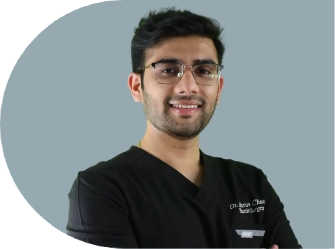
Take Control of Your Skin Today
Understanding the difference between post-acne marks and scars empowers you to choose the right treatment path. Marks fade with time and treatment, while scars require professional intervention for improvement.
Pune’s climate adds unique challenges that make professional guidance especially valuable. The monsoon humidity, year-round UV exposure, and seasonal changes all affect how your skin heals.
Prevention through early acne treatment remains your best strategy. Every day you delay addressing active acne increases your risk of both persistent marks and permanent scars.
Ready to fade those marks and improve your scars? Book your consultation at Clear Skin Clinic and get a personalized treatment plan from Dr. Dhanraj Chavan. Call +91-9584584111 or schedule your appointment online today.
Serving Pune, Baner, Wakad, Hinjewadi, Kothrud, Karve Nagar, Aundh, and surrounding areas since 1989. Seven convenient locations across Pune to serve you better.
Further Reading
Complete Guide to Acne: Types and Expert Treatment in Pune
Comprehensive acne treatment in Pune by Dr Dhanraj Chavan. Expert care for all acne types, affordable prices, & Free consultation. Book now!
Effective Tips to Remove Dark Spots on Hands
Expert guide to removing dark spots on hands in 2026. Latest natural remedies, medical treatments, and prevention tips from Dr Dhanraj Chavan.
Home Remedies for Melasma: What Helps, What Doesn’t, and When to See a Dermatologist?
Can home remedies treat melasma? Learn what works, what to avoid, and when to see a dermatologist for safe pigmentation care.
Tan Removal | Home Remedies for Skin Tan Removal
Beat the heat with 5 natural tan removal remedies that actually work. Scientifically-backed kitchen solutions for instant glow. Try today!
Have thoughts? Please let us know
We are committed not only to treating you, but also educating you.