
Melasma Moustache: Why It Happens and How to Treat Pigmentation on the Upper Lip?

Written by Clear Skin Content Team | Medically Reviewed by Dr. Dhanraj Chavan on March 28, 2026
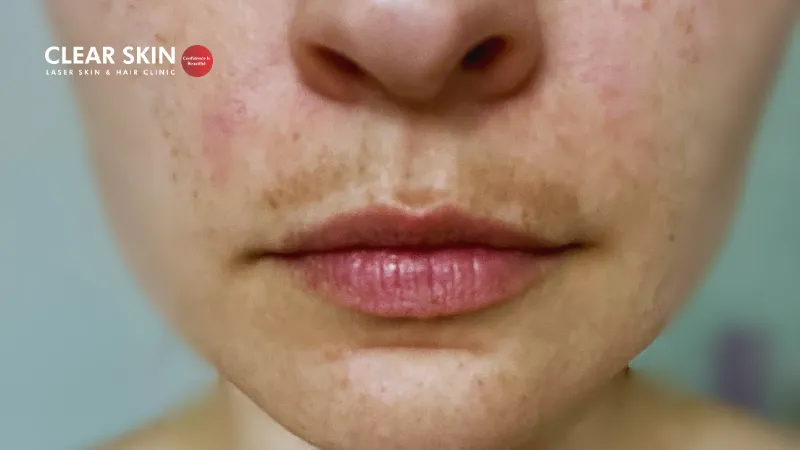
That dark patch above your lip isn’t stubborn tan—it could be melasma.
Noticing a dark patch forming above your upper lip can be disheartening. This shadow, often called a “melasma moustache,” is a very common form of facial pigmentation that we see frequently in our practice. While it might feel isolating, please know you are not alone in this experience, and there is a clear path towards managing it.
Melasma typically appears as brown or greyish patches on the skin, particularly on areas exposed to sunlight like the cheeks, forehead, and, yes, the upper lip. This specific area is quite prone to pigmentation due to a combination of hormonal changes, sun exposure, and even certain skincare habits.
Although melasma is a harmless medical condition, its impact on appearance and confidence can be significant. We understand how frustrating it can be when a part of your appearance feels out of your control. The good news is that with the right knowledge and a medically guided approach, this pigmentation can be effectively managed. At clinics like Clear Skin Clinic Pune, our entire focus is on providing you with the scientific expertise and compassionate care needed to restore your skin’s clarity and your self-assurance.
Table Of Content
- What Is a Melasma Moustache?
- What Causes Melasma on the Upper Lip?
- How Dermatologists Diagnose Melasma?
- Best Treatments for Melasma on the Upper Lip
- Can Home Remedies Remove a Melasma Moustache?
- How to Prevent Melasma from Getting Worse?
- When Should You See a Dermatologist?
- Frequently Asked Questions (FAQs)
- Conclusion
What Is a Melasma Moustache?
Let’s start by defining what this condition truly is. Melasma is a skin condition that causes patches of discolouration due to an overproduction of melanin, the pigment that gives our skin its colour. When melasma develops specifically on the skin of the upper lip, it creates a shadow-like patch that can sometimes resemble faint facial hair, hence the term “melasma moustache.”
This condition is more common than you might think and tends to affect certain groups more than others.
We often see it in:
- Women experiencing hormonal fluctuations.
- Individuals with medium to darker skin tones, whose pigment-producing cells are naturally more active.
- People with a history of frequent or intense sun exposure.
- Individuals using certain medications or cosmetics that increase skin sensitivity.
The pigmentation may appear very gradually, starting as a faint shadow and becoming more noticeable over time, especially after sun exposure. Understanding that this is a medical condition is the first step toward treating it correctly.
What Causes Melasma on the Upper Lip?
Melasma is a complex condition with multiple triggers. The pigment-producing cells in your skin, called melanocytes, become overactive and deposit too much colour in the skin layers. Several factors can spark this overactivity, especially on the delicate skin above the lip.
Sun Exposure
This is the single most significant trigger and contributor to melasma. Ultraviolet (UV) radiation from the sun directly stimulates your melanocytes to produce more pigment as a protective response. Even small amounts of daily, unprotected sun exposure can darken existing melasma and trigger new patches. The upper lip is a prominent facial feature that often receives direct sun, making it highly susceptible.
Hormonal Changes
Hormones, particularly oestrogen and progesterone, play a crucial role in triggering melasma. This is why the condition is so common during periods of hormonal fluctuation, such as pregnancy (when it’s often called “the mask of pregnancy”), when using hormonal birth control, or during hormone replacement therapy. These hormones are believed to directly signal the melanocytes to go into overdrive.
Skin Irritation
The skin on the upper lip is delicate and can be sensitive. Procedures that cause inflammation, such as waxing, threading, or even using harsh skincare products, can lead to something called post-inflammatory hyperpigmentation (PIH). In individuals already prone to melasma, this inflammation can act as a trigger, causing the melanocytes in that area to become overactive and deposit pigment.
Heat and Environmental Factors
It is not just UV light that can be a problem. Research suggests that exposure to excess heat—from sources like saunas, hot kitchens, or even just high ambient temperatures—can also stimulate pigment-producing cells. This, combined with environmental pollutants, can put additional stress on the skin and contribute to the development of melasma.
Genetic Factors
Finally, your genes play a part. If you have close family members with melasma, you have a higher genetic predisposition to developing the condition yourself. This doesn’t mean it is inevitable, but it does mean you need to be extra vigilant with sun protection and other preventive measures.
Looking for expert pigmentation care? Visit Clear Skin Clinic Pune for advanced melasma treatments guided by dermatologists.
Visit us at Baner, Kharadi, Prabhat Road, Pune Station, or NIBM for personalised pigmentation treatment.
How Dermatologists Diagnose Melasma?
When you come to a clinic with concerns about pigmentation, our first and most important job is to provide an accurate diagnosis. A dermatologist will diagnose melasma by carefully examining your skin and evaluating the specific pattern of the pigmentation.
This diagnostic process typically involves:
- Visual Skin Examination: We look at the colour, shape, and distribution of the patches. Melasma has a characteristic appearance that a trained eye can often identify.
- Dermatoscope Evaluation: We may use a dermatoscope, a special handheld magnifying tool, to get a closer look at the skin’s pigment patterns. This helps us see the depth of the pigment and rule out other conditions.
- Assessment of Medical History: We will have a detailed conversation with you about your health, lifestyle, sun exposure habits, medications, and family history. This information provides crucial clues about the underlying triggers of your melasma.
This thorough process ensures we can confirm that the pigmentation is indeed melasma and not another skin condition, allowing us to create the most effective and safest treatment plan for you.
Best Treatments for Melasma on the Upper Lip
Treating a melasma moustache requires a patient, multi-faceted approach. There is no single magic bullet, but rather a combination of treatments designed to reduce the existing pigment and prevent new pigment from forming. As dermatologists, we have access to a range of evidence-based treatments that deliver real, visible results.
Topical Medications
This is often the first line of defence. We can prescribe medical-grade creams that contain active ingredients designed to inhibit the enzyme responsible for melanin production. These are far more potent and effective than anything available over the counter.
Common ingredients we use under medical supervision include:
- Hydroquinone: A powerful skin-lightening agent that is considered a gold standard for treating melasma.
- Retinoids: Derivatives of Vitamin A that increase skin cell turnover, helping to shed pigmented cells more quickly.
- Azelaic Acid: A naturally derived acid that helps reduce inflammation and decrease pigment production.
- Kojic Acid: Another ingredient that helps inhibit melanin production and lighten the skin.
These treatments require consistent use over several weeks or months and must be monitored by a dermatologist to ensure safety and efficacy.
Chemical Peels for Pigmentation
Medical-grade chemical peels are another excellent tool for managing pigmentation above the upper lip. A carefully selected chemical solution is applied to the skin, which works to exfoliate and remove the top layers where the excess pigment is held. This stimulates the growth of new, healthier, and more evenly pigmented skin.
The benefits of a professionally administered chemical peel include:
- Improved overall skin brightness.
- A noticeable reduction in the darkness of the patches.
- A smoother, more refined skin texture.
A series of gentle peels, spaced several weeks apart, is often required to achieve the best results without causing irritation.
Laser Treatment for Melasma
Laser treatments for melasma must be approached with great care and expertise, as the wrong type of laser or setting can worsen the condition. At clinics like Clear Skin Clinic Pune, we use specific low-energy lasers that are designed to safely target and break down pigment cells without generating excessive heat.
Common options that are safe for melasma include:
- Q-switched Laser: This laser delivers very short, high-energy pulses that shatter melanin particles.
- Pico Laser: A more advanced laser that delivers energy in even shorter, picosecond pulses, breaking down pigment more efficiently with less risk of side effects.
- Fractional Laser Treatments: These create microscopic treatment zones in the skin, promoting renewal and pushing out old, pigmented cells.
Laser procedures are performed gradually over a series of sessions to reduce pigmentation safely and minimise the risk of recurrence.
Combination Treatment Approach
For a persistent and complex condition like melasma, the most successful strategy is almost always combination therapy. A dermatologist will often create a comprehensive plan that brings together multiple approaches to attack the pigmentation from all angles.
This might look like a daily routine of topical medications, combined with a series of in-clinic chemical peels or laser toning sessions. This is always paired with strict guidance on sun protection. This holistic approach consistently provides the best and most lasting long-term results.
Can Home Remedies Remove a Melasma Moustache?
The internet is filled with suggestions for home remedies, from lemon juice masks to turmeric pastes. While some of these natural ingredients may have very mild brightening properties, it is crucial to understand that they cannot effectively treat melasma.
Home remedies are not potent enough to penetrate the skin to the depth where the excess melanin is located. More importantly, some of these DIY treatments can be irritating or photosensitising, which can actually worsen the pigmentation. For a condition as stubborn as melasma, professional dermatology treatments are required for any visible, lasting improvement.
How to Prevent Melasma from Getting Worse?
Managing melasma is as much about prevention as it is about treatment. Once we achieve clearance, the goal is to keep the pigmentation from returning. This requires a consistent, diligent approach.
Daily Sunscreen Use
This is the single most important, non-negotiable step. You must use a broad-spectrum sunscreen with an SPF of 30 or higher every single day, without fail. This applies even on cloudy days, during short car rides, or when sitting near a window. Reapplication every two hours when outdoors is essential.
Avoid Excess Heat and Sun Exposure
Beyond sunscreen, try to limit your direct sun exposure, especially during peak hours. Wearing a wide-brimmed hat provides an excellent physical barrier for your face. Also, be mindful of other sources of intense heat that could be triggers.
Gentle Skincare Routine
Treat the skin on your upper lip gently. Avoid harsh scrubs, abrasive products, and any skincare that causes stinging or irritation. If you remove hair from this area, consider methods that are less inflammatory than waxing, such as dermaplaning or laser hair reduction.
Follow Dermatologist Advice
Your dermatologist is your partner in this journey. Adhering to your prescribed treatment plan, using your skincare as directed, and attending your follow-up appointments are vital for maintaining your results and making adjustments as needed.
Book your consultation for melasma treatment in Pune today and get a personalised plan designed for your skin.
When Should You See a Dermatologist?
If you have noticed pigmentation above your upper lip, it is never too soon to seek a professional opinion. You should definitely consider visiting a dermatologist if:
- The pigmentation has persisted for several months without fading.
- The dark patches seem to be getting darker or spreading.
- Over-the-counter brightening creams have had no effect.
- The appearance of the pigmentation is affecting your confidence or well-being.
Early and accurate diagnosis can help you manage the melasma much more effectively and prevent it from becoming more challenging to treat down the line.
Frequently Asked Questions
Can melasma on the upper lip go away on its own?
In some cases, such as melasma triggered by pregnancy, the pigmentation may fade on its own after hormonal levels stabilise. However, for most people, melasma requires active treatment and diligent sun protection to improve.
Is laser treatment safe for upper lip melasma?
When performed by an experienced dermatologist using the correct type of laser and settings, laser treatments can be a safe and effective part of a melasma management plan. In inexperienced hands, however, they can make it worse.
How long does melasma treatment take?
Melasma treatment is a marathon, not a sprint. Depending on the depth and severity of the pigmentation, it may take several weeks or months of consistent treatment to see significant results. Patience and persistence are key.
Can waxing worsen melasma?
Yes, for some individuals. The inflammation caused by waxing can trigger or worsen pigmentation in skin that is already sensitive or prone to melasma.
Do You Know?
Roughly 250 Patients Are Treated
Everyday By These Dermatologists
(You are one click away from flawless skin)
Meet Our Dermatologist!





Conclusion
A “melasma moustache,” while common, can undoubtedly be a source of frustration and self-consciousness. It is a stubborn pigmentation concern caused by a complex interplay of sun exposure, hormonal changes, and skin irritation. While it may feel overwhelming, please be reassured that you do not have to live with it. Highly effective dermatology treatments are available to significantly reduce this pigmentation and restore a more even, confident complexion.
The first and most important step is to consult a qualified dermatologist. They can accurately diagnose the cause of the pigmentation and recommend a personalised treatment plan that is safe and effective for your specific skin type. With the right combination of professional care, consistent treatment, and dedicated sun protection, managing melasma and improving the overall health and appearance of your skin is an absolutely achievable goal. If you are ready to take that step, we at Clear Skin Clinic Pune are here to provide the expert guidance and support you need.
Further Reading
Clear Legs: Dark Spot Treatment | Clear Skin
Discover effective treatments for dark spots on legs with Clear Skin
Best Pigmentation Treatment Clinics in Pune
Melasma, dark spots, or acne marks? Understand pigmentation treatments and how to choose the right dermatologist in Pune.
Effective Tips to Remove Dark Spots on Hands
Expert guide to removing dark spots on hands in 2026. Latest natural remedies, medical treatments, and prevention tips from Dr Dhanraj Chavan.
Can Food Reduce Melanin? What Actually Helps Skin Pigmentation
Discover the best foods to naturally reduce melanin levels for a glowing complexion.
Have thoughts? Please let us know
We are committed not only to treating you, but also educating you.