
How to Build an Acne Treatment Routine for Your Skin Type in Pune?

Written by Clear Skin Content Team | Medically Reviewed by Dr. Dhanraj Chavan on December 26, 2025
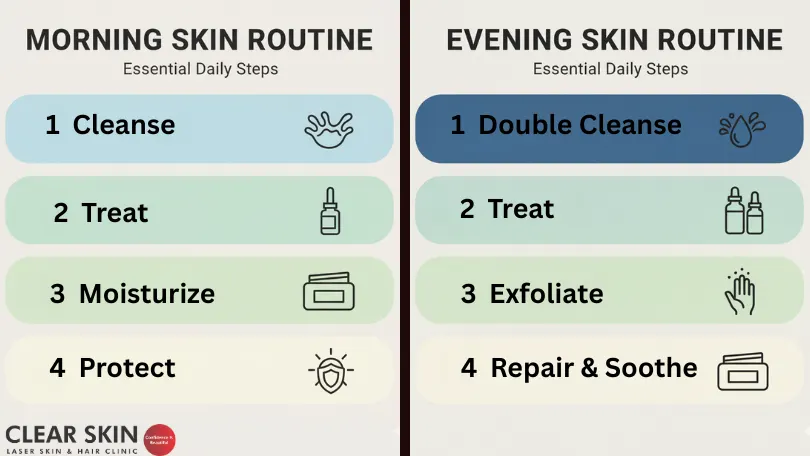
Building an effective acne treatment routine isn’t about using the most expensive products – it’s about choosing the right treatments for your specific skin type and using them consistently.
Dr. Dhanraj Chavan, Senior Dermatologist at Clear Skin Clinic with over 10 years of experience treating Pune residents, emphasizes that 80% of acne treatment success comes from a well-structured routine. “Most people fail not because they chose the wrong products, but because they don’t have a set routine,” he explains.
This guide walks you through building a personalized acne routine in five clear steps, complete with sample routines you can start using today.
- Key Takeaways
- Step 1: Identify Your Skin Type (5-Minute Assessment)
- Step 2: Build Your Morning Routine (4 Essential Steps)
- Step 3: Build Your Evening Routine (5 Essential Steps)
- Step 4: Add Professional Treatments Strategically
- Step 5: Track Your Progress (What to Measure & When)
- Common Routine Mistakes That Sabotage Results
- Sample Weekly Schedule
- Frequently Asked Questions
- Conclusion
Key Takeaways
Follow a proven 5-step framework to build your personalized acne routine – identify your skin type, create morning and evening protocols, add professional treatments strategically, and track your progress.
Discover ready-to-use routine templates for oily, dry, combination, and sensitive skin that you can implement immediately with products available in Pune.
Learn when to upgrade from at-home care to professional treatments and how to combine both approaches for faster, scar-free results.
Understand realistic timelines and tracking metrics so you know exactly what to measure and when to expect visible improvement.
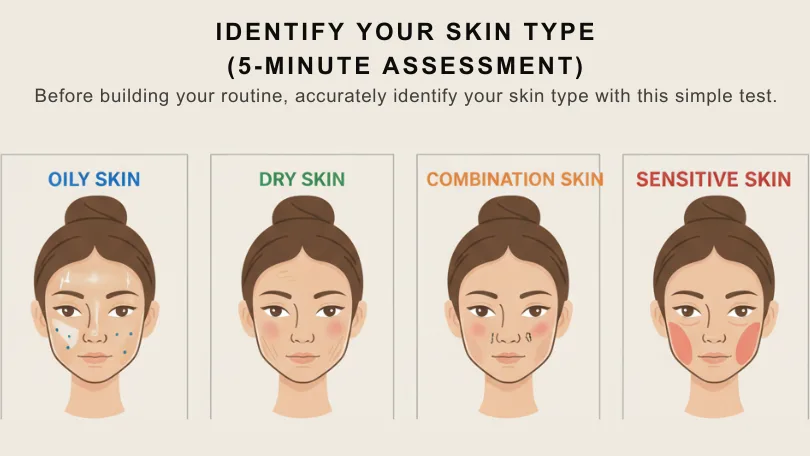
Step 1: Identify Your Skin Type (5-Minute Assessment)
Before building your routine, accurately identify your skin type with this simple test.
The Bare Face Test:
Wash your face with a gentle cleanser and pat dry. Wait 30 minutes without applying any products.
After 30 minutes, examine your skin:
Oily Skin Signs:
- Entire face feels greasy or shiny
- T-zone (forehead, nose, chin) visibly oily
- Enlarged pores across face
- Makeup slides off easily
Dry Skin Signs:
- Skin feels tight or uncomfortable
- Visible flaking or rough patches
- Fine lines more visible than usual
- No shine anywhere
Combination Skin Signs:
- T-zone is oily or shiny
- Cheeks feel normal or slightly dry
- Pores larger on nose, smaller on cheeks
- Mixed texture across face
Sensitive Skin Signs:
- Redness or irritation easily
- Stinging with certain products
- Reacts to weather changes
- May show oiliness of skin, but with irritation
Most Pune residents have combination skin due to the city’s fluctuating climate, according to Clear Skin Clinic’s patient data.
Step 2: Build Your Morning Routine (4 Essential Steps)
For Oily Skin
Step 1: Cleanse (2 minutes) Use a salicylic acid-based cleanser (2%) to control oil and unclog pores. Salicylic acid is oil-soluble, so it penetrates deep into pores. Recommended: Gel or foam cleansers that don’t leave residue. Step 2: Treat (1 minute) Apply benzoyl peroxide serum (2.5-5%) only on acne-prone areas. According to the American Academy of Dermatology, 2.5% benzoyl peroxide is nearly as effective as 10% but causes less irritation. Skip this step if your skin feels irritated. Step 3: Moisturize (1 minute) Use an oil-free, gel-based moisturizer with hyaluronic acid or niacinamide. Even oily skin needs hydration – skipping this triggers more oil production. Step 4: Protect (1 minute) Apply non-comedogenic sunscreen SPF 30+ daily. UV exposure worsens acne marks and triggers inflammation. Total time: 5 minutesFor Dry Skin
Step 1: Cleanse (2 minutes) Use a cream-based cleanser with ceramides. Avoid foaming cleansers – they strip your skin’s protective barrier. Step 2: Hydrate (1 minute) Apply hyaluronic acid serum to damp skin. According to Healthline, hyaluronic acid holds 1000x its weight in water, providing deep hydration without clogging pores. Step 3: Moisturize (1 minute) Use a rich, non-comedogenic moisturizer with shea butter or squalane. Layer this over your serum to seal in moisture. Step 4: Protect (1 minute) Apply moisturizing sunscreen that won’t dry your skin further. Look for chemical sunscreens with hydrating ingredients. Total time: 5 minutesFor Combination Skin
Step 1: Cleanse (2 minutes) Use a gentle gel cleanser that works for both zones. Step 2: Zone Treatment (2 minutes)- T-zone: Apply salicylic acid toner or serum
- Cheeks: Apply hydrating serum
For Sensitive Skin
Step 1: Cleanse (2 minutes) Use fragrance-free, gentle cleanser. Micellar water works well for sensitive skin. Step 2: Soothe (1 minute) Apply centella asiatica serum or niacinamide (5%). Both reduce inflammation without irritation. Step 3: Moisturize (1 minute) Use barrier-repair moisturizer with ceramides. This strengthens your protective layer. Step 4: Protect (1 minute) Apply mineral sunscreen (zinc oxide or titanium dioxide). Chemical sunscreens can irritate sensitive skin. Total time: 5 minutesStep 3: Build Your Evening Routine (5 Essential Steps)
Your evening routine repairs damage and actively treats acne while you sleep.
For Oily Skin
Step 1: Remove Makeup/Sunscreen (2 minutes) Use micellar water or oil cleanser first if you wore makeup.
Step 2: Cleanse (2 minutes) Same salicylic acid cleanser as morning.
Step 3: Exfoliate (2 minutes, 2-3x per week) Use chemical exfoliant (AHA/BHA) on non-retinoid nights. Don’t exfoliate daily – this damages your barrier.
Step 4: Treat (1 minute) Apply prescription retinoid (adapalene 0.1% or tretinoin) if your dermatologist prescribed it. Start with a pea-sized amount for the entire face.
Retinoids are the gold standard for acne according to research published in NCBI.
Step 5: Moisturize (1 minute) Use lightweight gel moisturizer even with retinoids. This prevents excessive dryness.
Total time: 6-8 minutes
For Dry Skin
Step 1: Remove Makeup/Sunscreen (2 minutes) Use cream or balm cleanser that doesn’t strip moisture.
Step 2: Cleanse (2 minutes) Same gentle, cream-based cleanser as morning.
Step 3: Treat (1 minute) Apply gentle retinol (0.25-0.5%) instead of prescription-strength retinoids. Lower concentrations prevent excessive dryness.
Step 4: Layer Hydration (2 minutes) Apply hydrating toner or essence, then hyaluronic acid serum.
Step 5: Seal with Moisturizer (1 minute) Use rich moisturizer with ceramides and peptides. Consider adding facial oil on top for extra hydration.
Total time: 8 minutes
For Combination Skin
Step 1-2: Remove makeup and cleanse (4 minutes) Same as morning routine.
Step 3: Zone Treatment (2 minutes)
- T-zone: Retinoid or stronger treatment
- Cheeks: Hydrating serum or gentler retinol
Step 4: Moisturize (2 minutes)
- T-zone: Gel moisturizer
- Cheeks: Cream moisturizer or extra layer
Total time: 8 minutes
For Sensitive Skin
Step 1-2: Remove makeup and cleanse (4 minutes) Double cleanse only if you wore heavy makeup.
Step 3: Treat Gently (1 minute) Use azelaic acid (10-15%) instead of retinoids. According to Healthline, azelaic acid treats acne without the irritation of stronger ingredients.
Step 4: Repair Barrier (2 minutes) Apply barrier-repair serum with ceramides and centella asiatica.
Step 5: Moisturize (1 minute) Use rich, fragrance-free moisturizer.
Total time: 8 minutes
Step 4: Add Professional Treatments Strategically
At-home routines work well for mild acne, but professional treatments accelerate results and prevent scarring.
When to Add Professional Care:
- Acne persists after 6-8 weeks of consistent home routine
- You have painful, cystic acne
- Scarring or dark marks are developing
- You want faster results
Professional Treatment Schedule by Skin Type
Oily Skin:
- Months 1-3: Chemical peels every 3 weeks (total 4-6 sessions) As required, usage of glycolic peels are also advised.
- Months 4-6: Carbon peel monthly for maintenance
- Ongoing: Quarterly peels to prevent relapse
Dr. Dhanraj Chavan recommends starting professional treatments during Pune’s dry season (November-March) when skin heals better.
Dry Skin:
- Months 1-4: Mild lactic acid peels (20%) every 4-6 weeks
- Months 3-6: Chemical Peels, Lasers, Dermabrasions & Hydrating Treatment Mask
- Ongoing: Quarterly hydrating treatments
Combination Skin:
- Months 1-3: Customized peels (different concentrations for different zones) every 3-4 weeks
- Months 4-6: Combination laser treatments for scars if needed
- Ongoing: Quarterly maintenance based on skin response
Sensitive Skin:
- Months 1-4: Gentle LED light therapy twice weekly (8-12 sessions)
- Months 3-6: Mild peels with extended intervals (every 6-8 weeks)
- Ongoing: Quarterly gentle treatments with patch testing
[LINK TO ARTICLE 2: For detailed comparison of which acne treatments work best for your skin type, see our complete guide: “Which Acne Treatments Work Best for Different Skin Types in Pune?”] <= To be added post 2nd article publishing.
How Professional + Home Care Work Together:
Professional treatments provide intensive intervention every few weeks. Your home routine maintains results between appointments and prevents new breakouts.
This combination approach delivers 60-80% faster improvement than either approach alone, according to Clear Skin Clinic’s patient outcomes.
Step 5: Track Your Progress (What to Measure & When?)
Without tracking, you won’t know what’s working. Measure these metrics consistently.
Week 0 (Before Starting):
- Take 3 photos: front view, left side, right side in same lighting
- Count active breakouts (pimples, cysts, nodules)
- Note skin texture and marks
- Record current products
Week 4-6 (First Checkpoint):
- Take same 3 photos in same lighting
- Count active breakouts again
- Compare photos side-by-side
Expected improvement: 25-35% reduction in new breakouts
If you see NO improvement, something’s wrong:
- Products might not match your skin type
- You’re not using them consistently
- Your acne might need professional intervention
Week 12 (Second Checkpoint):
- Repeat photo protocol
- Count active breakouts
- Assess scarring or marks
Expected improvement: 50-70% reduction from baseline
If you’re not at 50% improvement by week 12, book a consultation at Clear Skin Clinic. You likely need professional treatment.
Week 24 (Final Checkpoint):
- Final photo set
- Count remaining acne
- Assess overall skin quality
Expected improvement: 80-90% clear skin
At this point, you transition to maintenance mode – continuing your routine but reducing treatment frequency.
What to Track:
- Number of new breakouts per week
- Existing acne healing time (should decrease)
- Skin texture improvement
- Dark mark fading
- Overall skin confidence (subjective but important)
Tracking Tools:
- Phone camera with same lighting/angle
- Simple spreadsheet or notes app
- Weekly check-ins with same day/time
Dr. Dhanraj Chavan recommends patients bring progress photos to consultations. Visual tracking helps adjust treatment plans more accurately.
Common Routine Mistakes That Sabotage Results
Mistake 1: Changing Products Too Quickly
Give each routine 6-8 weeks before switching products. Your skin needs time to adjust and respond.
Exception: If a product causes burning, severe redness, or allergic reaction, stop immediately.
Mistake 2: Using Too Many Active Ingredients
Stick to 2-3 active ingredients maximum. Combining salicylic acid, benzoyl peroxide, retinoids, and AHAs/BHAs all at once destroys your skin barrier.
Build up slowly: Start with one active, add another after 2-3 weeks if tolerated.
Mistake 3: Over-Cleansing
Washing your face 4-5 times daily strips natural oils, triggering more oil production. Twice daily is enough – morning and evening.
Mistake 4: Skipping Moisturizer
“But my skin is already oily!” Every skin type needs moisturizer. Dehydrated skin compensates by producing more oil.
Mistake 5: Inconsistent Application
Using products randomly – some mornings yes, some evenings no – won’t deliver results. Consistency matters more than perfect products.
Set phone reminders if you forget your routine.
Mistake 6: Not Adjusting for Pune’s Seasons
Pune’s monsoon (June-October) requires lighter products. Winter (November-March) allows richer formulas.
If your skin suddenly gets worse during season changes, adjust product weights – not the entire routine.
Mistake 7: Expecting Overnight Results
Acne treatment is a marathon, not a sprint. Week 1 might show NO improvement – that’s normal.
Trust the process for at least 6-8 weeks before evaluating.
Sample Weekly Schedule
Here’s how to structure your week for maximum results:
Monday-Sunday (Daily):
- Morning routine: 5-6 minutes
- Evening routine: 6-8 minutes
Tuesday & Friday (2x per week):
- Add chemical exfoliation to evening routine
Wednesday (1x per week, oily/combination skin):
- Add clay mask in evening (leave on 10 minutes)
Professional Appointments (varies by skin type):
- Schedule during dry season when possible
- Space 3-6 weeks apart depending on treatment
- Never schedule during your period (skin is more sensitive)
Monthly (once):
- Take progress photos
- Update tracking spreadsheet
- Assess if any adjustments needed
For comprehensive details on which professional treatments to schedule
Frequently Asked Questions
How long should my acne routine take each day?
Morning routine: 5-6 minutes. Evening routine: 6-8 minutes.
Total daily time commitment: 11-14 minutes. This includes cleansing, treating, moisturizing, and sun protection.
Can I use the same routine year-round in Pune?
Your core routine stays the same, but adjust product textures seasonally. During monsoon (June-October), use lighter gels and lotions.
During the dry season (November-March), you can use slightly richer formulas. Don’t change active ingredients – just the vehicle.
When should I add professional treatments to my routine?
Add professional treatments if you see less than 50% improvement after 8 weeks of consistent home care. Or start professional care immediately if you have cystic acne or scarring.
Do I need different products for morning and evening?
Yes. Morning focuses on protection (sunscreen is essential). Evening focuses on treatment (retinoids, stronger actives).
Some products like salicylic acid cleansers can be used twice daily.
What if my skin gets worse before it gets better?
Some “purging” is normal when starting retinoids or chemical exfoliants – this lasts 2-4 weeks maximum. Your skin is clearing out clogged pores.
If worsening continues beyond 4 weeks, you’re likely having a reaction. Stop the new product.
How do I know if I need professional help?
Seek professional help at Clear Skin Clinic if:
- No improvement after 8 weeks of proper routine
- Painful, cystic acne develops
- Scarring or dark marks worsen
- Acne affects your confidence or mental health
Can I skip steps if I’m in a hurry?
Never skip cleansing and sunscreen (morning) or cleansing (evening). If you must shorten your routine, skip treatment steps occasionally – but don’t make it a habit.
Should I use different routines for different face zones?
Only if you have combination skin. Apply different products to your T-zone versus cheeks.
For other skin types, use the same products across your entire face.
Do You Know?
Roughly 250 Patients Are Treated
Everyday By These Dermatologists
(You are one click away from flawless skin)
Meet Our Dermatologist!





Conclusion
Start with these sample routines today, give them 6-8 weeks of consistent use, and adjust based on your results. Ready for personalized guidance? Book a consultation with Dr. Dhanraj Chavan at Clear Skin Clinic. With 7 convenient locations across Pune – Sasoon Road, Prabhat Road, Baner, Kharadi, NIBM, Pimple Saudagar, and Karad – your journey to clear skin starts here. Visit our contact page or call +91-9584584111 today.
Further Reading
Any Good Skin Treatment for Dull Skin?
Discover safe treatments for melasma on the upper lip. Know causes, triggers, and dermatologist-recommended solutions.
Aloe Vera for Acne Scars: Revealing Nature’s Solution
Discover the benefits of using aloe vera for treating acne scars.
Melasma Treatment in Pune for Upper Lip Pigmentation
Discover safe treatments for melasma on the upper lip. Know causes, triggers, and dermatologist-recommended solutions.
Dermatologist vs Cosmetologist for Acne Treatment
Confused between dermatologist and cosmetologist? Find the right acne treatment expert in Pune for clear skin.
Have thoughts? Please let us know
We are committed not only to treating you, but also educating you.