
The Best Sunscreens for Melasma Management: Protect and Treat Your Skin

Written by Clear Skin Content Team | Medically Reviewed by Dr. Dhanraj Chavan on February 04, 2023
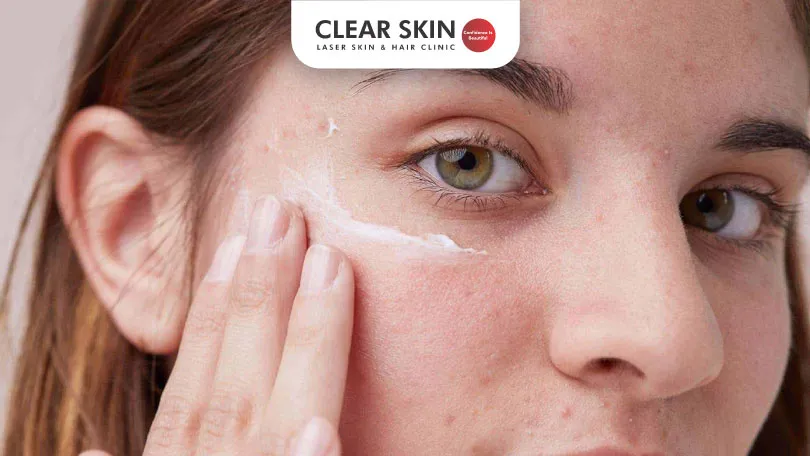
Are you struggling with melasma, a common skin condition that causes dark patches on your face? Do you feel self-conscious about your appearance and want to find a way to manage your melasma? Look no further than the world of sunscreens!
One of the primary triggers of melasma is exposure to UV radiation, which can exacerbate existing pigmentation and cause new patches to form. This makes sun protection a crucial component of any melasma management plan. However, not all sunscreens are created equal, and some may worsen your melasma by irritating your skin or failing to provide adequate protection.
Does sunscreen for melasma work? Let’s find out!
Table Of Content
- How Do Sunscreens Work for Melasma?
- Conclusion
How Do Sunscreens Work for Melasma?
Melasma is a common skin condition characterised by dark patches of hyperpigmentation that usually appear on the face. It’s often triggered by sun exposure, making it crucial to use sunscreen regularly.
The two types of UV rays that cause damage to the skin are UVA and UVB. UVA rays are responsible for skin ageing, while UVB rays are responsible for sunburns. Both types of rays can also worsen melasma by triggering melanin production, causing dark patches to become more prominent.
Sunscreen helps prevent melasma by reflecting or absorbing UV radiation before it can penetrate the skin. Chemical sunscreens contain organic compounds that absorb UV rays, while physical sunscreens contain inorganic compounds that reflect UV rays. Both types of sunscreens can provide broad-spectrum protection against UVA and UVB rays.
Nowadays, blue light (high-energy visible light) and infrared rays have also been found to play a role in triggering melasma. Therefore, an ideal sunscreen should provide broad-spectrum protection against UVB, UVA, visible light (including blue light), and IR radiation.
Choosing sunscreens containing physical blockers such as zinc oxide or titanium dioxide is essential for melasma treatment. These ingredients create a physical barrier on the skin’s surface, reflecting and scattering UV rays away from the skin. Physical sunscreens are less likely to cause irritation or allergic reactions and are preferred over chemical sunscreens for people with melasma. Additionally, sunscreens with an SPF of at least 30 are ideal.
Do You Know?
Roughly 250 Patients Are Treated
Everyday By These Dermatologists
(You are one click away from flawless skin)
Meet Our Dermatologist!





Conclusion
Remember, some sunscreen can cause skin irritation and worsen your melasma. Therefore, before using any cream, it’s better to consult a melasma doctor to find a suitable treatment plan. With the right sunscreen for melasma and treatment approach, he/she can help manage your melasma and protect your skin from further damage.
Say goodbye to melasma and hello to clear, even-toned skin with Clear Skin Clinics Pune! At Clear Skin Clinics, our experienced dermatologist helps you manage your melasma and achieve your dream complexion. Book your consultation now and get ready to shine!
Further Reading
Topical vs Oral Acne Treatment: Which Is Right?
Topical vs oral acne treatment compared – how each works, when dermatologists prescribe them, side effects, and which suits your acne in Pune.
Forehead Acne: Causes, Appearance, Prevention, and Treatment
Most forehead acne has a specific cause. Clear Skin dermatologists explain 9 triggers, including hormones, helmet friction, and hair oil and the right treatment for each.
Why Do White Patches Appear on Skin?
A single white patch could be tinea versicolor, vitiligo, pityriasis alba, or early leprosy, each needs a different treatment.
Carbon Laser vs Chemical Peel for Acne: Which Works Better for Oily Indian Skin?
Confused between carbon laser and chemical peels? Compare benefits, downtime, cost, and acne results to choose the right treatment for your skin.
Have thoughts? Please let us know
We are committed not only to treating you, but also educating you.