
Best Treatments for Back Acne and Body Scars

Written by Clear Skin Content Team | Medically Reviewed by Dr. Dhanraj Chavan on August 31, 2026
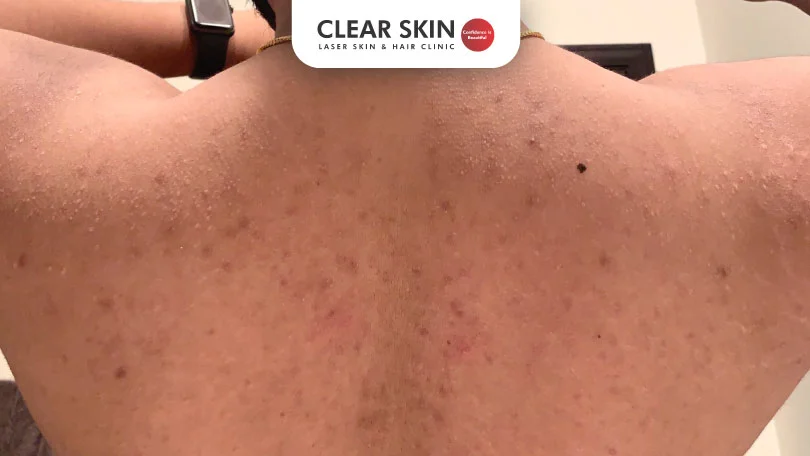
If you have been avoiding sleeveless clothes, skipping beach trips, or changing in a bathroom stall at the gym, you already know that back acne is not just a skin issue. It is something that quietly limits what you wear, where you go, and how comfortable you feel in your own body. And for most patients, the frustration doubles when they realise that the creams and washes that work on facial acne do almost nothing on their back.
The reason is that back acne and back acne scars are two different problems that require different treatments. Treating scars with active-acne products wastes months. Treating active acne with scar-removal procedures when breakouts are still occurring guarantees that new scars form alongside the ones being treated. Understanding which problem you are dealing with, and which treatment addresses it, is the first step to actually seeing results.
Table Of Content
- Treating Active Back Acne
- Treating Back Acne Scars
- What Happens Without Treatment?
- While You Wait: What to Do at Home?
- Questions Patients Ask Before Booking
- Conclusion
Treating Active Back Acne
The back has a higher density of sebaceous glands than the face and produces more sebum per unit area. The skin is also thicker, harder to reach for consistent topical application, and more prone to occlusion from clothing, bags, and gym equipment. These factors combine to make back acne more resistant to the same topical regimens that clear facial acne.
Topical Treatments for Back Acne
Benzoyl peroxide (2.5 to 5%) in a wash or leave-on gel is the most effective OTC topical for back acne because it kills Propionibacterium acnes bacteria and does not contribute to antibiotic resistance. Salicylic acid body washes exfoliate the pore lining and reduce comedonal (blackhead and whitehead) acne. Clindamycin lotion, available by prescription, reduces inflammatory acne by combining antibiotic and anti-inflammatory effects.
For most patients with mild to moderate back acne, a consistent routine combining a benzoyl peroxide wash (left on for 2 to 3 minutes before rinsing) with a prescription clindamycin lotion applied after showering produces visible improvement within 8 to 12 weeks.
Oral Treatments for Moderate to Severe Back Acne
Nodulocystic back acne, where painful lumps extend deep into the dermis, does not respond adequately to topical treatment. For this grade, oral antibiotics (doxycycline, minocycline) are typically prescribed for 6 to 12 weeks to reduce bacterial load and inflammation. In cases of severe, scarring cystic back acne, isotretinoin (commonly known as Accutane) is the most effective treatment, producing permanent remission in the majority of patients. Your dermatologist will assess whether isotretinoin is appropriate based on your acne grade and scarring history.
Fungal Acne on the Back: A Common Misdiagnosis
A significant proportion of patients presenting with back acne have Pityrosporum folliculitis (fungal acne), caused by an overgrowth of Malassezia yeast rather than bacteria. Fungal acne looks similar to bacterial acne (small, itchy pustules on the back, often uniform in size) but does not respond to benzoyl peroxide, antibiotics, or retinoids. It can actually worsen with prolonged antibiotic use, which disrupts the skin’s microbiome and allows yeast to proliferate further.
If your back acne has not improved after 2 to 3 months of standard bacterial acne treatment, fungal acne is a likely explanation. Treatment is antifungal: ketoconazole shampoo used as a body wash, or oral fluconazole/itraconazole prescribed by your dermatologist. A dermatologist can confirm the diagnosis with a clinical exam and, where needed, a KOH mount.
Back Acne Triggers Specific to Indian Patients
Whey protein supplementation is a documented trigger for truncal (back and chest) acne in genetically predisposed individuals. Whey increases circulating insulin-like growth factor 1 (IGF-1), which stimulates sebum production and follicular keratinocyte growth. Indian gym-goers consuming whey protein frequently present with nodulocystic back acne that is resistant to treatment until supplementation is reduced or stopped. Switching to plant-based protein (pea protein, rice protein) typically produces improvement within 4 to 8 weeks if whey is the primary trigger.
Tight synthetic clothing that traps sweat against the skin, heavy backpacks worn daily, and sleeping in sweaty gym clothes are mechanical contributors that dermatologists address alongside medical treatment.
Treating Back Acne Scars
Once active acne is controlled or clearing, attention turns to the scars it has left. Back acne scars are treated differently from facial acne scars in one important respect: the back has a much higher rate of keloid and hypertrophic scar formation, particularly in Indian patients (Fitzpatrick IV-VI). This fundamentally changes which treatments are appropriate and in what sequence.
Scar Type and the Right Treatment for Each
|
Scar Type |
How It Looks |
Best Treatment on Back |
|
Ice-pick scars |
Deep, narrow pits |
TCA CROSS (focal TCA application), CO2 laser |
|
Rolling scars |
Broad, wave-like depressions |
Subcision (releases fibrous tethering) + RF microneedling |
|
Box-car scars |
Wide depressions with sharp edges |
RF microneedling, CO2/Erbium laser resurfacing |
|
Atrophic scars |
Flat, thin, slightly depressed marks |
Chemical peels, RF microneedling, PRP |
|
Hypertrophic scars |
Raised, red, firm, stays within scar boundary |
Intralesional steroid + silicone sheet + fractional laser |
|
Keloid scars |
Raised, extends beyond original wound, may itch |
Intralesional steroid (first) + silicone sheet; laser only after steroid response confirmed |
RF Microneedling for Back Acne Scars
RF microneedling (radiofrequency delivered through fine needles into the dermis) stimulates collagen remodelling and is one of the most effective treatments for rolling and box-car scars on the back. It is safe for Fitzpatrick IV-VI skin because the energy is delivered below the epidermis, reducing PIH risk. Most patients see significant improvement in scar depth after 4 to 6 sessions spaced 4 to 6 weeks apart. The back responds more slowly than the face due to thicker dermis, and sessions are spaced accordingly.
CO2 and Erbium Laser Resurfacing
Fractional CO2 and Erbium lasers ablate controlled columns of damaged skin and stimulate collagen production in surrounding tissue. They are effective for box-car and moderately deep rolling scars on the back but must be used with caution in Fitzpatrick IV-VI skin due to PIH risk. At Clear Skin, fractional laser parameters for the back are calibrated specifically for Indian skin tones, and patients are primed with topical agents before treatment to reduce PIH risk.
Subcision for Rolling Scars
Rolling scars on the back are caused by fibrous bands of scar tissue tethering the skin surface to the deeper dermis. Subcision is a procedure in which a needle is inserted beneath the scar to cut these fibrous bands, releasing the tethering and allowing the skin surface to rise. Subcision is often combined with RF microneedling or PRP for optimal results. It is particularly effective for rolling scars that have not responded to surface-level treatments.
Chemical Peels for Back Acne Scars and PIH
Medium-depth chemical peels (TCA 20 to 35%) address superficial to moderate scar depth and post-acne hyperpigmentation on the back. For darker Indian skin, mandelic or lactic acid peels are used first to reduce PIH risk before advancing to TCA. A series of 4 to 6 peels spaced 3 to 4 weeks apart produces progressive improvement in skin texture and dark spot reduction.
Keloids and Hypertrophic Scars: Why Treatment Sequence Matters for Indian Skin
Indian skin (Fitzpatrick IV-VI) has a significantly elevated risk of keloid and hypertrophic scar formation compared to lighter skin types. The back and chest are the highest-risk anatomical sites. This creates a critical distinction that every patient with raised back scars needs to understand before beginning treatment.
A hypertrophic scar is raised and firm but stays within the boundary of the original wound. A keloid extends beyond the original wound boundary, often continues to grow, and may itch or be tender. Treating a keloid with fractional laser without first establishing steroid response can trigger further keloid growth. The correct protocol for keloids is intralesional corticosteroid injection first (to soften and flatten the scar over 4 to 8 weeks), followed by silicone sheet application, and only then fractional laser if the keloid has responded appropriately.
If you have raised, itchy back scars that seem to have grown beyond the original acne site, a dermatologist assessment before any laser or procedure is essential.
What Happens Without Treatment?
Nodulocystic back acne causes progressive dermal damage with each episode. A cystic lesion that is not treated drains internally rather than resolving at the surface, destroying collagen in the surrounding dermis and leaving a deeper, wider scar. Patients who delay treatment waiting for acne to “run its course” frequently present 2 to 3 years later with scar burden that would have been significantly smaller with earlier intervention.
Raised keloid scars that are not treated early typically continue to enlarge. A keloid treated in its first year responds significantly better to intralesional steroid than one that has been present for 3 to 5 years with established fibrotic architecture.
While You Wait: What to Do at Home?
Home care does not remove scars, but it prevents active acne from creating new ones and reduces background PIH.
Use a salicylic acid or benzoyl peroxide body wash daily. Apply broad-spectrum SPF 30 to 50 to any back area that is sun-exposed (this matters for PIH). Avoid picking or squeezing back acne: squeezing a deep cystic lesion dramatically increases scarring and PIH. Change workout clothes and shower immediately after exercise. If you use whey protein, consider trying a plant-based alternative for 8 weeks and noting the response.
These steps reduce the inflammatory burden while your dermatologist addresses the clinical problem.
Questions Patients Ask Before Booking
Can back acne scars be completely removed?
Significant improvement is achievable for most scar types with the right treatment. Complete removal depends on scar depth and type. Superficial atrophic scars and PIH respond very well and often clear almost entirely. Deep ice-pick and rolling scars typically see 50 to 80 percent improvement in depth after a full treatment course, making them much less visible. Keloids can be flattened and softened substantially but require ongoing management.
How many sessions does back acne scar treatment take?
RF microneedling typically requires 4 to 6 sessions for rolling and box-car scars. Subcision is often performed 2 to 3 times. Chemical peel series run 4 to 6 sessions. Keloid treatment with intralesional steroids is given every 4 to 6 weeks and assessed for response. Your dermatologist will plan session count at your first consultation after assessing scar type and depth.
Is back acne scar treatment painful?
RF microneedling on the back is performed with topical anaesthetic applied 30 to 45 minutes before the procedure. Subcision involves local anaesthetic injection at each scar site. Intralesional steroid injections have a brief stinging sensation. Most patients find the procedures manageable and significantly less uncomfortable than anticipated.
Is laser safe for dark skin on the back?
Yes, with appropriate laser selection and parameters. Fractional CO2 and Erbium laser carry PIH risk in Fitzpatrick IV-VI but are used safely with topical priming and conservative energy settings. RF microneedling is generally safer for darker skin because energy is delivered below the epidermis. At Clear Skin, all procedures for Indian skin are performed with parameters calibrated for Fitzpatrick IV-VI.
How do I know if my raised back scar is a keloid or hypertrophic scar?
A hypertrophic scar is raised and firm but does not extend beyond the boundary of the original wound. A keloid extends beyond the original wound, may continue to grow months or years after the wound has healed, and often itches. If you are uncertain, a dermatologist can assess this clinically. The distinction matters because the treatment sequence differs significantly.
Can I treat back acne scars while I still have active acne?
Generally, it is better to bring active acne under control first before beginning scar treatment. Active acne during a scar treatment course means new scars form while existing ones are being treated. In practice, many patients have a mix of fading old scars and occasional new breakouts, and a dermatologist will create a phased plan that addresses both.
Does fungal acne leave the same type of scars as bacterial acne?
Fungal acne (Pityrosporum folliculitis) tends to leave less severe scarring than deep bacterial cystic acne because the lesions are smaller and do not extend as deep into the dermis. However, it does leave PIH (dark spots) in Indian skin, which can be addressed with the same topical brightening and peel protocols used for post-bacterial-acne PIH.
Vitamin E Benefits For Skin: Get Glowing Skin(Skin के लिए विटामिन ई के फायदे) ClearSkin
Do You Know?
Roughly 250 Patients Are Treated
Everyday By These Dermatologists
(You are one click away from flawless skin)
Meet Our Dermatologist!


Conclusion
Your dermatologist will examine your back to assess whether active acne, scars, or both are the primary concern, and to determine scar types present (rolling, ice-pick, box-car, hypertrophic, keloid). For patients with a combination of scar types, a phased treatment plan is designed, typically beginning with active acne control if needed, then moving into the scar treatment sequence. Patients with raised scars on the back will have keloid risk assessed before any laser or energy-based procedure is planned.
Clear Skin’s dermatologists have treated thousands of patients for back acne and body scars across Pune, including patients with keloid-prone skin, PCOS-related acne, and post-isotretinoin scar sequelae. See acne and acne scar results.
Further Reading
Melasma Treatment Reviews in Pune | Clear Skin
Real Clear Skin Pune patient results for melasma treatment – see before and after outcomes after laser and chemical peel, and what to expect.
Best Treatment for Pigmentation on Face
Discover top treatments for pigmentation on the face. Get clear, even-toned skin with dermatologist-recommended pigmentation solutions in Pune.
Skin Treatments for Anti-Aging
Discover the best skin treatments for anti-ageing to reduce wrinkles, fine lines, and achieve glowing skin. Explore non-surgical options and expert tips for youthful skin.
Laser Hair Removal Before and After Results – Things to Know
What does laser hair removal look like after session 1, 3, and 6? See the session-by-session timeline, body area guide, and book at Clear Skin Pune.
Have thoughts? Please let us know
We are committed not only to treating you, but also educating you.